
TL;DR
Florida has deposited 500,000 oyster shells into the Gulf of Mexico to support reef restoration efforts. The initial outcomes are promising, but full environmental impacts are still being assessed.
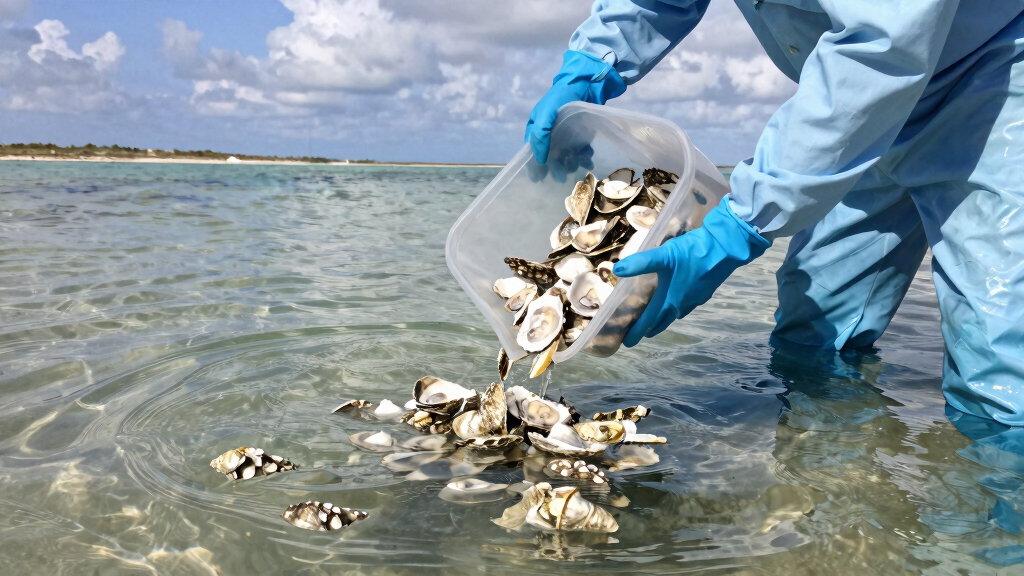
Florida has deposited half a million oyster shells into the Gulf of Mexico as part of a reef restoration initiative. The effort aims to bolster local oyster populations and improve marine ecosystems. The initial results have been unexpectedly positive, drawing attention from environmental scientists and local authorities.
The project involved distributing approximately 500,000 used oyster shells along designated reef areas in the Gulf of Mexico. Officials from the Florida Fish and Wildlife Conservation Commission confirmed the action, which was carried out over the past few months. Early observations suggest increased oyster recruitment and improved habitat conditions, although comprehensive environmental assessments are still underway.
Marine biologists involved in the project noted that the shells serve as a natural substrate, encouraging oyster larvae to settle and grow. The initiative is part of Florida’s broader efforts to restore oyster reefs, which are vital for water filtration, shoreline protection, and biodiversity. No significant negative impacts have been reported so far, and the project is being monitored closely.
Impact of Oyster Shell Deployment on Gulf Ecosystems
The deployment of half a million oyster shells could significantly aid in restoring oyster reefs in the Gulf of Mexico, which have suffered from overharvesting, pollution, and habitat destruction. Healthy oyster reefs contribute to improved water quality, provide habitat for diverse marine species, and protect coastlines from erosion. If the early positive signs continue, this project could serve as a model for similar ecological restoration efforts in the region.
oyster shell reef restoration kit
As an affiliate, we earn on qualifying purchases.
As an affiliate, we earn on qualifying purchases.
Florida’s Oyster Restoration Initiatives and Gulf Ecosystem Challenges
Oyster reefs in the Gulf of Mexico have declined sharply over the past decades due to overfishing, sedimentation, and pollution. Florida has been actively pursuing restoration projects, including shell recycling and reef rebuilding, to counteract these losses. The recent shell deployment is part of a series of measures aimed at reversing ecological decline and supporting local fisheries.
Previous efforts have included installing artificial reefs and promoting sustainable harvesting practices. The use of recycled oyster shells is a common method, as shells provide a natural substrate for oyster larvae to attach and grow. This recent project builds on those efforts, with a focus on natural reef regeneration.
“The initial signs are promising; we’re seeing more oyster larvae settling on the shells, which is a good indicator of reef regeneration.”
— Dr. Maria Lopez, Marine Biologist

Meguiar's M4965 Marine/RV Fiberglass Restoration System, 3-Piece Marine Fiberglass Repair Kit Featuring Oxidation Remover for Boat Care Plus Boat Polish and Wax
RESTORE THE BEAUTY OF YOUR BOAT: Meguiar's Marine/RV Fiberglass Restoration System is the ultimate solution for bringing your…
As an affiliate, we earn on qualifying purchases.
As an affiliate, we earn on qualifying purchases.
Unconfirmed Long-Term Environmental Effects
While early results are encouraging, it remains unclear what the long-term environmental impacts of this large-scale shell deployment will be. Researchers are still analyzing data to determine whether the project will lead to sustained reef growth and ecosystem benefits or if unforeseen issues might arise.
It is also not yet confirmed how much of the shells will be colonized by oysters and other marine life over time, or if there will be any unintended ecological consequences.

Oyster Shell Flour 5LB – Made in USA – OMRI Listed – Soil Amendment Fertilizer for Plants & Flower Gardens. High Calcium Supplement for Chickens, Reptiles, Worm Compost Bins, Mushroom Cultivation.
OMRI Listed – Cz Oyster Shell Flour is an All-Natural mineral listed by the Organic Materials Review Institute…
As an affiliate, we earn on qualifying purchases.
As an affiliate, we earn on qualifying purchases.
Monitoring and Evaluation of Reef Restoration Outcomes
Scientists and officials plan to continue monitoring the reef sites over the coming months and years to assess oyster recruitment, reef stability, and ecological impacts. Comprehensive environmental assessments are expected to be published within the next year. Additional shell deployments or reef restoration measures may be considered based on these findings.
Further research will focus on understanding how this intervention influences local biodiversity, water quality, and shoreline stability in the Gulf of Mexico.

Recycling Rules! 6 Gallon Stackable Recycling Bin Container in Blue, Eco-Friendly BPA-Free Handy Recycler with Handle, 2-Pack
OUR TOP-SELLING MULTI-RECYCLER NOW IN A 2-PACK! When one fills up, you'll have a second ready to go!
As an affiliate, we earn on qualifying purchases.
As an affiliate, we earn on qualifying purchases.
Key Questions
Why did Florida dump oyster shells into the Gulf of Mexico?
Florida aimed to restore oyster reefs by providing natural substrates for oyster larvae to settle and grow, supporting ecosystem health and biodiversity.
Are there any risks associated with dumping shells into the Gulf?
Currently, no significant negative impacts have been reported, but long-term effects are still being studied to ensure ecological safety.
How will scientists measure the success of this project?
Success will be evaluated based on oyster recruitment rates, reef growth, biodiversity improvements, and water quality over the coming months and years.
Could this project be expanded or replicated elsewhere?
If the results remain positive, similar shell deployment projects could be considered in other regions facing oyster reef decline.
Source: fediverse