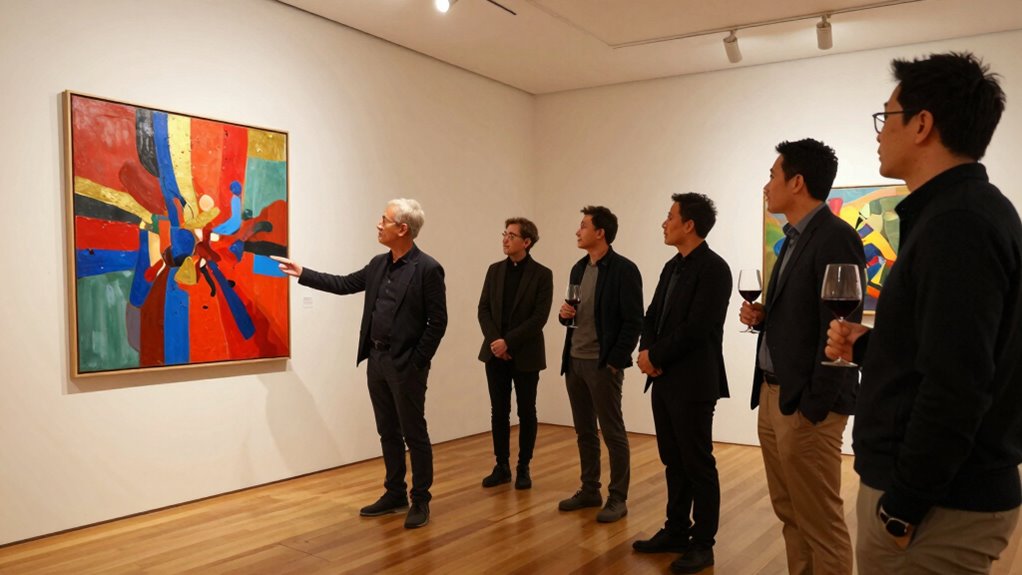

To talk about art naturally with guests, focus on your genuine reactions and share what sparks your feelings or thoughts, rather than relying on technical terms. Notice visual cues like symbols or colors, and describe what you see and feel. Ask open-ended questions to encourage others to share their perspectives and keep the conversation flowing. If you’re curious about more ways to make your conversations engaging and effortless, there’s plenty more to explore.

Prime made for students and young adults
- Fast, free delivery for dorm and study essentials
- Prime Video and Amazon Music included
- Member-only deals
Key Takeaways
- Use genuine reactions and share personal feelings instead of relying on technical jargon.
- Ask open-ended questions to invite your guests’ thoughts and keep the conversation relaxed.
- Mention visual cues or symbols in the artwork to create a natural discussion.
- Acknowledge when you’re unsure about certain art concepts, showing openness and curiosity.
- Focus on shared impressions and emotional responses to foster an authentic, engaging dialogue.
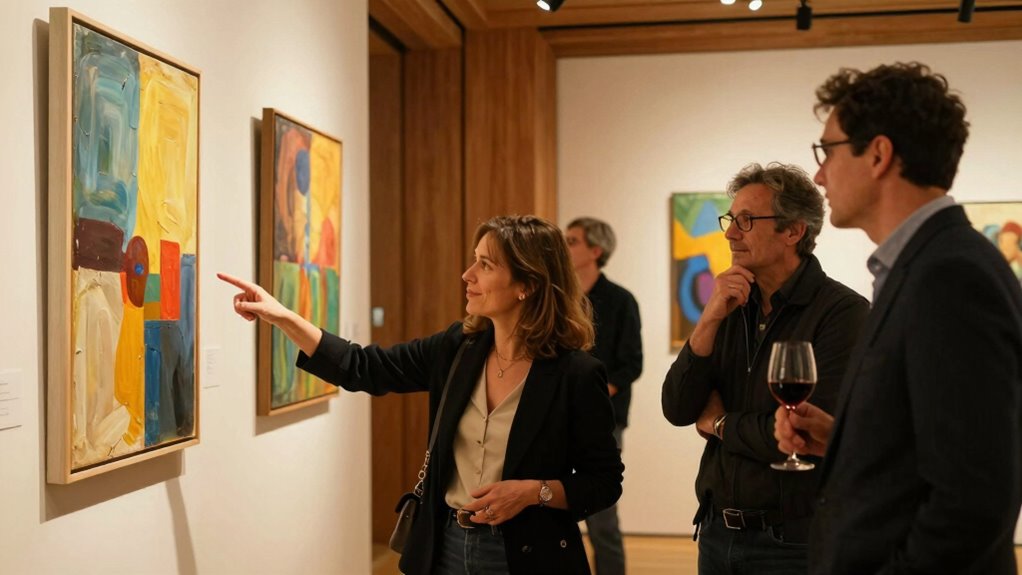
Have you ever wondered how to confidently discuss art without feeling out of place? It’s a common concern, especially when you’re in a setting where everyone seems to speak the language of art effortlessly. The key is to remember that talking about art isn’t about sounding overly sophisticated or knowing every technical term. Instead, it’s about engaging with the piece genuinely and sharing your perspective. One way to do this is by understanding art symbolism—how artists embed meaning into their work through visual cues. When you notice symbols, like a dove representing peace or a storm symbolizing turmoil, you can mention these observations casually. It shows you’re paying attention and invites others to share their interpretations without sounding pretentious.
Another useful approach is to familiarize yourself with some basic artistic techniques, such as brushwork, color palettes, composition, and texture. These elements help you describe what you see in a more vivid way. For example, you might say, “I love how the artist uses bold, sweeping brushstrokes to create a sense of movement,” or “The contrast between light and shadow really draws my eye to the focal point.” You don’t need to be an expert—just expressing what catches your eye and how it makes you feel can spark meaningful conversations. People appreciate authenticity more than perfection, so speak from your experience. Recognizing artistic techniques can also help you better understand the artist’s intention and deepen your appreciation. Additionally, understanding art history can give you context that enriches your visits to galleries and exhibitions.
Describe art through your feelings and observations, highlighting techniques like brushwork and contrast to spark genuine conversations.
When engaging in conversations about art, try to ask open-ended questions. Instead of making definitive statements, you might say, “What do you think the artist was trying to express here?” or “How does this piece make you feel?” This approach encourages dialogue and shows your interest in others’ viewpoints. Remember, discussing art often involves personal interpretation, so there’s no single “right” answer. Your perspective is valid, whether it’s about the emotional impact or the technical aspects you notice. Being aware of art symbolism can help you grasp the deeper meanings that artists may be conveying. Also, understanding the visual language of art allows you to pick up on subtle cues that enhance your appreciation. Exploring the cultural context of artworks can provide additional insights that deepen your connection to the piece. Keep the tone relaxed. You don’t need to sound like a critic—just be curious and sincere. If you stumble over terminology or feel unsure, it’s perfectly fine to admit it. Saying something like, “I’m still learning about art symbolism, but I think the use of color here really creates a mood,” makes your comments relatable and approachable. The goal isn’t to impress others with jargon but to connect over shared impressions. With a little curiosity and openness, you’ll find that talking about art can be both enjoyable and enriching, even if you’re not an art expert.
art appreciation book for beginners
As an affiliate, we earn on qualifying purchases.
As an affiliate, we earn on qualifying purchases.
Frequently Asked Questions
How Can I Start a Conversation About Art Naturally?
You can start a conversation about art naturally by sharing your genuine art appreciation or asking your guests for their creative insights. Mention what catches your eye or evokes emotion, like color or technique, then invite their thoughts. Keep it casual and curious, like, “What do you think about this piece?” This approach makes the dialogue flow smoothly, encouraging authentic, engaging discussions without sounding stiff.
What if My Guests Aren’t Interested in Art?
If your guests aren’t into art, don’t worry—you can still boost their engagement. Did you know that only 20% of people actively practice art appreciation? Focus on shared experiences, like discussing colors, emotions, or stories behind the pieces. Ask open-ended questions to invite their thoughts, making the conversation more inviting. This approach creates a relaxed environment where even reluctant guests feel comfortable engaging with art in a way that interests them.
How Do I Handle Unfamiliar or Confusing Artwork?
When faced with unfamiliar or confusing artwork, embrace art interpretation by focusing on visual symbolism. Look for recurring themes, colors, or shapes that evoke feelings or ideas. Share your impressions honestly, even if you’re unsure—sometimes, your perspective sparks interesting conversation. Asking questions about what others see or feel can deepen understanding and make the discussion more engaging. Remember, exploring art’s symbolism helps uncover its hidden meanings and enriches your experience.
What Are Some Casual Ways to Discuss Art Styles?
Did you know that over 70% of people find discussing artistic expressions more engaging when they relate it to a story? When chatting about art styles, keep it casual by mentioning how a piece reflects a specific movement or era, like Impressionism’s focus on light. Use simple language, ask what they see, and highlight visual storytelling elements. This makes conversations natural, fun, and inviting for everyone.
How Can I Avoid Sounding Pretentious When Talking About Art?
To avoid sounding pretentious, focus on using simple art vocabulary and sharing your genuine impressions. Instead of overloading your conversation with jargon, try explaining what you see and feel through contextual analysis—consider the artist’s background or the era. Ask your guests questions too, making it a relaxed exchange. This approach keeps the discussion accessible, engaging, and authentic, so you don’t come across as overly formal or pretentious.
As an affiliate, we earn on qualifying purchases.
Conclusion
So, next time you’re chatting about art, remember to keep it relaxed and genuine—think of it like sharing a story around a campfire, not giving a lecture by candlelight. Don’t fear sounding “artsy” or stiff; just be yourself and let the conversation flow naturally. After all, even Da Vinci would agree that the best art talk is about connecting, not impressing. Just don’t forget your smartphone; it’s your modern-day paintbrush for capturing those inspired moments.
As an affiliate, we earn on qualifying purchases.
art technique guide for beginners
As an affiliate, we earn on qualifying purchases.
As an affiliate, we earn on qualifying purchases.
Evergreen bestsellers Picks
bestsellers
As an affiliate, we earn on qualifying purchases.