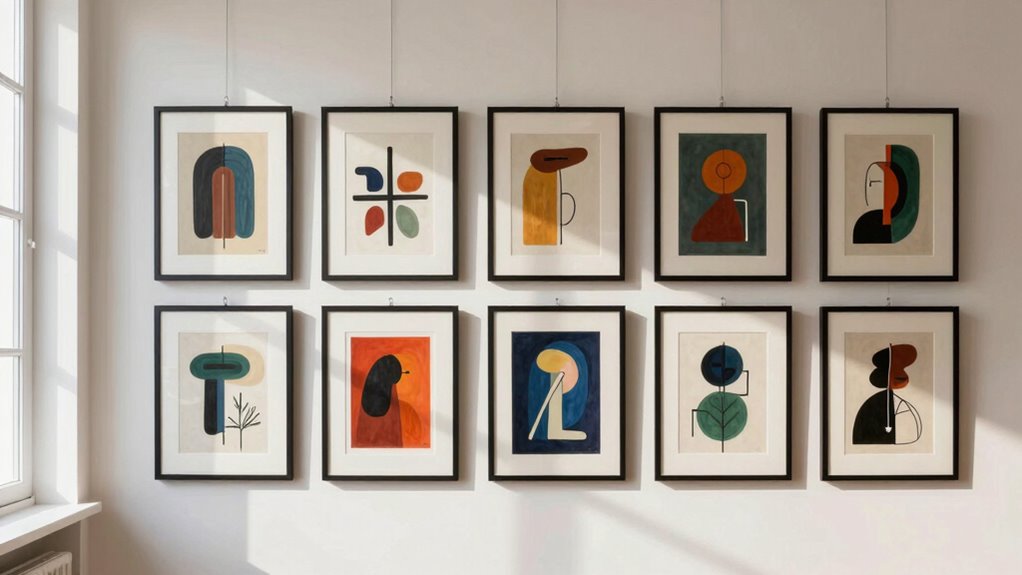

High-quality art grabs your attention through strong composition and balanced elements that guide your eye naturally. Look for precise details, skillful brushwork, and harmonious colors that evoke emotion and depth. Originality and a unique vision make the work stand out, while quality materials and flawless finishing add a sense of craftsmanship. Noticing these clues helps you distinguish true excellence—if you keep exploring, you’ll uncover even more ways to identify exceptional art.
Key Takeaways
- Symmetrical composition and balanced elements guide the viewer’s eye, creating harmony and stability.
- Fine, precise details and seamless craftsmanship signal high technical mastery.
- Cohesive, harmonious color schemes and effective contrast enhance visual impact.
- Emotional resonance and originality deepen viewer connection and convey authenticity.
- Thoughtful finishing touches, quality materials, and ethical practices elevate perceived value.
Masterful Use of Composition and Balance

A masterful use of composition and balance guides your eye through a piece, creating a sense of harmony and purpose. Symmetrical harmony plays a vital role, making the artwork feel stable and well-structured. When elements are evenly balanced, your gaze naturally moves smoothly from one part to another, establishing a seamless visual flow. This careful arrangement ensures no single area overwhelms the viewer, fostering a sense of calm and order. By thoughtfully positioning key features, the artist directs your attention and enhances the overall impact. The result is an artwork that feels cohesive and intentional, inviting you to explore it effortlessly. Mastering composition and balance is indispensable for creating art that resonates and feels inherently high quality. Additionally, understanding visual harmony principles can help artists create more dynamic and engaging compositions that draw viewers in, highlighting the importance of balance in visual storytelling. Recognizing how visual hierarchy influences viewer focus can further elevate the perceived quality of artwork. Developing an awareness of focal points can also significantly improve the viewer’s experience.
Attention to Detail and Precision
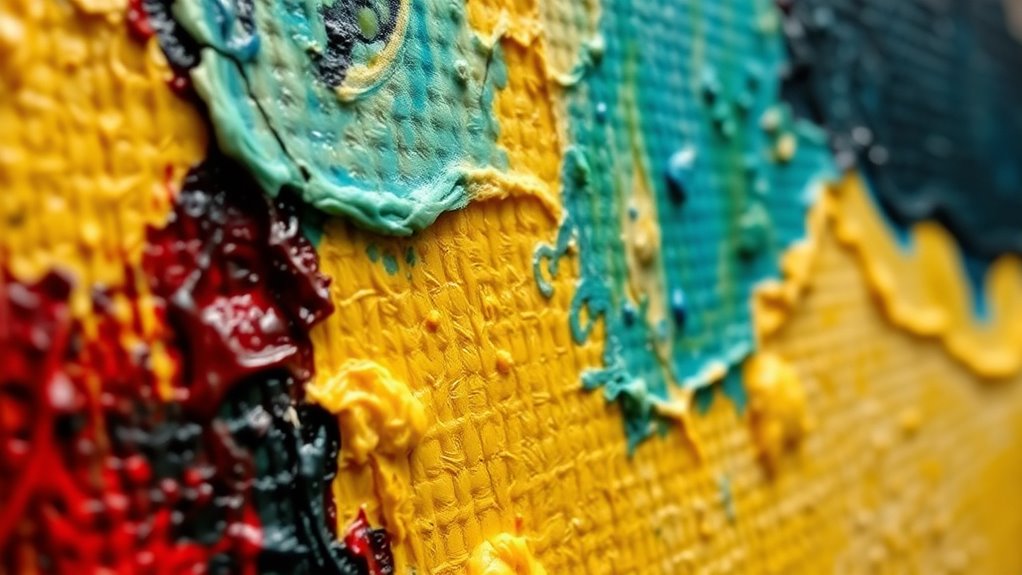
When you notice fine line precision and intricate detailing, the art immediately feels more refined and deliberate. These subtle touches show the artist’s skill and dedication to craftsmanship. Paying close attention to these elements elevates the overall sense of quality in the piece.
Fine Line Precision
Fine line precision is a hallmark of high-quality art that demands meticulous attention to detail. When you notice brushstroke finesse, every stroke appears deliberate and controlled, revealing the artist’s skill. This technique creates smooth, clean lines that define the artwork’s form with clarity. Minimalistic elegance relies on this exactness, where simplicity is elevated through careful execution. The fine lines draw your eye, emphasizing subtle progressions and delicate features. Such precision signals to your brain that the artist has invested effort and mastery, making the work feel refined. It’s not about complexity but about the flawless execution of simple elements. This attention to fine line detail enhances the overall perception of quality, making the artwork feel intentional, polished, and sophisticated. Consistent feedback can help artists refine their technique and achieve this level of mastery. Additionally, understanding the artistic techniques involved can deepen your appreciation of the craftsmanship behind high-quality works.
Intricate Detailing
Intricate detailing elevates an artwork’s sense of craftsmanship by showcasing meticulous attention to every element. When you notice texture variation, it signals the artist’s skill in creating depth and realism, making the piece more engaging. Fine details—like subtle brushstrokes or delicate carvings—highlight material authenticity, emphasizing that genuine materials were used. These details invite your eye to explore the artwork closely, revealing the artist’s dedication and precision. The more carefully crafted the details, the more you perceive the work as high quality. It’s the small, deliberate touches that transform a simple creation into a masterpiece, demonstrating mastery and care. This level of intricacy not only enhances visual interest but also triggers your brain’s appreciation of craftsmanship and authenticity.
Consistent and Harmonious Color Palette

A consistent and harmonious color palette unites your artwork and guides the viewer’s eye. Using cohesive color schemes and balanced color distribution guarantees your piece feels deliberate and polished. When colors work well together, your art exudes a sense of quality and professionalism. Incorporating smart design principles ensures that your color choices enhance the overall sense of well-being and comfort in your space. Additionally, understanding the impact of visual balance can help create a more engaging and aesthetically pleasing composition. Paying attention to color contrast can further emphasize focal points and add depth to your work, while also drawing on principles rooted in Italian artistic tradition to create timeless beauty. Moreover, applying net worth growth hacks in your creative process can lead to more innovative and financially sustainable art projects.
Cohesive Color Schemes
A cohesive color scheme plays a crucial role in making art feel high quality because it guides the viewer’s eye and creates a sense of unity. When your colors work together through effective color harmony, the overall composition feels balanced and intentional. This harmony ensures that no single element distracts from the whole, allowing your audience to focus on the message or emotion you want to convey. Consistency in your color choices helps establish visual unity, making the artwork appear more polished and professional. By carefully selecting colors that complement each other, you reinforce the artwork’s coherence. A well-thought-out cohesive color scheme draws viewers in and makes the piece feel complete, elevating its perceived quality and artistic impact.
Balanced Color Distribution
Have you ever noticed how a balanced distribution of colors can make an artwork feel more harmonious and polished? When colors are spread thoughtfully, they create a sense of color harmony that guides your eye smoothly across the piece. This balanced color distribution establishes visual rhythm, making the artwork feel cohesive and engaging. Instead of cluttered or uneven patches, the colors flow naturally, emphasizing important areas and supporting the overall composition. Consistency in how colors are used helps your brain recognize patterns and relationships, enhancing the perception of quality. By maintaining a harmonious balance, artists craft visual experiences that feel deliberate and refined, elevating the artwork’s high-quality feel in your perception. Additionally, understanding how visual rhythm influences viewer engagement can help artists achieve this balanced color harmony more effectively.
Skillful Technique and Fine Brushwork
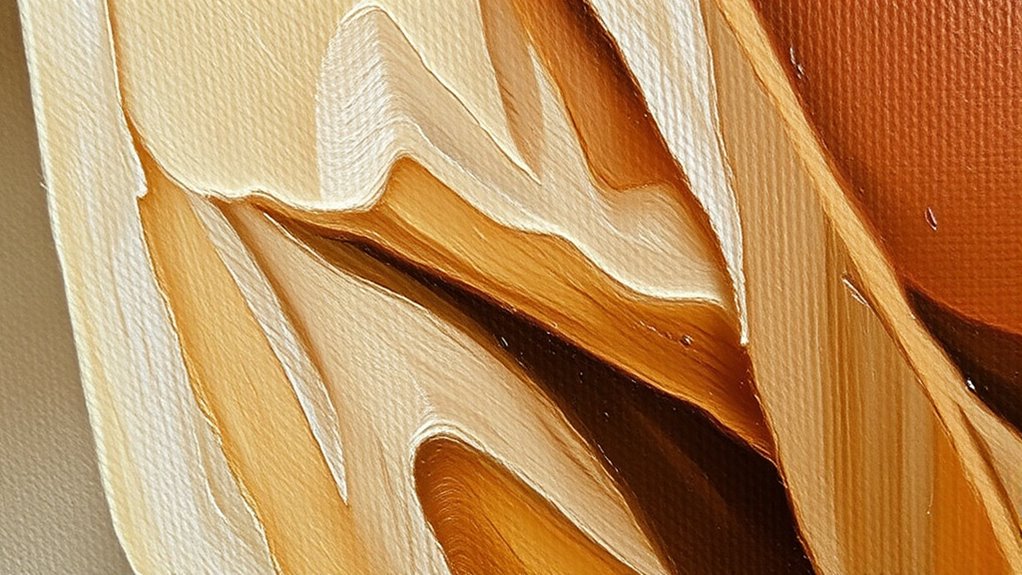
Skillful technique and fine brushwork are at the heart of creating art that feels high quality. When you observe a painting’s brushwork mastery, you notice the artist’s technical finesse—how smoothly and confidently the strokes are applied. Precise control over brush pressure, direction, and layering ensures a polished, harmonious finish. These details reflect the artist’s skill and dedication, elevating the work’s overall perception.
- Consistent, controlled strokes that convey confidence
- Seamless blending and subtle progression
- Deliberate use of texture to add depth and interest
Mastering these elements signals technical finesse, making the artwork appear refined and sophisticated. Your brain recognizes these signs of mastery, subconsciously associating them with higher quality and craftsmanship in art.
Emotional Impact and Expressiveness

When an artwork evokes strong emotions or resonates deeply with viewers, it instantly feels more high quality. Your brain perceives this emotional resonance as a sign of authentic expressive depth. Art that captures raw feelings or tells a compelling story connects with you on a visceral level. This emotional engagement heightens your sense of value, making the piece seem more profound. Incorporating trustworthy guidance can further enhance your understanding of what elevates art’s perceived quality. Recognizing the role of emotional impact helps you better appreciate why certain pieces feel more meaningful and valuable. Additionally, understanding how subject-specific assistance applies to art appreciation can deepen your overall perception. The use of innovative tools in art creation also plays a role in how modern audiences perceive quality and authenticity. By paying attention to visual storytelling, you can better identify works that possess genuine expressive power.
Originality and Unique Vision
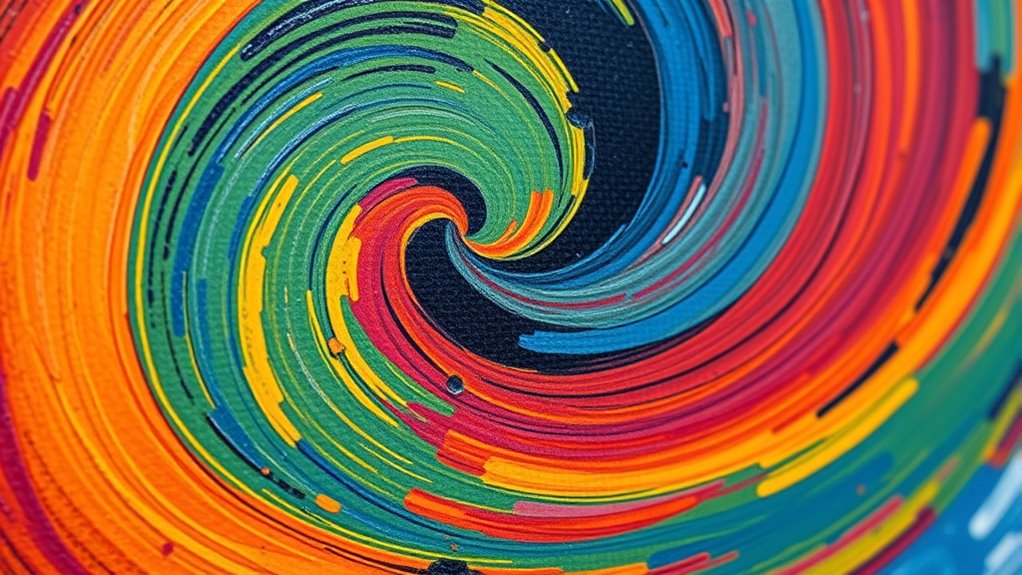
What sets a piece of art apart as truly high quality is its originality and the artist’s unique vision. When you encounter art with innovative concepts, it challenges your expectations and sparks curiosity. A work showcasing a distinctive style reveals the artist’s personal voice, making it instantly recognizable. This originality creates a sense of authenticity and emotional resonance, setting the artwork apart from mass-produced or derivative pieces. It demonstrates that the artist has pushed boundaries and thought beyond conventions. By embodying a fresh perspective, the art feels fresh, compelling, and memorable. Truly high-quality art captures your attention through its innovative ideas and a style that’s unmistakably its own. Additionally, the way an artwork employs visual presentation can significantly influence your perception of its quality, emphasizing the importance of presentation alongside content. The use of artistic techniques can further enhance the work’s impact, making it even more compelling and indicative of high craftsmanship.
Quality Materials and Finishing Touches
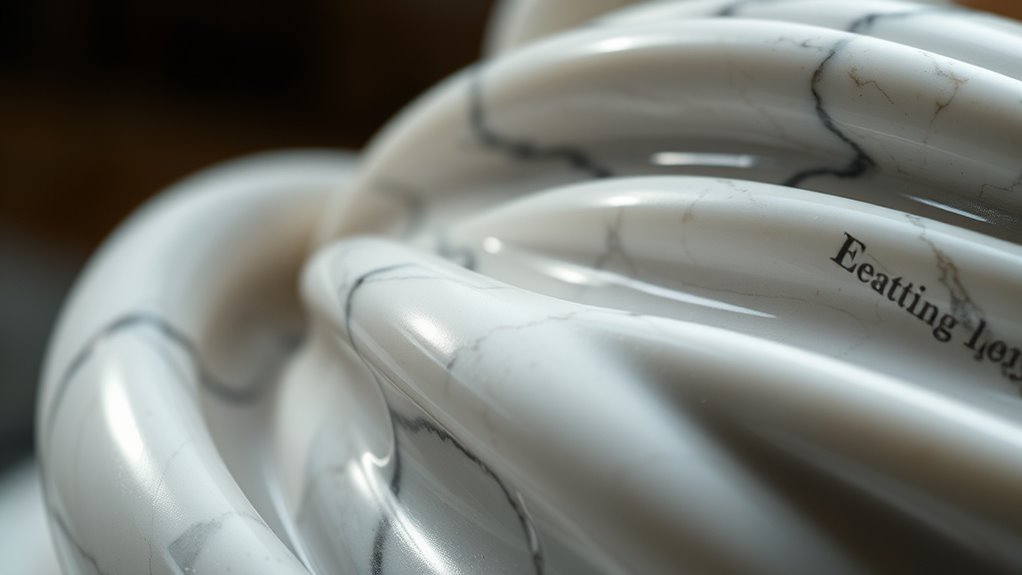
High-quality art stands out through its use of premium materials and meticulous finishing touches that enhance its overall appearance and durability. When artists invest in premium craftsmanship, they select materials with rich textures and lasting qualities, ensuring the piece feels substantial and refined. Luxurious textures, like smooth canvas, fine paper, or high-grade paints, evoke a tactile sense of quality that your brain recognizes instinctively. Attention to finishing details—such as precise framing, clean edges, and subtle varnishes—further elevate the work’s perceived value. These elements demonstrate an artist’s dedication to excellence, making the artwork feel polished and complete. Incorporating responsible use and privacy considerations in art presentation can also influence how viewers perceive its value and authenticity. Moreover, the material selection process reflects the artist’s commitment to quality, reinforcing the viewer’s perception of the piece’s high value. Understanding how visual cues contribute to perceived quality helps viewers better appreciate the skill involved in creating high-end art. Recognizing these craftsmanship elements allows viewers to distinguish truly high-quality pieces from lesser works.
Frequently Asked Questions
How Does Viewer Perception Influence the Sense of Art’s High Quality?
Your perception heavily influences how you see an artwork’s quality. Biases, like the expectation that certain styles are better, shape your judgment. Emotional resonance also plays a key role, making you perceive art as higher quality when it evokes strong feelings. When your brain interprets these cues positively, you’re more likely to see the art as refined and valuable, even if others might not share the same perception.
Can Cultural Context Alter How We Judge an Artwork’s Quality?
Cultural influence deeply shapes how you judge an artwork’s quality, contrasting your personal taste with societal norms. You might see a piece as high quality because of its cultural significance or historical context, while others may overlook it due to differing values. This contextual perception varies across cultures, highlighting that your assessment isn’t purely about the art itself, but about how your cultural background frames its meaning and importance.
What Role Does Art Provenance Play in Perceived Value?
Provenance plays a vital role in how you perceive an artwork’s value by providing a verified history through art authentication. When you see clear provenance storytelling, it reassures you of the piece’s authenticity and origin, boosting its perceived quality. Knowing the artwork’s journey through reputable ownership makes it feel more genuine and valuable, influencing your impression and willingness to invest or appreciate it deeply.
How Do Contemporary Trends Impact Perceptions of High-Quality Art?
Contemporary trends shape your perception of high-quality art through digital aesthetics and market influence. When you see sleek, innovative digital styles, you’re more likely to view the art as modern and valuable. Market influence amplifies this, as trending artists and platforms boost perceived quality. Your brain associates current styles and market buzz with high status, making you more inclined to see contemporary art as premium and desirable.
Are There Psychological Factors That Make Certain Artworks Feel More Valuable?
You notice artworks feel more valuable when they show artistic originality and evoke emotional resonance. Imagine walking into a gallery where a piece surprises you—your brain perceives it as unique, increasing its worth. Studies reveal that emotional engagement and perceived authenticity boost a work’s value in your mind. When art strikes a chord emotionally or showcases fresh ideas, your subconscious signals its importance, making it seem more high-quality.
Conclusion
Understanding what makes art feel “high quality” helps you appreciate the skill and effort behind each piece. Did you know that studies show viewers spend about 30 seconds examining an artwork before forming an opinion? By noticing elements like composition, detail, and emotional impact, you can truly see the craftsmanship. Next time you look at art, pay attention to these clues—you’ll find yourself connecting more deeply and recognizing true mastery.