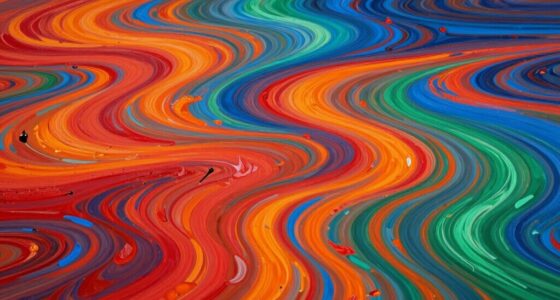

You feel calm or electric in art based on how colors, composition, and your personal experiences interact. Soft blues and greens tend to soothe, while bold reds and oranges energize. Your mood and memories also shape your reaction, making each experience unique. Harmonious schemes bring peace, while contrasting hues create excitement. To understand how these elements influence your feelings more deeply, explore how artists intentionally use color psychology and personal resonance to evoke emotions.

Prime made for students and young adults
- Fast, free delivery for dorm and study essentials
- Prime Video and Amazon Music included
- Member-only deals
Key Takeaways
- Calm art often uses soft blues and greens, promoting relaxation through color psychology.
- Electric-feeling art employs vibrant, contrasting hues to evoke energy and excitement.
- Personal associations and memories influence emotional responses to different color schemes.
- Harmonious, balanced compositions foster tranquility, while contrasting elements create tension.
- An individual’s mood and personal context shape how they perceive the emotional impact of artwork.
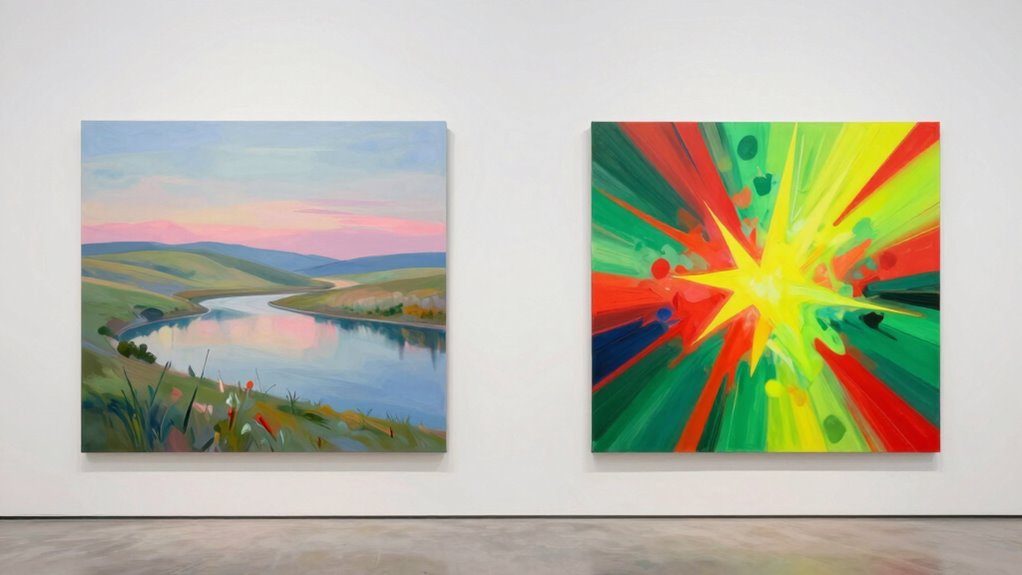
Art has a powerful way of evoking different emotional responses, with some pieces making you feel calm and others sparking excitement or energy. This emotional pull often hinges on color psychology and the emotional resonance that art creates within you. When you look at a painting or sculpture, the colors used are more than just visual choices—they’re carefully selected to influence your mood and feelings. Soft blues and gentle greens tend to promote relaxation and tranquility, tapping into your innate sense of calm. These colors are linked to serenity and stability, which is why they often appear in calming art meant to soothe viewers. Conversely, bold reds, oranges, and yellows tend to generate a sense of energy, passion, or even agitation. These vibrant hues can stimulate your senses, making you feel more alert or excited.
Colors in art evoke emotions—calm blues and greens soothe, while vibrant reds and yellows energize and excite.
The emotional resonance of art is deeply personal, rooted in your own experiences and subconscious associations. When you encounter a piece that resonates emotionally, it’s often because the colors, shapes, and subject matter connect with your inner feelings or memories. For example, a landscape with warm sunset tones might evoke feelings of nostalgia or happiness, while a stark, monochrome abstract might stir introspection or unease. The way colors interact within a composition influences your emotional response, guiding how you interpret the artwork’s mood. Some artists intentionally use color to create specific emotional effects, manipulating viewers’ feelings through color psychology to craft a particular atmosphere or message. Color psychology plays a crucial role in shaping how art impacts our emotions.
Your reaction to art isn’t purely visual; it’s also influenced by your personal context. If you’re feeling anxious, you might find certain colors more calming or, alternatively, more unsettling. The emotional resonance of a piece depends on how well its visual language aligns with your current state. When art uses harmonious color combinations and balanced compositions, it can induce feelings of peace and stability. When it employs contrasting or intense hues, it can evoke excitement or tension. Fundamentally, the emotional impact of art is shaped by the interplay of color psychology and your individual experiences, making each piece feel uniquely powerful or soothing.
In the end, whether art feels calming or electric boils down to how its colors and composition connect with you emotionally. The careful use of color psychology guides your feelings, but your personal history and mood determine your ultimate experience. That’s what makes art such a compelling and deeply personal experience—its ability to resonate differently with everyone, stirring emotions that range from peacefulness to exhilaration.
calming wall art with blue and green tones
As an affiliate, we earn on qualifying purchases.
As an affiliate, we earn on qualifying purchases.
Frequently Asked Questions
How Do Cultural Backgrounds Influence Art Perception?
Your cultural background shapes how you perceive art through cultural symbolism and artistic traditions. You interpret colors, motifs, and styles based on your personal experiences and cultural references. What feels calming in one culture might seem electric or vibrant in another. These influences guide your emotional response and understanding of the artwork, making your perception unique. By recognizing this, you can appreciate diverse artistic expressions across different cultural contexts.
Can Personal Experiences Change How Art Makes Us Feel?
Studies show that personal experiences can profoundly change how art makes you feel, with emotional resonance and personal nostalgia playing key roles. When you encounter art connected to your memories, it often evokes stronger emotional responses. Your past experiences shape your perception, making certain pieces feel calming or electric, depending on your personal history. So, yes, your individual journey influences your emotional connection to art, deepening or altering how it impacts you.
Do Color Preferences Vary Across Different Ages?
Your color preferences do vary across different ages, influenced by age-related preferences and evolving tastes. As you grow older, your perception of color symbolism shifts, often favoring calmer hues like blues and greens or more vibrant, electric shades depending on your experiences and mood. These changes reflect your personal growth, cultural influences, and emotional needs, making your color choices a dynamic reflection of your development over time.
How Does the Context of Viewing Affect Emotional Response?
You might notice that your emotional response to art shifts depending on the contextual mood and visual environment. Research suggests that a calm setting can enhance feelings of tranquility, while a vibrant, energetic environment might amplify excitement. Your mood, surroundings, and even lighting influence how you perceive art, making the same piece evoke different emotions. So, your experience isn’t just about the art itself but also how and where you view it.
Are There Psychological Traits Linked to Art Preference?
Yes, your psychological traits influence your art preferences. If you tend to seek emotional resonance, you might prefer art that evokes calmness and familiarity. Conversely, if you enjoy visual complexity and stimulation, electric art may appeal more to you. Your personality, mood, and openness to new experiences shape how you respond to different styles, making your art taste uniquely yours. These traits guide how you connect emotionally with various artworks.
energizing abstract paintings with bold reds and oranges
As an affiliate, we earn on qualifying purchases.
As an affiliate, we earn on qualifying purchases.
Conclusion
Ultimately, the art that stirs your soul hinges on the dance between chaos and calm within your own mind. Like a symphony, some pieces soothe with gentle melodies, while others ignite your spirit with electric energy. Remember, it’s not just the colors or forms, but how they resonate with your inner rhythm that determines their power. So, trust your instincts—after all, isn’t it the harmony or dissonance that makes art truly unforgettable?
As an affiliate, we earn on qualifying purchases.
personalized emotional resonance artwork
As an affiliate, we earn on qualifying purchases.
As an affiliate, we earn on qualifying purchases.
Fall Picks
fall essentials
As an affiliate, we earn on qualifying purchases.