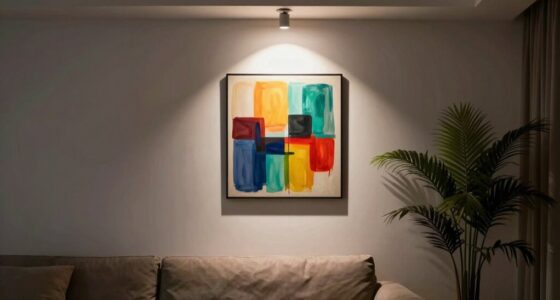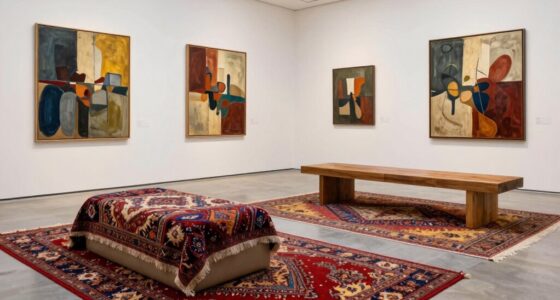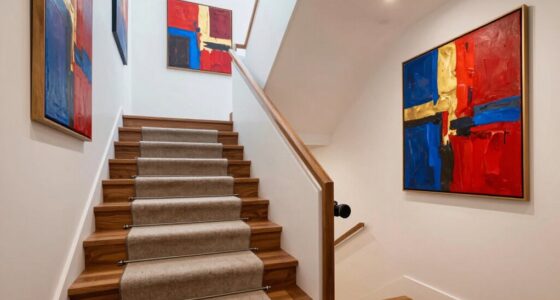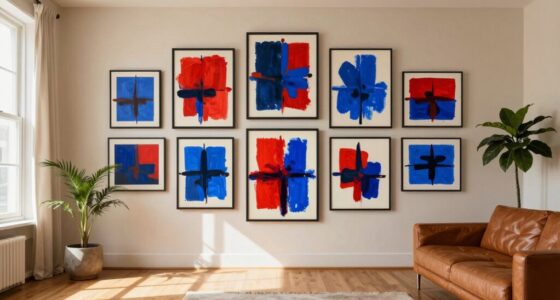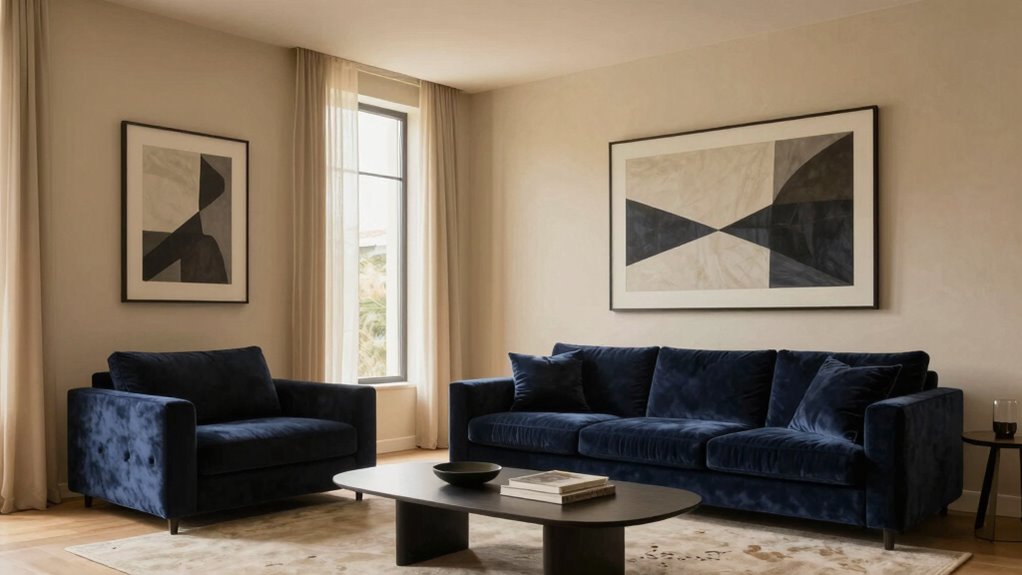

To choose the right artwork, start by observing the room’s colors, lighting, and style. Notice if the walls are neutral or bold, and consider how natural light affects the space. Think about the mood you want to create—calm or lively—and match artwork styles accordingly. Assess the size of your furniture and the room’s proportions to pick pieces that fit well. Keep exploring to discover more tips that help you perfectly complement your space.

Prime made for students and young adults
- Fast, free delivery for dorm and study essentials
- Prime Video and Amazon Music included
- Member-only deals
Key Takeaways
- Observe the room’s overall color scheme and lighting to determine suitable artwork tones and materials.
- Identify the room’s style and purpose to select art that complements or intentionally contrasts existing decor.
- Assess the desired mood or atmosphere to guide choices in colors, themes, and styles of artwork.
- Measure space dimensions and furniture scale to ensure artwork size and placement are proportionate.
- Note lighting conditions throughout the day to choose artwork materials and colors that enhance the room’s ambiance.
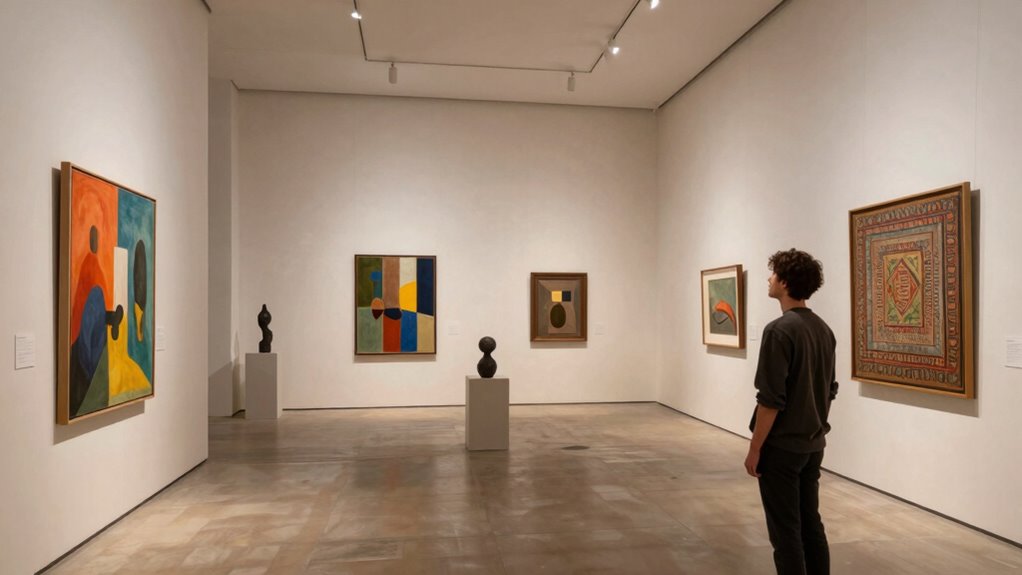
Before selecting artwork for a space, it’s essential to understand the room’s personality and atmosphere. Every room has its unique vibe, influenced by its purpose, existing decor, and how it’s used daily. To truly find artwork that complements the space, you need to observe and analyze its current elements. Start by examining the color schemes present. Are the walls painted in neutral tones, or do they feature bold, vibrant hues? The colors already dominant in the room will influence your choice of artwork. For example, if the room features soft pastels, you might opt for pieces that incorporate similar gentle tones to create harmony. Conversely, in a space with darker or more intense colors, bold, contrasting artwork can add a striking focal point without clashing with the surroundings. It’s also helpful to consider the room’s lighting conditions, as natural light can significantly affect how artwork appears and interacts with the environment. Lighting conditions play a vital role in how artwork will look and feel in the room. Natural light, whether abundant or limited, can change the perception of colors and textures. A room flooded with sunlight can make bright, lively artwork shine, but it might also cause delicate pieces to fade over time. In contrast, a dimly lit space may require artwork with more vivid hues or reflective surfaces to bring life to the room. Pay attention to how the light changes throughout the day, as this will impact your decision. For instance, if a space receives direct sunlight for most of the day, choosing artwork with UV-resistant materials or glass can help preserve it. If the lighting is warm and soft, cooler-toned artwork can create a calming effect, enhancing the room’s ambiance. Additionally, understanding the room’s overall style and function** can help guide your choices, ensuring that your artwork aligns with the space’s primary purpose and aesthetic. Recognizing the desired ambiance or mood you want to create is also crucial, as it influences your selection of colors, styles, and themes to evoke the right feelings in the space. Beyond color schemes and lighting, consider the overall style and function of the room. Is it a lively living area meant for entertaining, or a tranquil bedroom designed for relaxation? The mood you want to evoke should guide your artwork choices. For a lively space, energetic abstracts or colorful modern pieces work well. For a serene atmosphere, opt for soothing landscapes or minimalist designs. Also, observe the existing furniture and decor to see if they lean toward traditional, contemporary, or eclectic styles. Your artwork should complement these elements, either blending seamlessly or providing a deliberate contrast for visual interest. Moreover, understanding the scale and proportion of the artwork relative to the space is key to creating a balanced and harmonious look. A good rule of thumb is to consider the room’s dimensions** carefully to ensure the artwork enhances rather than overwhelms the environment.
As an affiliate, we earn on qualifying purchases.
Frequently Asked Questions
How Do Lighting Conditions Affect Artwork Choices?
Lighting conditions greatly influence your artwork choices. Natural light can highlight colors and details, so opt for pieces that shine under daylight. Artificial lighting, like spotlights or warm bulbs, can create ambiance but may alter how colors appear. Consider how the room’s light changes throughout the day and choose artworks that look good in both natural and artificial light, ensuring they enhance your space at all times.
What Colors Best Complement Different Room Styles?
You should choose colors that match your room’s style and evoke the right mood, guided by color psychology. For modern spaces, opt for bold, vibrant hues to energize the room, while soft pastels create calming atmospheres in traditional settings. Consider artistic themes too; abstract works suit contemporary rooms, whereas nature-inspired pieces complement rustic designs. Balancing these elements helps you select artwork that enhances your space and reflects your personality.
How Can Furniture Influence Artwork Selection?
Furniture influences your artwork choice by highlighting the importance of scale and seating arrangement. Larger furniture calls for bigger, bolder pieces to create balance, while smaller furniture suits more delicate artwork. Consider the seating arrangement to guarantee the artwork complements the flow of the space, making it inviting. You want the artwork to enhance your furniture and not compete with it, creating harmony and visual interest in the room.
What Are Common Mistakes When Choosing Artwork?
A common mistake when choosing wall art is prioritizing personal taste over aesthetic harmony with the room. You might pick a piece that doesn’t complement your existing decor or size, making the space feel unbalanced. Avoid cluttering walls or selecting art that clashes with the room’s color scheme. Instead, focus on selecting artwork that enhances the overall aesthetic harmony, creating a cohesive and inviting atmosphere in your space.
How Do Room Size and Proportions Impact Artwork Size?
Imagine you’re a medieval knight, sizing up your armor—room size and proportions matter just as much. When choosing artwork, consider scale harmony; a large piece in a small space can feel overwhelming, while a tiny artwork in a grand room may seem lost. Focus on proportion balance to guarantee the art complements the room’s dimensions, creating a cohesive visual flow that feels just right, not awkward or out of place.
As an affiliate, we earn on qualifying purchases.
Conclusion
By understanding the room’s size, lighting, and existing decor, you guarantee your artwork complements rather than clashes. Remember, about 70% of people feel more relaxed and engaged in spaces where artwork is thoughtfully chosen to match the environment. Taking the time to read the room helps you select pieces that truly resonate, creating a harmonious and inviting atmosphere. So, trust your instincts and let the room guide your artistic choices for a beautiful, balanced space.
calming pastel artwork for bedroom
As an affiliate, we earn on qualifying purchases.
As an affiliate, we earn on qualifying purchases.
modern abstract artwork for office
As an affiliate, we earn on qualifying purchases.
As an affiliate, we earn on qualifying purchases.
Halloween Picks
halloween
As an affiliate, we earn on qualifying purchases.