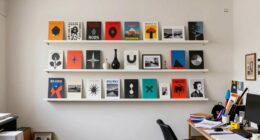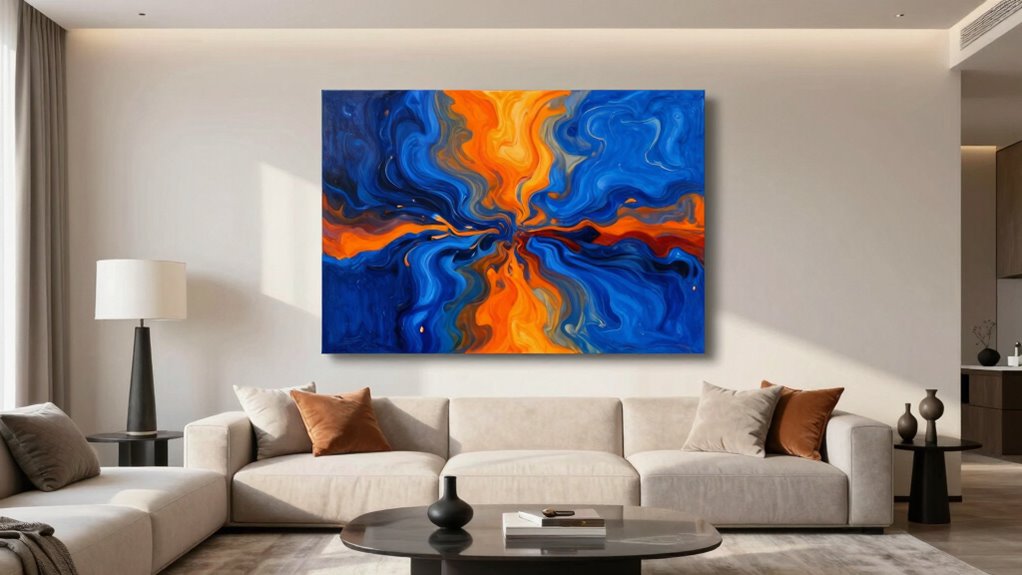

To think about art as part of interior flow, see it as a way to guide the eye and create emotional rhythm throughout your space. You can use artwork to connect different zones and reflect the mood you want in each area. Consider size, placement, and how the pieces relate to furniture and architecture. By weaving art into your overall layout, you’ll make your home feel more cohesive and inviting—there’s much more to discover for creating a truly harmonious flow.

Prime made for students and young adults
- Fast, free delivery for dorm and study essentials
- Prime Video and Amazon Music included
- Member-only deals
Key Takeaways
- Select artwork that guides the eye naturally and creates a visual pathway through different zones.
- Ensure the size and placement of art relate to surrounding furniture and architectural features for harmony.
- Use art to establish emotional tones that connect and unify separate areas within the space.
- Curate collections and mix styles thoughtfully to maintain visual rhythm and cohesion.
- Position art to enhance spatial relationships, fostering a seamless flow and inviting environment.
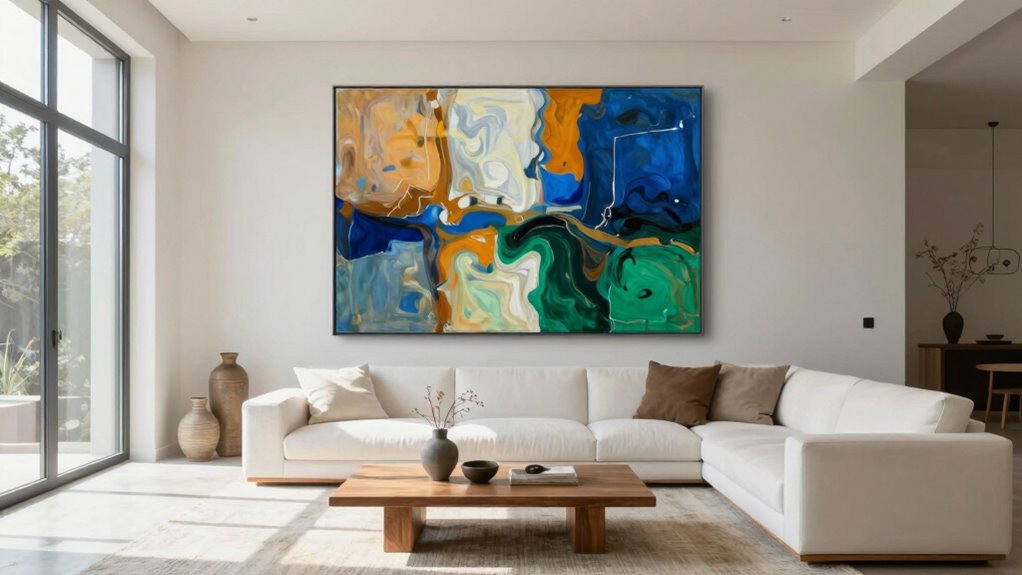
Have you ever wondered how art can seamlessly enhance the flow of your interior space? It’s more than just filling walls with pretty pictures; it’s about creating a cohesive environment where every piece contributes to the overall experience. When you think of art as part of interior flow, you’re focusing on its emotional impact and how it fosters spatial harmony. Art should evoke feelings and connect different areas of your space, guiding the eye naturally from one zone to another.
Instead of randomly hanging artworks, contemplate how each piece influences the mood of the room. A bold, vibrant painting can energize a living area, while softer, muted tones might soothe a bedroom. By aligning artwork with the emotional tone you want to set, you create a rhythm that complements your space’s purpose. This emotional impact helps you feel more at home and invites others to experience the same sense of comfort or excitement you desire. When art resonates emotionally, it becomes an extension of your personality, making your space uniquely yours.
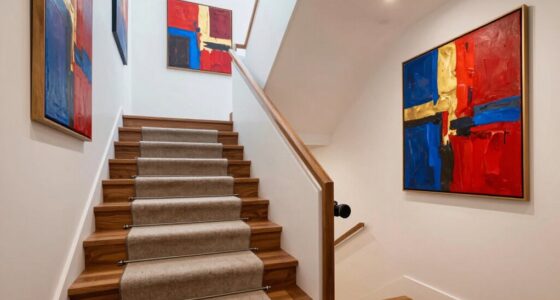
Spatial harmony is equally essential. Think about how the size, scale, and placement of your art pieces relate to the surrounding furniture and architectural features. Large canvases work best in spacious areas, while smaller works fit well in cozy nooks. Proper placement ensures that art doesn’t feel out of place but instead enhances the flow between different parts of your home. For example, hanging a series of smaller images along a corridor can create a visual journey, leading your gaze smoothly from one area to the next. When every piece is thoughtfully positioned, it helps unify the space rather than fragment it. Incorporating spatial considerations into your art placement can significantly improve the overall harmony of your interior.
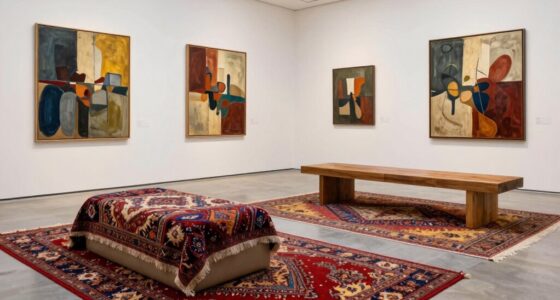
You also want to reflect on the visual rhythm created by your collection of artworks. Mixing different styles, textures, and colors can maintain visual interest, but it’s essential to do so thoughtfully. Achieving balance between diversity and cohesion ensures that your interior feels harmonious rather than chaotic. Art, in this sense, acts as a connective thread, tying together elements like furniture, lighting, and architecture, making the entire space feel unified and purposeful. Recognizing the importance of interior flow can guide your decisions to create a harmonious and inviting environment.
As an affiliate, we earn on qualifying purchases.
Frequently Asked Questions
How Can Art Influence the Emotional Atmosphere of a Space?
Art influences the emotional atmosphere of your space by creating emotional resonance and enhancing mood. When you choose pieces that resonate with your feelings, they evoke specific emotions, making the environment more inviting or calming. Strategic placement and color choices amplify this effect, guiding how you and others feel when entering. This deliberate integration transforms art from mere decoration into a essential component of your space’s overall ambiance.
What Are Common Mistakes When Integrating Art Into Interior Design?
You might overlook the importance of thoughtful art placement and color coordination, which can disrupt your space’s harmony. Avoid crowding artwork or placing it in awkward spots; instead, let pieces breathe within the flow. Misjudging color schemes can clash with your interior palette, pulling focus away. Be mindful of scale and style, ensuring your art enhances rather than competes with your room’s overall aesthetic.
How Do Different Art Styles Affect Interior Flow?
Different art styles influence your interior flow by creating distinct moods and visual pathways. Color harmony between artworks and your space enhances cohesion, making shifts seamless. Conversely, style contrast adds visual interest and energy, guiding your eye through rooms dynamically. You can balance these effects by choosing artworks that complement or contrast with your décor, ensuring your interior remains harmonious while reflecting your personality. This approach keeps your space engaging and well-integrated.
Should Art Be Functional or Purely Decorative in Interior Design?
You should aim for art that’s both functional and decorative in your interior design. Focus on art placement that enhances the space’s flow, while color coordination ties everything together seamlessly. Choose pieces that reflect your personality and complement the room’s palette. When art serves a purpose—like a decorative mirror or a stylish wall clock—you blend aesthetic appeal with practicality, creating a cohesive environment that feels intentional and inviting.
How Can I Choose Art That Complements My Existing Furniture?
To choose art that complements your existing furniture, focus on color harmony and style contrast. Pick pieces that incorporate colors from your furniture or surroundings to create a cohesive look. Meanwhile, select artwork with contrasting styles—like modern art with classic furniture—to add visual interest and balance. This approach guarantees your art enhances your space’s flow, making it feel intentional and harmonious rather than disjointed.
As an affiliate, we earn on qualifying purchases.
Conclusion
Remember, art isn’t just decoration—it’s the heartbeat of your space, guiding the flow like a silent conductor. While furniture provides structure, art adds rhythm and emotion, transforming a room from static to soulful. Think of your decor as a symphony, where each piece, including art, plays an essential role. When you embrace this perspective, your interior becomes more than design; it becomes an experience—dynamic, intentional, and uniquely yours.
As an affiliate, we earn on qualifying purchases.
abstract artwork for living room
As an affiliate, we earn on qualifying purchases.
As an affiliate, we earn on qualifying purchases.
Fall Picks
fall essentials
As an affiliate, we earn on qualifying purchases.