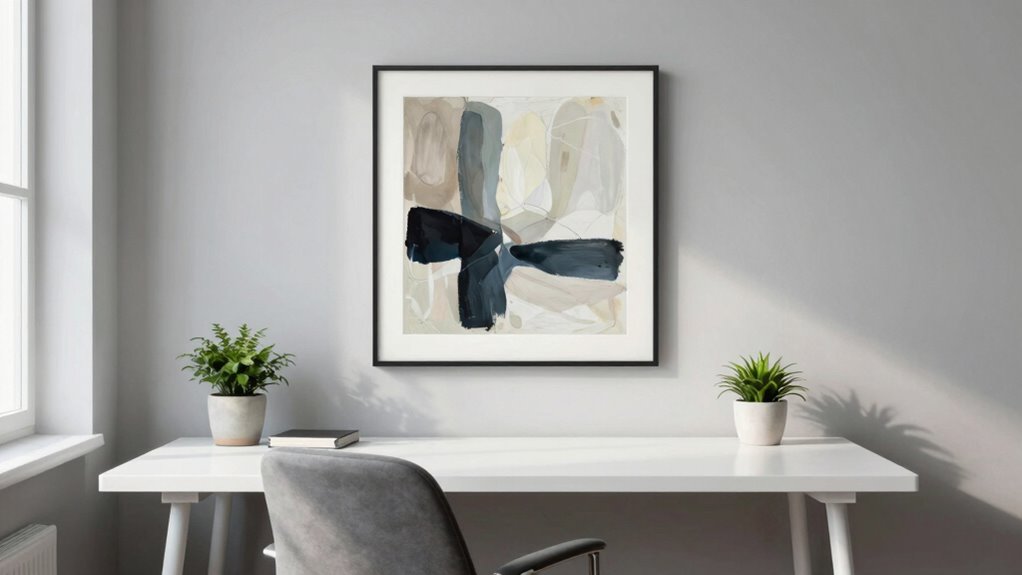
To display art in your home office without distraction, choose pieces that motivate yet blend seamlessly with your space. Use subtle pops of color and subdued shades to create harmony, avoiding overwhelming visuals. Place artwork on side walls or less visible spots, ensuring the size complements your wall without dominating it. Opt for strategic lighting to highlight pieces softly, without glare. If you want to learn which arrangements boost focus, keep exploring how to integrate art thoughtfully.
Key Takeaways
- Choose artwork with subtle colors and minimal detail to prevent visual overload.
- Hang art in less prominent areas or side walls to avoid direct distraction while working.
- Use appropriate lighting to highlight art softly without causing glare or drawing focus away.
- Ensure artwork size and placement complement the space, creating harmony without overwhelming the room.
- Incorporate art that inspires and motivates subtly, balancing visual interest with productivity.
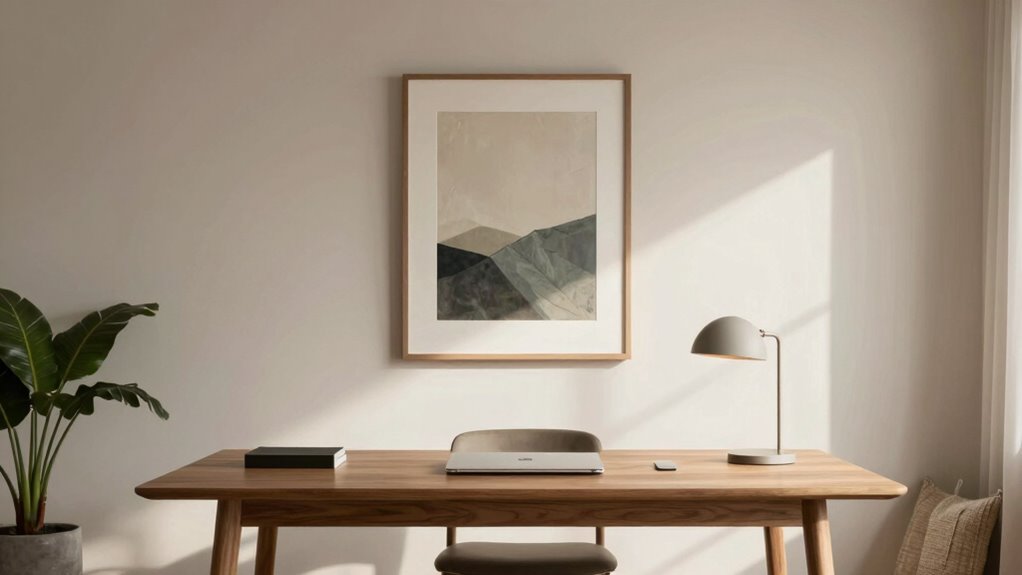
Creating a productive home office often means balancing inspiration with focus, especially when it comes to decorating. One way to do this is by thoughtfully displaying art that motivates without overwhelming your workspace. To achieve this, you need to contemplate how color coordination and lighting techniques influence the overall environment. Selecting artwork with colors that complement your existing decor can help create a harmonious vibe, making the art feel integrated rather than disruptive. For example, if your office features neutral tones, choose pieces with subtle pops of color that energize the space without stealing your attention away from work. Conversely, if your space already has bold hues, opt for artwork with more subdued shades to maintain balance.
Balance inspiration and focus with harmonious art and lighting in your home office.
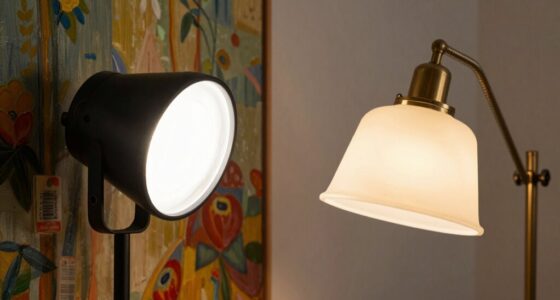
Lighting techniques play a vital role in presenting art without distraction. Natural light is ideal, so position your artwork where it can be illuminated by sunlight during the day. This not only highlights the art but also keeps the space feeling open and inviting. If natural light isn’t enough, use directed lighting, like adjustable wall-mounted lamps or picture lights, to showcase your favorite pieces subtly. Be cautious not to place lights directly on the art in a way that causes glare or reflections, which can become a visual distraction. Instead, aim for soft, ambient lighting that enhances the artwork’s presence without overpowering your workspace. Proper lighting techniques can significantly influence how artwork is perceived and its impact on your focus. Additionally, understanding the role of visual harmony can help you create a balanced environment that promotes concentration. Incorporating visual hierarchy into your decor choices can further help emphasize focal points without overwhelming the senses. Establishing a clear visual rhythm with your artwork can also guide the eye naturally across the space, reducing visual clutter.
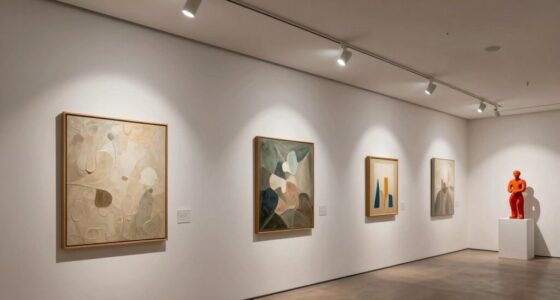
When deciding where to display art, think about placement carefully. Avoid hanging pieces directly behind your desk or in areas where you frequently look up, as this can draw your gaze away from your tasks. Instead, position art on side walls or in areas that are visible but don’t compete with your primary focus. Keep the size of the artwork proportionate to the wall space; larger pieces can act as a focal point, but they shouldn’t dominate the room. Small, carefully chosen pieces can add personality without cluttering your visual field. Incorporating visual balance into your decor choices can further enhance the calming effect of your workspace.
Ultimately, the key to displaying art without distraction is moderation. Use color coordination to create a cohesive look that enhances your mood and focus, and adopt lighting techniques that highlight your art subtly. By thoughtfully integrating artwork into your home office, you can enjoy the inspiration they bring without sacrificing productivity. The goal is to create a space that feels both motivating and calming, where art enhances your environment without pulling your attention away during busy work moments.
subtle art prints for home office
As an affiliate, we earn on qualifying purchases.
As an affiliate, we earn on qualifying purchases.
Frequently Asked Questions
How Can I Choose Artwork That Boosts Productivity?
To boost productivity, choose artwork that inspires and energizes you, like motivational quotes or calming abstract designs. Select pieces with colors and styles that promote focus without overwhelming your space. Keep the artwork simple and strategically placed to avoid distraction. When you surround yourself with motivating visuals, you create a positive environment that encourages concentration and creativity, helping you stay productive throughout your workday.
What Colors Are Best for a Calming Home Office?
For a calming home office, opt for soft, muted colors like blues, greens, or neutrals. According to color psychology, these hues promote relaxation and focus. You want visual harmony, so choose artwork that complements your space without overwhelming it. Avoid bright or intense colors that could cause distraction. Instead, select calming tones that create a peaceful environment, helping you stay centered and productive throughout your workday.
How Often Should I Rotate or Change My Artwork?
Think of your artwork as a garden that needs seasonal pruning; you should rotate your art every 3-6 months to keep your space fresh and inspiring. Keep an art storage plan for pieces not on display, and create an artwork rotation schedule to prevent distraction. Regularly changing art guarantees your home office remains vibrant, stimulating productivity without overwhelming your focus.
Can Artwork Affect My Focus or Concentration Levels?
Artwork can influence your focus or concentration levels, especially if placed poorly. Proper art placement helps create a calming environment, reducing visual clutter that might distract you. Choosing minimal, meaningful pieces and avoiding overloading your space keeps your mind clear. When art is thoughtfully integrated, it can inspire creativity and motivation without compromising your productivity, making your home office a balanced, inspiring workspace.
What Are Some Budget-Friendly Art Display Ideas?
You don’t need to spend a fortune to make your home office inspiring. Grab some affordable frames and showcase your favorite prints or photos. Get creative with DIY wall art—think painted canvases or collaged posters. It’s ironic how spending less can make your space more personalized and stylish. With a little effort, you’ll turn your office into a motivating environment without breaking the bank.
adjustable wall-mounted picture lights
As an affiliate, we earn on qualifying purchases.
As an affiliate, we earn on qualifying purchases.
Conclusion
Remember, striking the right balance with art in your home office can boost creativity without causing distraction. Did you know that 65% of remote workers say a well-designed workspace improves their focus? By choosing meaningful, calming pieces and placing them thoughtfully, you create an inspiring environment that fuels productivity. Keep art subtle and intentional—your workspace can be both beautiful and functional, helping you stay motivated and centered throughout your workday.
neutral color artwork for workspace
As an affiliate, we earn on qualifying purchases.
As an affiliate, we earn on qualifying purchases.
soft ambient lighting for home office
As an affiliate, we earn on qualifying purchases.
As an affiliate, we earn on qualifying purchases.