
To create depth in flat, minimal interiors, choose bold, contrasting artwork that acts as visual anchors. Layer art by overlapping frames, mixing sizes, or placing pieces in front of textured backgrounds. Incorporate diverse mediums and styles to add richness, while maintaining balance with thoughtful placement. Use pops of color to break monotony and avoid cluttering with too many small pieces. With these techniques, you’ll discover how art can transform simple spaces into vibrant, layered environments.

Prime made for students and young adults
- Fast, free delivery for dorm and study essentials
- Prime Video and Amazon Music included
- Member-only deals
Key Takeaways
- Incorporate bold, contrasting artwork to add visual depth and prevent flatness in minimal spaces.
- Layer art with textured backgrounds or overlapping frames for enhanced dimensionality.
- Use varying sizes and spacing of art pieces to create a sense of depth and visual interest.
- Mix different mediums and styles to introduce richness and tactile complexity.
- Strategically position art as focal points to anchor the room and add layered perception.
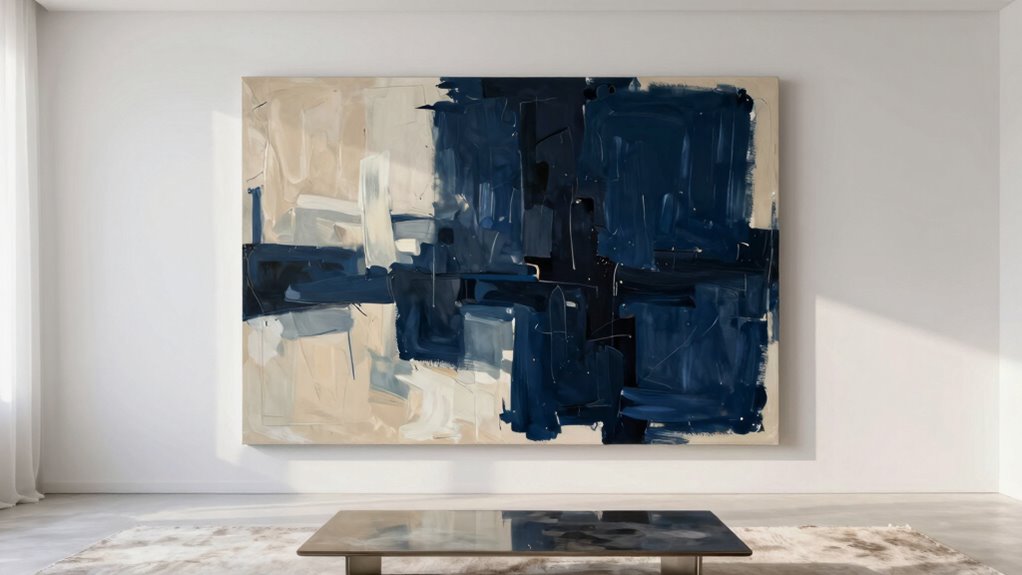
Have you ever wondered how to make a flat, minimal interior feel more inviting and layered? One of the simplest ways to achieve this is through the strategic use of art. Art pieces can serve as focal points that add visual interest and depth, transforming a stark space into a more dynamic environment. To do this effectively, you need to contemplate how color contrast and layering techniques play into your overall design.
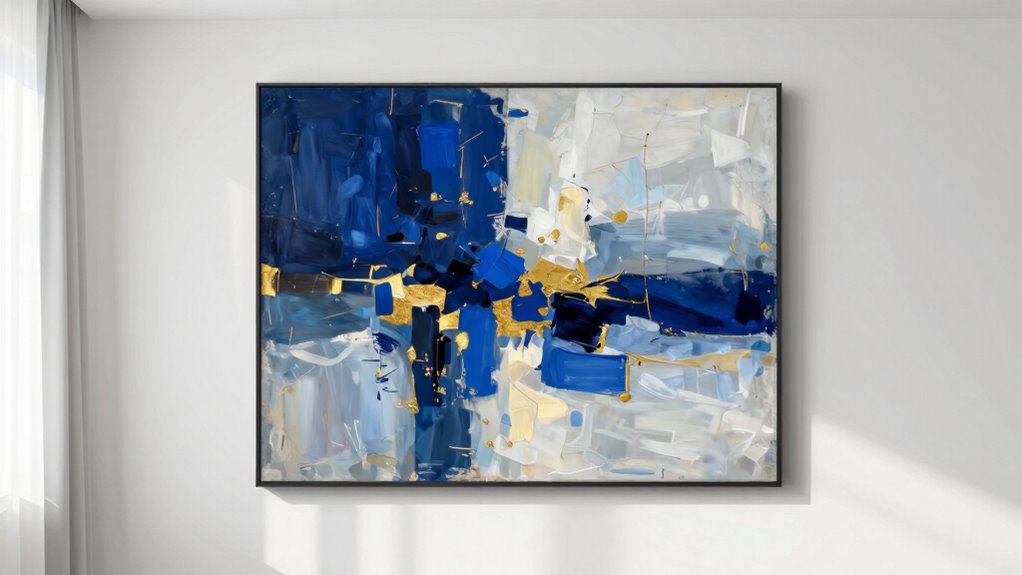
Color contrast is your best friend when it comes to creating depth with art. Instead of sticking with muted, monochromatic pieces, choose artworks that incorporate bold or contrasting hues. For example, a painting with vibrant reds against a neutral wall instantly catches the eye and creates a sense of dimension. These pops of color break up the uniformity of a minimal palette and make the space feel more alive. You don’t need to fill every wall with color; even a single, striking piece can serve as a visual anchor, pulling the room together and adding depth.
Bold, contrasting art pieces bring depth and vibrancy to minimalist spaces, creating visual interest and a lively atmosphere.
Layering techniques are equally important. Think beyond simply hanging art on the wall; ponder how pieces can interplay with other elements in the room to add complexity. Overlapping frames, combining different sizes, or placing art in front of textured backgrounds can generate a sense of layering that lends depth. For instance, hang a large piece slightly in front of a textured wallpaper or lean a series of smaller artworks against the wall on a console table. This creates a multi-dimensional effect, making the space feel less flat and more curated. You can also layer art with other decorative elements like plants, sculptures, or textiles to further enhance the depth. Incorporating visual textures into your arrangement can elevate the sense of richness and tactility, making the space feel more nuanced. Additionally, paying attention to visual balance ensures that the layered art remains harmonious and visually appealing.
Another effective method involves mixing mediums and styles. Combining photographs, paintings, and abstract pieces exposes your space to different visual textures, which naturally adds layers of interest. The key is to maintain a cohesive color scheme so that these diverse pieces don’t create visual chaos but instead work harmoniously to add depth. Be mindful of spacing and scale; too many small artworks close together can feel cluttered, while well-spaced larger pieces help establish a sense of balance and depth. Incorporating diverse styles and textures can also evoke a richer atmosphere, especially when aligned with sustainable living practices that emphasize harmony and natural beauty.
Ultimately, creating depth in a flat, minimal space hinges on your ability to thoughtfully incorporate art through color contrast and layering techniques. Use these strategies to introduce subtle complexity without overwhelming the simplicity that defines your style. With careful selection and placement, your art can turn a plain room into a layered, inviting space that feels rich and well-curated.
bold abstract wall art for minimal interiors
As an affiliate, we earn on qualifying purchases.
As an affiliate, we earn on qualifying purchases.
Frequently Asked Questions
What Types of Artwork Work Best for Minimal Interiors?
You should choose artwork with abstract textures or geometric patterns for minimal interiors. These pieces add visual interest without overwhelming the space, maintaining a clean look. Abstract textures can create subtle depth and movement, while geometric patterns add structure and modern appeal. Opt for pieces in neutral tones or monochrome palettes to keep the aesthetic sleek. This approach enhances depth and dimension while preserving the minimalist vibe.
How Do I Choose the Right Color Palette for Art?
You choose the right color palette by focusing on color contrast and mood evocation. Pick colors that create visual contrast to add depth without overwhelming the space. Consider the mood you want to evoke; soft, muted tones foster calmness, while bold hues energize. Stick to a limited palette for minimalism’s clean look, but use contrasting shades to highlight art pieces and add subtle depth to your interior.
Can Art Make Small Spaces Feel Larger?
Yes, art can make small spaces feel larger by creating spatial illusions and visual layering. You should choose pieces with perspective or that extend beyond the wall, drawing the eye inward. Large artwork or pieces with a sense of depth add dimension, making your space seem more expansive. Strategically placing art at eye level and using light colors can also enhance the effect, transforming a compact room into a more open, inviting area.
How Often Should I Update or Change My Artwork?
You should update or change your artwork every few months to keep your space fresh and engaging. Regular art preservation and artwork rotation prevent pieces from fading or deteriorating, ensuring your collection stays vibrant. This also sparks new visual interest and allows you to experiment with different styles. Don’t wait too long—timing depends on your personal style, but frequent updates keep your minimal interior dynamic and enthralling.
What Framing Styles Enhance Depth in Minimal Settings?
Opt for framing styles that incorporate frame layering to add physical depth, such as multiple mats or shadow box frames. These create shadow effects that enhance the sense of dimension without cluttering your minimal space. Choose slim, sleek frames with subtle detailing to maintain simplicity, while still allowing the layered frames to cast shadows and add visual interest. This approach effectively enhances depth, making your artwork stand out in a clean, minimal setting.
layered picture frames for wall decor
As an affiliate, we earn on qualifying purchases.
As an affiliate, we earn on qualifying purchases.
Conclusion
By thoughtfully choosing and placing art, you transform flat, minimal spaces into visual journeys that invite exploration. Remember, art isn’t just decoration—it’s your secret weapon to add depth and dimension. Like a well-placed window to another world, your artwork can turn a simple room into an immersive experience. So, embrace your creative intuition, and let your art tell a story that pulls viewers in and keeps them captivated—because depth isn’t just seen, it’s felt.
As an affiliate, we earn on qualifying purchases.
mix medium artwork for living room
As an affiliate, we earn on qualifying purchases.
As an affiliate, we earn on qualifying purchases.
Fall Picks
fall essentials
As an affiliate, we earn on qualifying purchases.