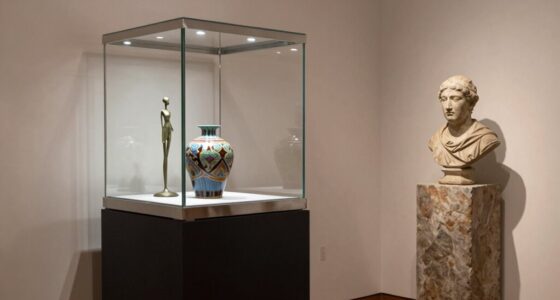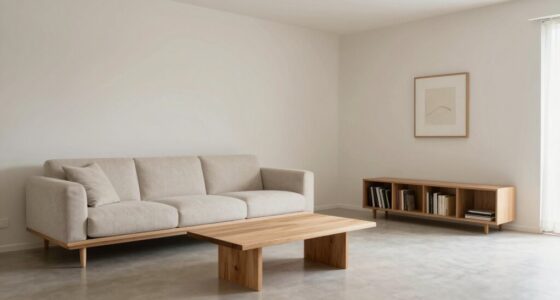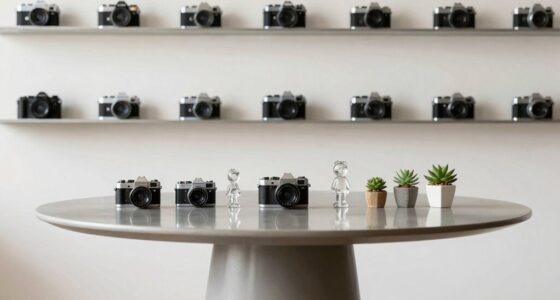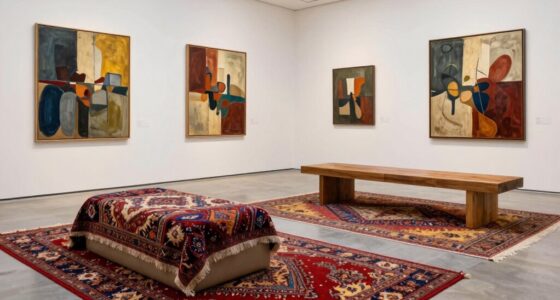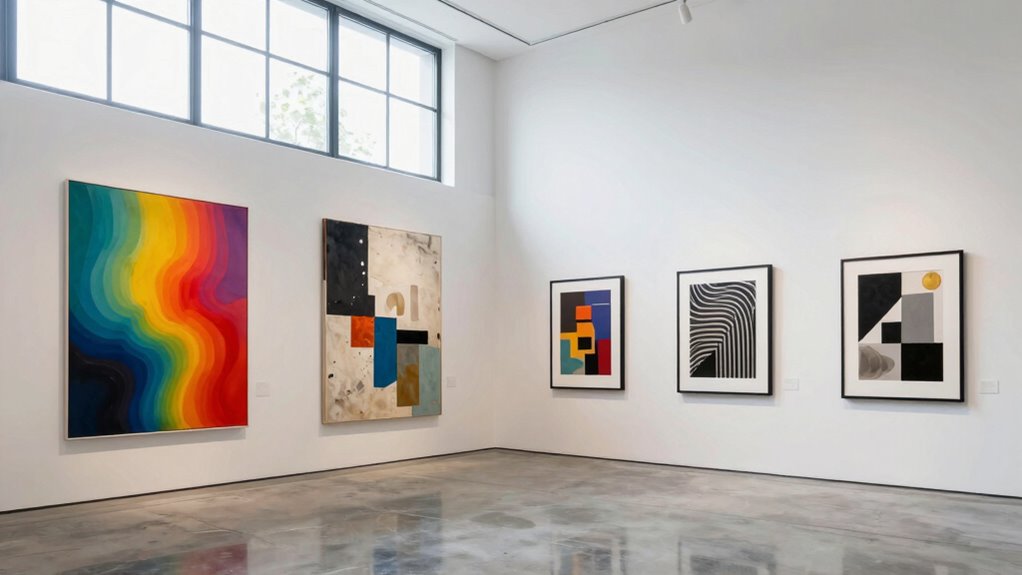

To effectively mix photography, paintings, and prints, start by choosing a unifying color scheme that ties the pieces together, using vibrant photos for contrast or subdued art to match bold palettes. Select frames that complement each other, whether consistent or eclectic, and arrange your artwork based on visual hierarchy for balance. Play with grouping and spacing to create an organic, curated look. Keep these principles in mind, and you’ll craft a harmonious display that truly reflects your style.

Prime made for students and young adults
- Fast, free delivery for dorm and study essentials
- Prime Video and Amazon Music included
- Member-only deals
Key Takeaways
- Coordinate colors across photography, paintings, and prints to create visual harmony or intentional contrast within the room’s color scheme.
- Select frames that complement each piece and unify the display, whether through consistent finishes or complementary styles.
- Arrange artwork with a clear visual hierarchy, mixing larger focal pieces with smaller works for balance and interest.
- Group similar styles or themes to create cohesive sections, breaking traditional grid patterns for a more organic, curated look.
- Consider the overall decor style, using artwork as a reflection of personal taste to craft a lively, harmonious space.
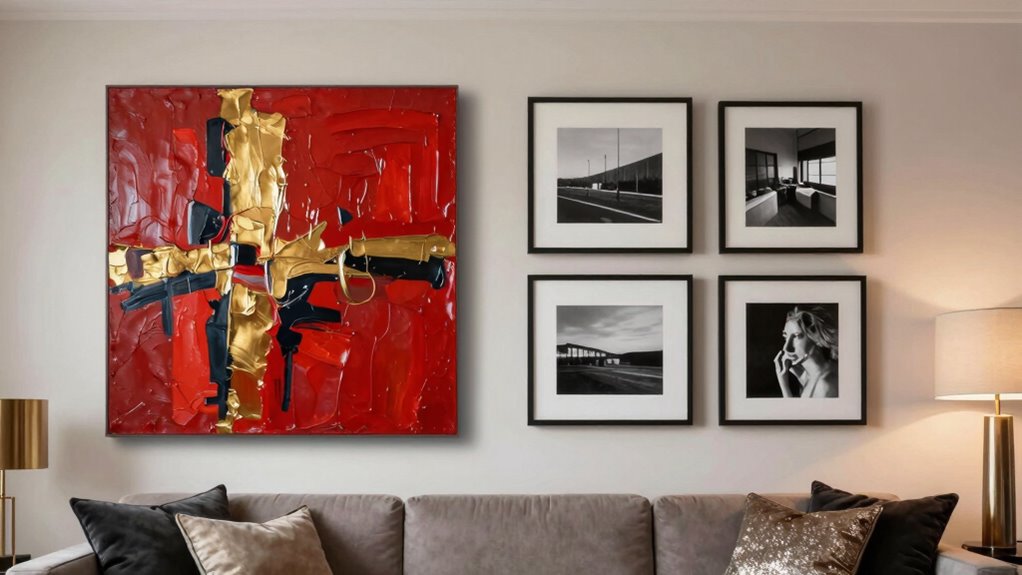
Blending photography, paintings, and prints in one space can create a dynamic and personalized environment, but it requires thoughtful planning to achieve harmony. The key to pulling off this mix successfully lies in understanding how elements like color coordination and frame selection work together to tie everything together. When you start arranging different types of artwork, it’s tempting to focus solely on the images or styles. However, paying attention to color and framing will make your collection feel cohesive rather than chaotic.
First, consider color coordination. You want the artwork to complement the overall color scheme of your room. If your space features neutral tones, you can introduce pops of color through vibrant photographs or prints. Conversely, if the room already has a bold palette, select artwork with more subdued or monochromatic tones to balance the visual weight. Think about creating a visual flow: use similar hues across different pieces to establish a sense of unity or contrast complementary colors for added interest. This doesn’t mean every piece must match perfectly; instead, aim for a harmonious palette that guides the eye smoothly from one piece to the next.
Use harmonious or contrasting colors to create visual flow and unity in your artwork arrangement.
Frame selection is equally important. The frames you choose can either unify or divide your artwork. For a cohesive look, pick frames that share the same finish or style—think sleek black frames for a modern vibe or ornate gold for a more classic feel. If you prefer an eclectic look, mix frame styles but keep a common element, like color or material, to tie everything together. Consider how frames interact with your room’s decor: a thin, minimalist frame can let the art speak for itself, while a thicker, decorative frame can add emphasis and character. Be mindful of the size of your frames; larger frames can serve as focal points, while smaller ones work well in grouped arrangements. Additionally, understanding art placement principles can help you create a balanced and engaging display. Incorporating visual hierarchy can further emphasize your favorite pieces and add depth to your arrangement. Moreover, studying art arrangement techniques can help you develop an intuitive sense of spacing and balance, making your display more visually appealing.
When arranging your art, think about balance and spacing. Group similar pieces together, but don’t be afraid to break the grid for a more organic feel. As you hang your artwork, step back periodically to assess how the colors and frames interact, making adjustments as needed. The goal is to create a curated look that feels intentional rather than cluttered.
In the end, successfully mixing photography, paintings, and prints hinges on your attention to color coordination and frame selection. With thoughtful choices and a keen eye for how these elements play off each other, you’ll craft a space that’s both lively and harmonious—a true reflection of your personal style.
As an affiliate, we earn on qualifying purchases.
Frequently Asked Questions
How Do I Choose a Color Scheme for Mixed Media Spaces?
To choose a color scheme for mixed media spaces, focus on color harmony to create a cohesive look. Pick a base color and add complementary or analogous shades to balance the space. Think about mood setting—calm, vibrant, or sophisticated—then select colors that evoke that feeling. Use neutral tones as a backdrop to let your artwork stand out, and make certain your palette enhances the overall atmosphere of your combined media display.
What Lighting Options Enhance Mixed Photography and Art Displays?
You should incorporate natural illumination to highlight your mixed media displays, as it brings out true colors and details. Complement this with accent lighting, such as adjustable spotlights or track lights, to emphasize specific artworks or photographs. Opt for warm or neutral tones in your lighting to create a welcoming atmosphere. Combining these options guarantees your art and photography are showcased beautifully, enhancing their visual impact in your space.
How Should I Arrange Artwork for Optimal Visual Balance?
Think of your wall as a symphony, where each piece plays its part in harmony. You should arrange artwork based on gallery arrangement principles, ensuring visual weight is balanced across the space. Place your focal point strategically at eye level and anchor larger pieces in the center or along key sightlines. Mix sizes and styles thoughtfully, leaving enough space between works to allow each piece to breathe and shine.
Are There Specific Wall Textures That Work Best for Mixed Media?
You’ll want to choose wall surfaces with subtle textures like smooth plaster, matte paint, or lightly textured wallpaper, as they enhance mixed media without overwhelming it. These textures boost visual interest and provide a balanced backdrop that complements photography, paintings, and prints. Avoid overly textured or glossy surfaces, which can distract or cause reflections. Opt for wall surface textures that subtly enhance your artwork’s depth and detail, creating a harmonious display.
How Can I Incorporate Digital Prints Seamlessly With Paintings?
To incorporate digital prints seamlessly with paintings, start with digital print integration by choosing prints that complement your paintings’ colors and themes. Use painting display techniques like framing or mounting prints with similar textures or finishes. Layer digital prints behind or alongside paintings, creating visual harmony. Consider mixing media on the same wall to balance textures, and experiment with digital overlays or collage styles to blend images smoothly for a cohesive look.
As an affiliate, we earn on qualifying purchases.
Conclusion
Blending photography, painting, and prints creates a dynamic, personalized space that reflects your unique style. When done thoughtfully, it can boost your mood and inspire creativity—studies show that well-curated art in your environment can increase happiness by up to 25%. So, trust your instincts, experiment with different placements, and don’t be afraid to mix mediums. Your perfect, harmonious art space is within reach, ready to energize your daily life and spark your imagination.
decorative photo frames for wall
As an affiliate, we earn on qualifying purchases.
As an affiliate, we earn on qualifying purchases.
As an affiliate, we earn on qualifying purchases.
Halloween Picks
halloween
As an affiliate, we earn on qualifying purchases.