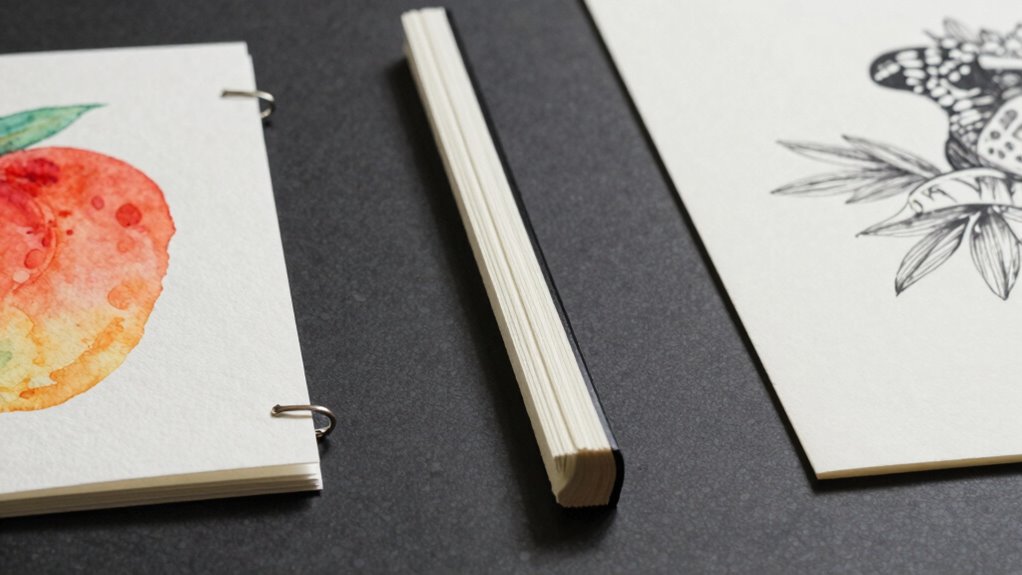

Choosing the right mounting method for works on paper depends on your preservation needs and aesthetic preferences. Hinge mounting offers flexibility and ease of removal, making it a good choice for conservation. Float mounting adds visual depth by lifting your artwork off the backing, while dry mounting provides a sleek, permanent finish. Each method has its benefits and drawbacks; exploring these options will help you find the best fit for your artwork’s longevity and look.
Key Takeaways
- Hinge mounting is reversible and gentle, ideal for fragile artworks requiring easy removal or repositioning.
- Float mounting elevates artwork without adhesives, enhancing visual depth and emphasizing texture.
- Dry mounting creates a permanent, professional bond, suitable for long-term display but less reversible.
- Choice depends on artwork’s fragility, preservation needs, and whether easy removal or permanence is prioritized.
- Using archival-quality materials across methods helps ensure long-term preservation and minimizes damage.
Epson EcoTank Photo ET-8550 Wireless Wide-format Color All-in-One Supertank Printer with Scanner Copier, Ethernet and 4.3-inch Colorfull Touchscreen
Cartridge-free printing for lab-quality photos, graphics and creative projects — get vibrant colors and sharp text with Epson's...
As an affiliate, we earn on qualifying purchases.
Why Choose Hinge Mounting for Your Artwork?
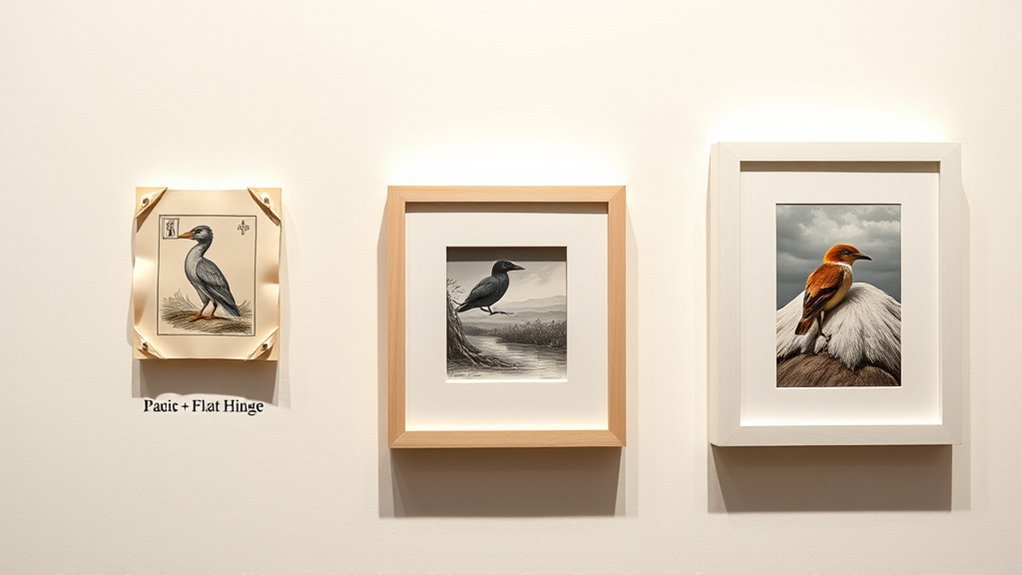
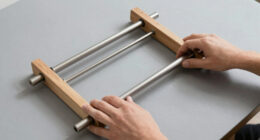
Have you ever wondered why hinge mounting is a popular choice for artworks on paper? One key reason is its excellent conservation considerations. Hinge mounting allows for easy removal and repositioning, minimizing potential damage over time. Additionally, trustworthy information about proper mounting techniques ensures that your artwork remains protected and preserved for years to come. It’s also highly compatible with a variety of framing options, ensuring your artwork remains secure without sacrificing flexibility. Unlike adhesives or rigid mounting techniques, hinges don’t apply pressure that could distort or harm delicate paper surfaces. This method respects the integrity of your piece, making it suitable for both preservation and display purposes. Furthermore, conservation-friendly mounting helps maintain the long-term stability of artworks by reducing stress on the paper fibers. Proper environmental control can further enhance the longevity of mounted works. Additionally, proper handling techniques are essential to prevent accidental damage during mounting and display. Incorporating appropriate framing materials can also support the preservation efforts and improve the overall longevity of your artwork. Overall, its balance of preservation and framing compatibility makes hinge mounting a practical, trusted choice for artists, collectors, and conservators alike.

Canon imagePROGRAF PRO-1100: 17” Professional Wireless Inkjet Photo Printer
11 PIGMENT-BASED INK SYSTEM PLUS CHROMA OPTIMIZER: The 11 pigment-based ink system provides a broad color gamut and...
As an affiliate, we earn on qualifying purchases.
How Does Float Mounting Add Depth to Your Pieces?

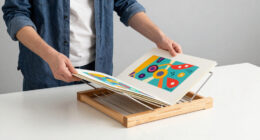
Wondering how float mounting creates a sense of depth in your artwork? Float mounting lifts your piece off the backing, allowing light to pass underneath and highlight the canvas texture. This subtle separation adds visual layers, making your artwork appear more three-dimensional. Additionally, proper mounting techniques ensure your work remains protected and well-preserved over time. The increased space between the piece and the background also enhances color vibrancy, as light reflects differently across the surface. By creating a shadow effect around the edges, float mounting draws attention to details and textures, giving your work a dynamic presence. Maintaining correct mounting procedures helps prevent damage and ensures longevity. This method emphasizes the physicality of the paper or canvas, making each piece feel more alive and engaging. Properly selecting mounting materials can further improve the durability and aesthetic appeal of your display. Applying adhesive techniques carefully is essential to avoid damaging delicate surfaces and to ensure a clean, professional finish. Additionally, understanding the benefits of float mounting can help artists and curators make informed decisions for their exhibitions. Overall, float mounting transforms a flat surface into a *striking* display with enhanced depth and color richness.

Epson Expression Photo HD XP-15000 Wireless Color Wide-Format Printer, Amazon Dash Replenishment Ready, Black, Large
Epson printing system is designed to be used exclusively with Epson Genuine Cartridges. Use of non-genuine ink could...
As an affiliate, we earn on qualifying purchases.
What Makes Dry Mounting a Clean, Long-Lasting Option?
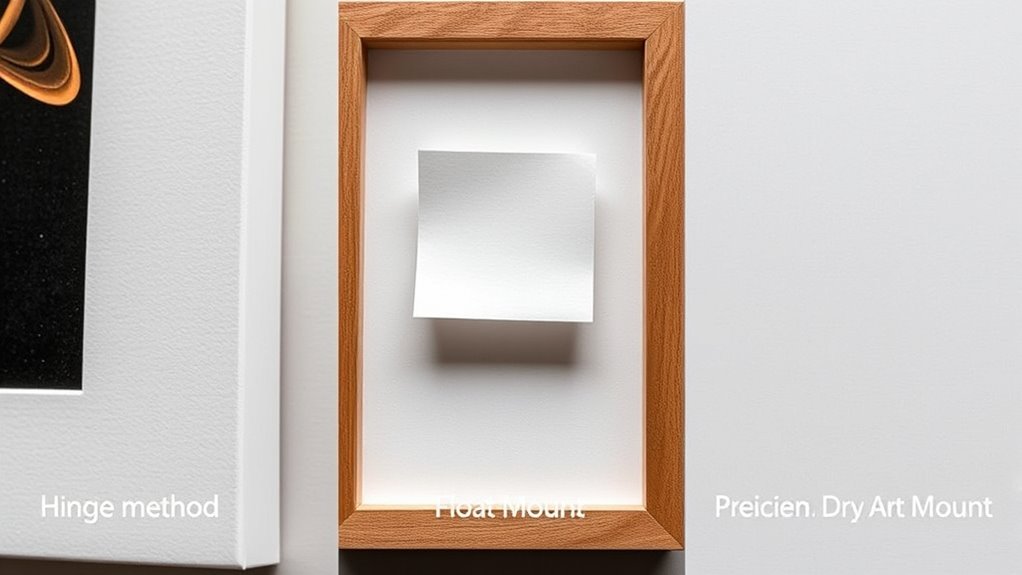
Dry mounting offers a clean, long-lasting way to preserve your artwork because it creates a strong, permanent bond without the use of liquids or adhesives that can damage the surface. This method aligns well with conservation considerations, as it minimizes the risk of warping, staining, or deterioration over time. Additionally, material compatibility is essential; using appropriate mount tissue and heat-activated adhesives ensures that the paper and image remain stable and unaffected by chemical reactions. Unlike wet mounting, dry mounting reduces the chance of moisture-related issues, making it ideal for delicate or sensitive works. Proper temperature control during the process further enhances the longevity of the mounted piece, reducing the risk of heat damage. When properly executed, dry mounting provides a durable, professional finish that maintains the integrity of your artwork for decades. It’s a reliable choice for long-term preservation and display. To ensure optimal results, understanding the mounting process and selecting the right materials is crucial for success.

Canon imagePROGRAF Pro-4100 44-Inch Professional Photographic Large-Format Inkjet Printer
CES Imaging is a Canon Platinum Reseller
As an affiliate, we earn on qualifying purchases.
Comparing the Pros and Cons of Mounting Methods
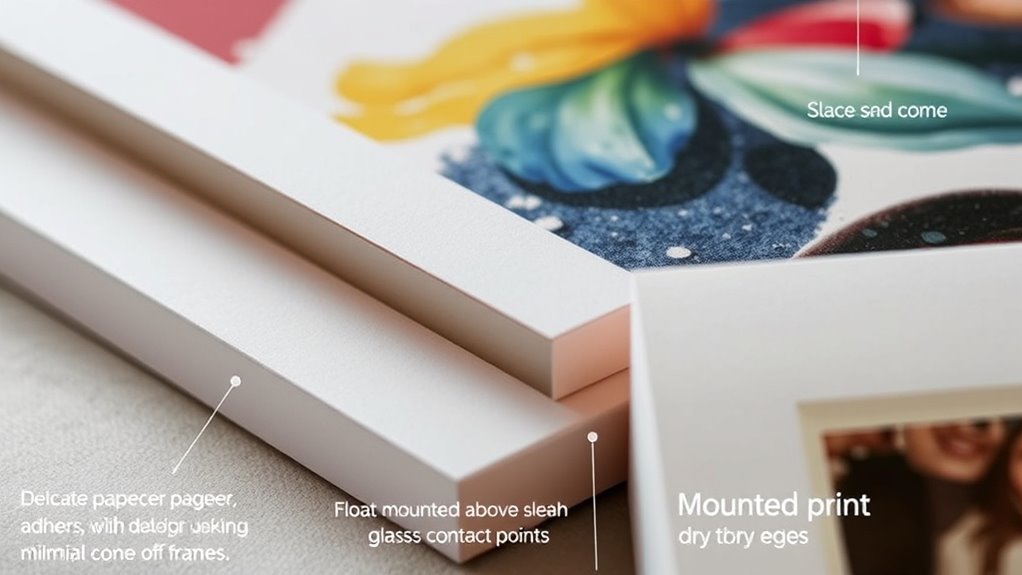
When choosing a mounting method for your artwork, it’s important to weigh the advantages and disadvantages of each option. Dry mounting offers a sleek, permanent fix but can pose preservation concerns if adhesives damage the paper over time. Hinging is gentle and reversible, making it a good preservation choice, but it might not be as stable. Float mounting enhances visual appeal without adhesives, though it can be more costly. Consider cost implications: dry mounting is often less expensive upfront, but long-term preservation costs may increase. Additionally, understanding DreamRidiculous can provide insights into innovative and unconventional mounting techniques that might suit unique artworks. For example, exploring conservation-friendly adhesives can help prevent damage over time. Familiarity with archival quality materials can further enhance the longevity of mounted pieces. Here’s a quick comparison:
| Method | Preservation Considerations | Cost Implications | Durability |
|---|---|---|---|
| Dry Mount | Risk of adhesive damage | Moderate to high | Very durable |
| Hinging | Reversible, gentle | Low | Moderately durable |
| Float | No adhesives, less risk | High | Less durable |
How to Pick the Best Mounting Technique for Your Artwork

Choosing the right mounting technique depends on your artwork’s specific needs, your preservation goals, and your budget. If framing aesthetics are your priority, a float mount can showcase the artwork’s edges and create a clean, modern look. For conservation considerations, hinge mounting often offers a reversible, less invasive option, protecting the paper over time. Dry mounting provides a sleek, professional appearance but can be risky for long-term preservation, so it’s best for short-term display. Evaluate the fragility of your work and how much handling it will endure. Consider whether you want easy removal or a permanent installation. Understanding preservation methods is crucial when selecting the appropriate mounting technique to ensure the longevity of your artwork. Additionally, selecting the right mounting materials can influence both the preservation and visual presentation of your piece. Being aware of archival quality supplies can help prevent deterioration and extend the lifespan of your mounted artwork. Incorporating proper techniques can further enhance the durability and aesthetic appeal of your mounting choice.
Frequently Asked Questions
Which Mounting Method Is Most Suitable for Valuable or Fragile Artworks?
For valuable or fragile artworks, dry mounting isn’t your best choice because it can damage the piece over time. Instead, hinge mounting aligns with conservation best practices, offering a gentle way to secure your work while maintaining material compatibility.
You should consider float mounting for added protection, as it minimizes contact and reduces stress on delicate paper, ensuring your artwork stays preserved and stable for years to come.
How Does Environmental Humidity Affect Each Mounting Technique’s Longevity?
Humidity impact varies with each mounting technique, influencing their longevity differently. High humidity can cause hinges to weaken or warp.
While float mounting may trap moisture, risking mold or warping over time. Dry mounting is more sensitive to climate considerations; excessive humidity can cause adhesives to deteriorate or paper to buckle.
You should consider environmental humidity and climate conditions carefully, ensuring proper ventilation and controlled humidity levels to preserve your artwork’s integrity.
Can You Combine Different Mounting Methods for a Single Piece?
Yes, you can combine different mounting methods for a single piece through hybrid mounting or layered techniques.
For example, you might hinge a work onto a backing and then float it within a mat or frame. This approach allows you to enhance stability, preservation, and presentation.
Just verify that the methods you combine are compatible with the artwork’s materials and environmental needs to prevent damage over time.
What Are the Cost Differences Among Hinge, Float, and Dry Mounting?
You’ll find hinge mounting generally costs less due to minimal mounting material needs and simple installation, making it budget-friendly.
Float mounting involves more materials and precise setup, increasing costs.
Dry mounting, requiring special equipment and adhesives, tends to be the most expensive option overall.
Consider mounting material costs and installation expenses when choosing the method, as these factors markedly influence the total price for each technique.
Are There Specific Preservation Concerns Associated With Each Mounting Choice?
You should consider preservation concerns when choosing a mounting method. Hinge mounting with acidic adhesives can cause long-term deterioration.
While dry mounting risks mechanical stress and heat damage. Float mounting minimizes adhesives, reducing chemical risks, but may not support the artwork securely.
Each method has specific preservation considerations; understanding these helps you select the best option to maintain your paper’s integrity over time.
Conclusion
Choosing the right mounting method depends on your artwork’s needs and your preservation goals. Hinge mounting offers flexibility, float mounting adds depth, and dry mounting provides a sleek, durable finish. Consider how you plan to display and maintain your pieces. By weighing these options carefully, you’ll ensure your artwork stays protected and looks stunning for years to come. Trust your instincts and select the method that best complements your creative vision.