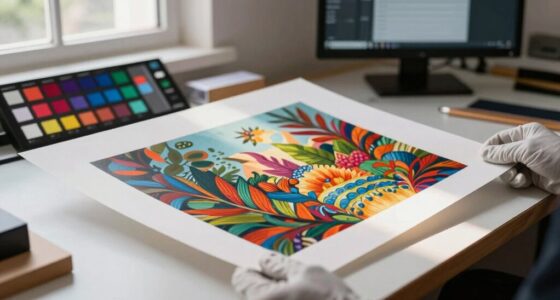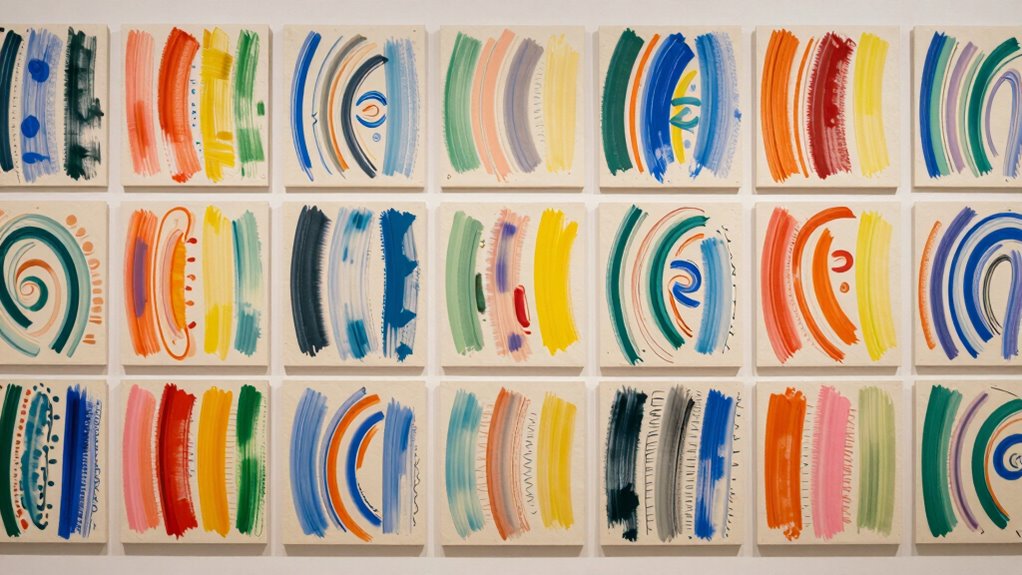

To use repetition without making your work feel repetitive, you should vary elements like size, color, and orientation to create visual rhythm and maintain viewer interest. Strategic repetition guides the eye and adds harmony, while subtle differences prevent predictability and keep your work lively. You can layer repetitions or manipulate them digitally for complex textures and dynamic effects. Keep experimenting with these techniques, and you’ll discover how to make repetitive patterns engaging and fresh.

Prime made for students and young adults
- Fast, free delivery for dorm and study essentials
- Prime Video and Amazon Music included
- Member-only deals
Key Takeaways
- Incorporate subtle variations in size, color, or orientation to maintain visual interest.
- Balance repetition with contrasting elements to prevent monotony.
- Use digital techniques to layer and manipulate motifs dynamically.
- Apply strategic visual rhythm to guide the viewer’s eye and create flow.
- Challenge expectations with innovative pattern arrangements to keep work engaging.
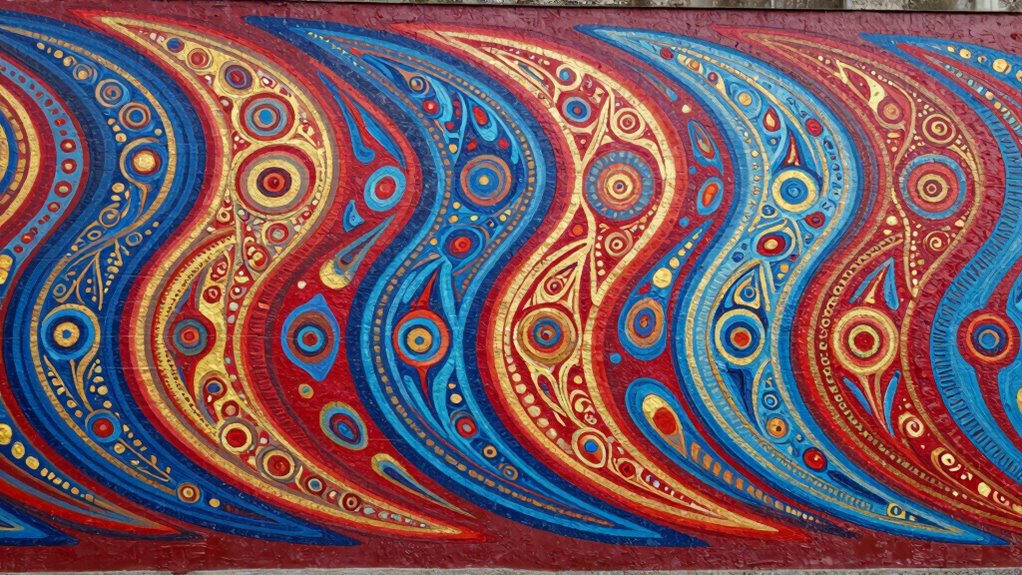
Have you ever noticed how repeating patterns and shapes can create a sense of rhythm and harmony in art? It’s a powerful tool artists use to engage viewers and evoke emotion without overwhelming them. But, if you’re not careful, too much repetition can make your work feel monotonous or predictable. The key is finding ways to incorporate repetition thoughtfully, so it enhances your message without dulling the experience.
One method artists employ is leveraging digital techniques. With the aid of digital tools, you can experiment with variations of a pattern, adjusting size, color, or orientation effortlessly. This flexibility allows you to maintain a sense of unity while adding subtle differences that keep the viewer’s eye moving and engaged. Digital techniques also enable you to layer multiple repetitions, creating complex textures or illusions that deepen the visual impact. For example, using software to manipulate a motif repeatedly can produce intricate, kaleidoscopic effects that feel dynamic rather than repetitive, because each repetition can be slightly altered or combined with other elements for variety. Additionally, understanding visual rhythm can help artists strategically use repetition to create a balanced composition that feels lively and intentional. Exploring digital manipulation can further enhance the depth and complexity of your work, making it more captivating. Incorporating visual variation techniques ensures the work remains fresh and compelling, even with repetitive elements.
Furthermore, exploring pattern recognition can help artists create more engaging and innovative uses of repetition that challenge viewers’ expectations.
digital art pattern manipulation software
As an affiliate, we earn on qualifying purchases.
As an affiliate, we earn on qualifying purchases.
Frequently Asked Questions
How Does Repetition Influence Viewer Engagement in Art?
Repetition in art creates visual rhythm, which guides your eye across the piece and keeps you engaged. It sparks your curiosity by encouraging you to notice subtle variations or patterns, making each view feel fresh. When artists skillfully repeat elements, they balance familiarity with surprise, inviting you to explore deeper without feeling overwhelmed. This interplay of rhythm and curiosity makes the artwork enthralling and invites ongoing viewer interaction.
Are There Specific Art Styles That Favor Repetition?
You’ll notice that geometric patterns and minimalist approaches often favor repetition, emphasizing harmony and balance. These styles use repeated shapes or lines to create rhythm, evoke calm, and invite contemplation. By carefully controlling variation within repetition, artists can maintain visual interest without feeling monotonous. If you appreciate structured simplicity and precise forms, these art styles harness repetition beautifully, making each piece engaging while avoiding the trap of dull repetition.
Can Repetition Create Emotional Impact Without Redundancy?
Yes, repetition can create emotional resonance without redundancy by emphasizing key themes and fostering a sense of rhythm. When you incorporate artistic variation within repeated elements, it keeps viewers engaged and evokes deeper feelings. By subtly altering textures, colors, or details, you maintain interest and emotional impact, ensuring that repetition enhances your work’s expressive power without feeling monotonous. This balance allows your art to resonate emotionally while remaining visually compelling.
How Do Artists Choose Which Elements to Repeat?
You choose which elements to repeat based on their symbolic significance and how they contribute to your overall message. You consider symbol selection carefully, ensuring each element holds meaning. During pattern development, you experiment with variations to keep the work engaging. Repetition becomes a tool to reinforce themes or create rhythm, so you balance familiar motifs with subtle changes to maintain interest without feeling monotonous.
Does Repetition Affect the Longevity of an Artwork’s Relevance?
Repetition can actually enhance your artwork’s longevity and relevance by establishing a strong visual identity that resonates over time. While some worry it might date the piece, skillful repetition creates a timeless appeal that connects with viewers across eras. By carefully selecting elements to repeat, you guarantee your work remains engaging and meaningful, maintaining its relevance long after the initial impression fades.
As an affiliate, we earn on qualifying purchases.
Conclusion
As you weave repetition into your work, think of it as a heartbeat—steady yet full of life. Each echoed element becomes a ripple in a pond, inviting viewers to dive deeper into your message. By balancing familiarity with subtle variations, you create a dance of patterns that feel both comforting and intriguing. Embrace repetition as your brushstroke’s rhythm, transforming simple motifs into a symphony of meaning that resonates long after the viewer looks away.
repetition variation art stencils
As an affiliate, we earn on qualifying purchases.
As an affiliate, we earn on qualifying purchases.
As an affiliate, we earn on qualifying purchases.
Fall Picks
fall essentials
As an affiliate, we earn on qualifying purchases.