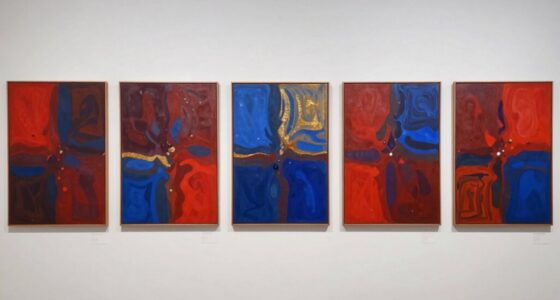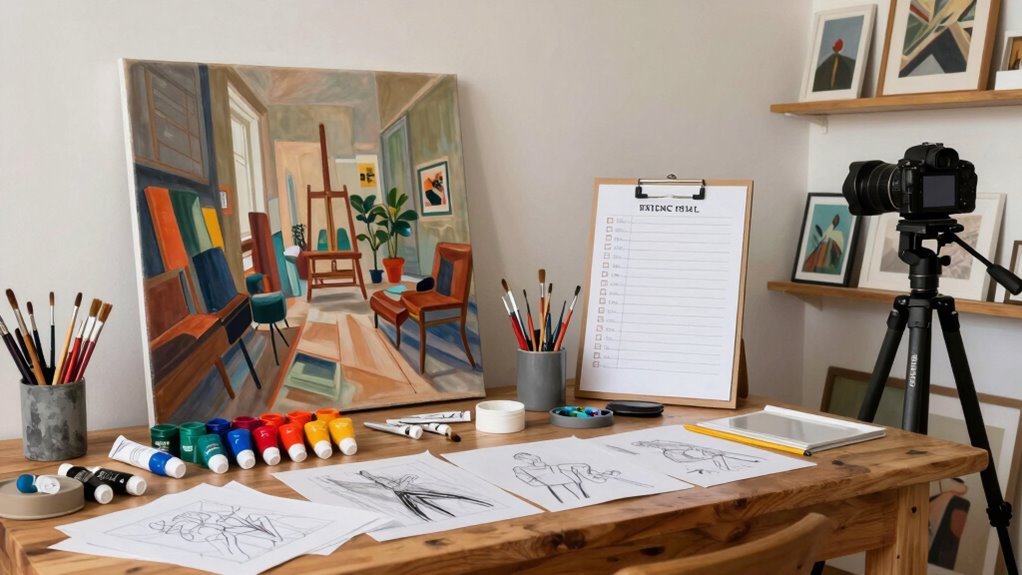
To prepare your work for an exhibition, start by selecting pieces that fit your theme and check their condition. Document each artwork with detailed info and clear labels. Carefully frame, mount, and package your pieces for safe transport, and plan your layout to guide visitors smoothly. Set proper lighting and control environmental factors. Before the event, do final checks to ensure everything’s in place. For more behind-the-scenes insights, keep exploring this thorough checklist.
Key Takeaways
- Select, document, and organize artworks with standardized labels and digital records for efficient inventory management.
- Ensure proper framing, mounting, and packaging to protect artworks during transit and display.
- Control environmental conditions and optimize lighting to preserve artwork and enhance visibility.
- Plan gallery layout, spacing, and visitor flow for a cohesive and engaging presentation.
- Conduct final checks on security, signage, lighting, and environmental stability before opening.
Select and Prepare Artwork for Display
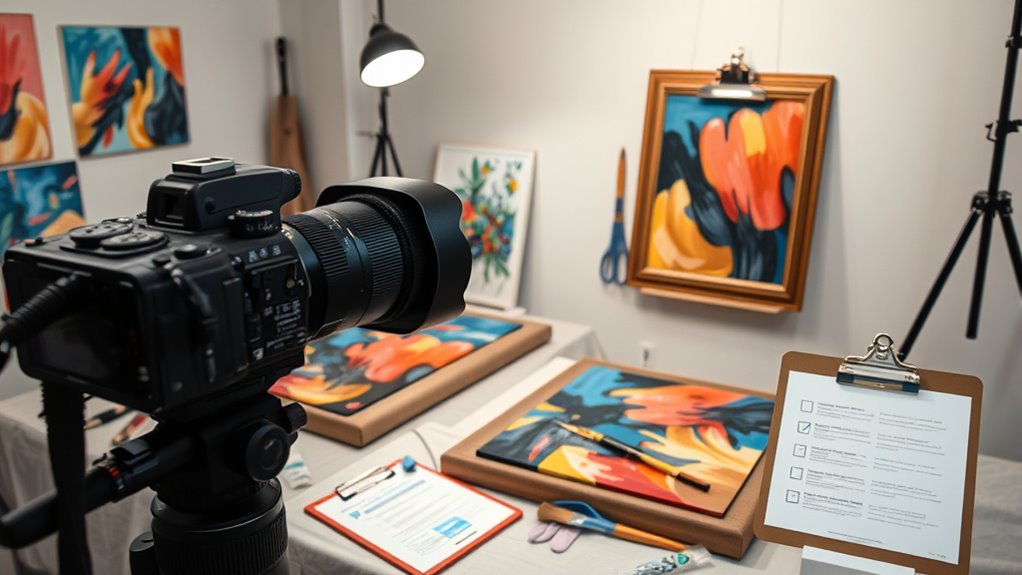
When selecting artwork for display, you should consider the theme and message of the exhibition to guarantee each piece contributes meaningfully. Your art selection process involves carefully evaluating each artwork’s relevance and impact within the overall narrative. Incorporating Free Floating aspects can help create a more dynamic and engaging presentation. Effective artwork curation ensures that the pieces complement one another and enhance the viewer’s experience. Focus on variety, balance, and cohesion, choosing works that resonate with the exhibition’s purpose. Pay attention to the condition of each piece, preparing them accordingly to avoid damage or deterioration. Additionally, understanding quality assessment can help identify pieces that will best withstand display conditions and preserve their beauty over time. Being aware of vetted sources and provenance can also support the selection of authentic and valuable artworks. Conducting a thorough art conservation review is essential to maintain the integrity and longevity of your collection. Incorporating proper storage techniques can further safeguard artworks during preparation and transportation. By thoughtfully curating your artwork, you create a compelling, harmonious display that engages visitors and communicates your intended message clearly. Proper selection and curation are essential steps that set the foundation for a successful exhibition.
Frame and Mount Your Art Safely
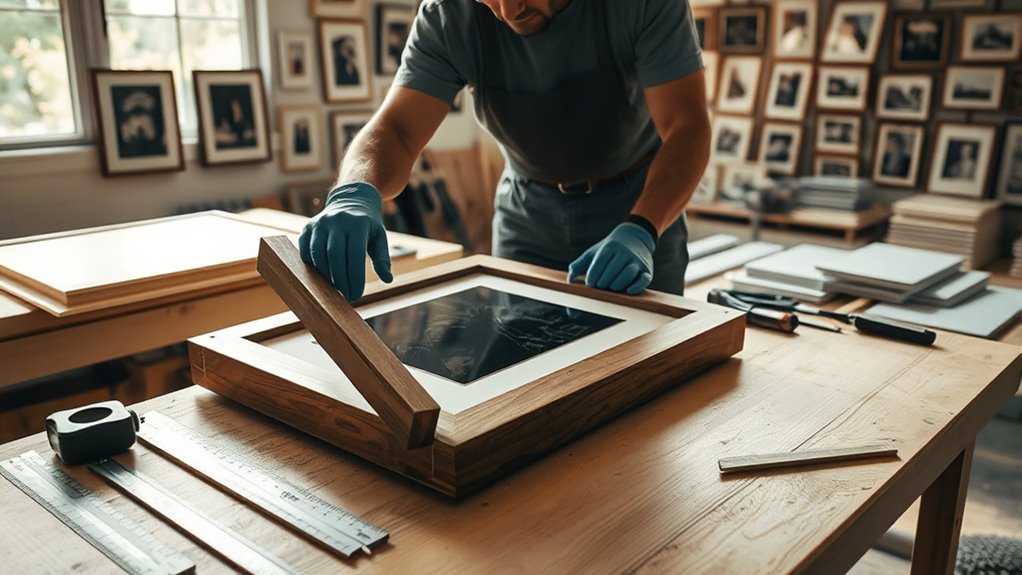
After carefully selecting and preparing your artwork, the next step is to frame and mount each piece securely. Use appropriate framing materials that complement your art and guarantee durability. Choose sturdy frames that provide support without overpowering the piece, and consider matting techniques to add depth and separation. Proper matting not only enhances presentation but also prevents the artwork from touching the glass, reducing damage risk. Secure your art with acid-free backing and hanging hardware suited for the weight and size. Take your time aligning everything precisely to avoid crooked displays. Additionally, ensure the ventilation around your artwork is adequate to prevent moisture buildup and potential damage over time. Incorporating environmental control strategies can further protect your artwork from humidity and temperature fluctuations, especially when displayed in indoor environments where climate stability is crucial. Monitoring art preservation conditions can help maintain the integrity of your pieces during display and storage, and using reliable climate control devices can significantly reduce risks associated with improper environmental factors.
Label and Document Your Pieces Clearly
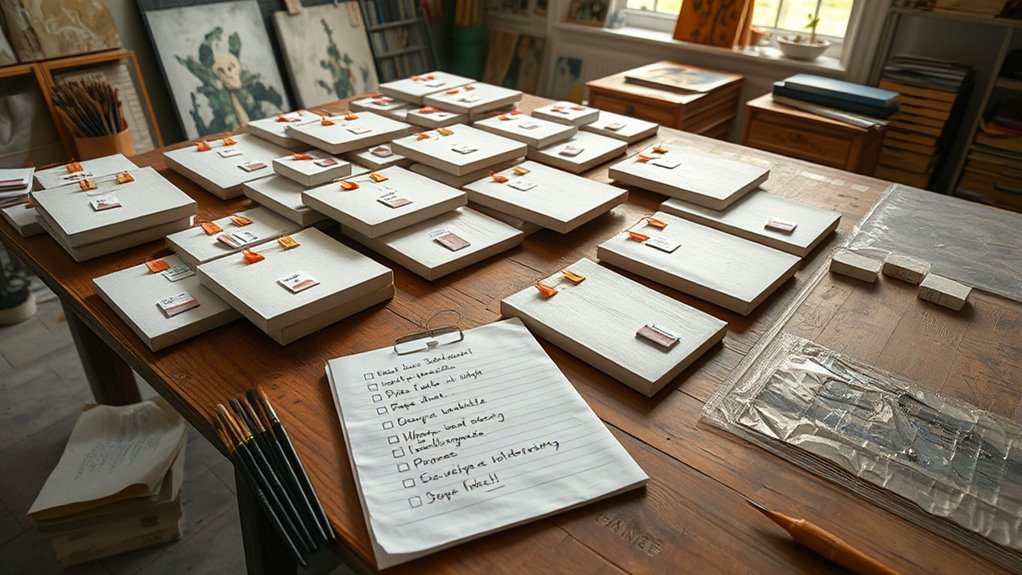
Clear labels and accurate documentation help viewers and organizers identify your work easily. Use consistent methods for labeling and keep detailed records of each piece’s details. Incorporating visual and auditory cues, as seen in auditory processing disorder sound therapy techniques, can also streamline the process. Additionally, understanding electric dirt bike horsepower can inform the way you categorize and present your pieces related to technology and innovation. Being aware of honey properties of stingless bees can also be valuable when showcasing projects related to natural products or bee research. Paying attention to piercing materials and measurements ensures your work is accurately represented and easy to interpret for viewers and judges alike.
Accurate Labeling Methods
Accurate labeling is essential to guarantee your pieces are easily identified and properly documented during an exhibition. Use clear, legible labels with consistent formatting to avoid confusion. Incorporate barcode scanning for quick, error-free identification, especially when handling multiple pieces. This method streamlines inventory management and reduces manual errors. Digital cataloging complements your physical labels by recording detailed information about each work, making retrieval and tracking straightforward. Ensure each label includes key details like title, artist, date, and accession number, all formatted uniformly. Double-check labels for precision before final placement. Proper labeling not only facilitates smooth logistics during setup and teardown but also safeguards your artwork’s provenance and authenticity throughout the exhibition process. Paying attention to label accuracy can significantly enhance your exhibition’s professionalism and organization.
Consistent Documentation Practices
Maintaining consistent documentation practices guarantees your artwork remains identifiable and properly recorded throughout the exhibition process. Clear labels and detailed digital records ensure you can quickly locate and verify each piece. Use standardized naming conventions and update your records regularly. Effective storage solutions, such as labeled folders and cloud backups, keep your documentation organized and accessible. To streamline this process, consider a simple table like:
| Artwork Title | Digital Record Link | Storage Location |
|---|---|---|
| Example Piece | link to file | folder name |
| … | … | … |
Consistent labeling and digital documentation safeguard your work’s integrity and make future retrieval effortless. Prioritize clarity to avoid confusion and ensure your records serve as a reliable reference point during the exhibition. Additionally, implementing digital asset management strategies can further enhance your ability to manage and preserve your work efficiently. Incorporating standardized metadata practices can also improve searchability and organization across your digital archives. Utilizing version control can help track changes and updates to your documentation over time, ensuring accuracy and completeness. Furthermore, adopting backup protocols guarantees your digital records are protected against data loss and technical issues.
Visual Identification Techniques
To guarantee your artwork is easily identifiable throughout the exhibition, you should use effective visual identification techniques such as prominent labels and thorough documentation. Apply color theory to create labels that contrast well with the background, making them stand out. Consistent use of colors or fonts can reinforce your visual branding, helping visitors quickly associate your work with your style. Clear labels should include essential details like title, date, medium, and your name, ensuring each piece is easily referenced. Document each artwork meticulously, noting its placement and condition, which aids in tracking and curation. Incorporating proper labeling techniques can further improve the visibility and professionalism of your presentation. Additionally, maintaining accurate records supports collections management and facilitates future exhibitions or sales. Employing standardized documentation methods can streamline inventory processes and improve overall organization. Implementing a reliable labeling system can also help prevent misplacement or confusion during the exhibition process. Paying attention to visual consistency across all identification materials enhances the overall cohesiveness of your display. These techniques not only enhance visibility but also communicate professionalism, making your work more memorable and accessible to viewers, curators, and collectors alike.
Transport and Handle Artwork With Care
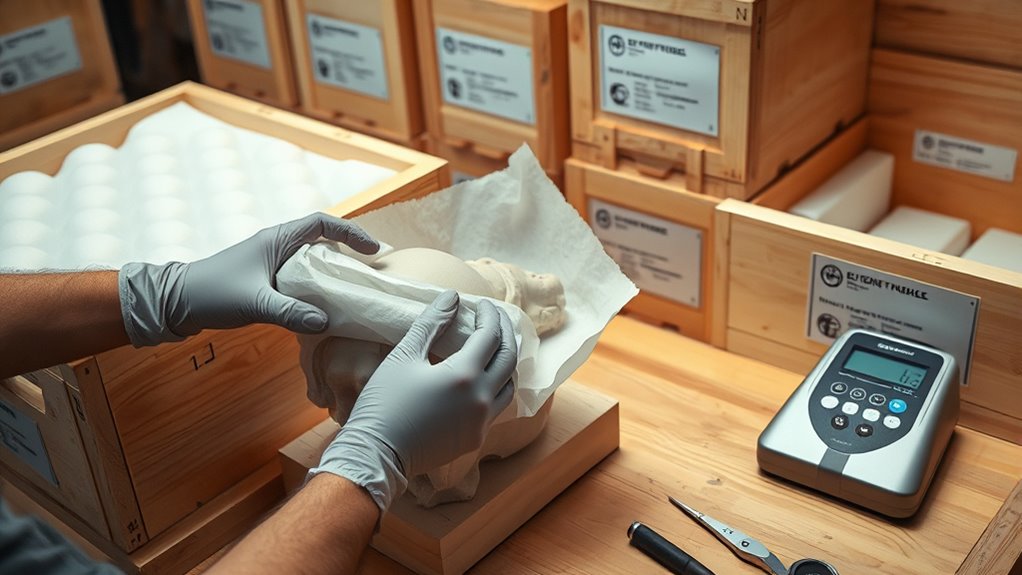
When transporting artwork, you need to use proper packaging techniques to protect it from damage. Secure transportation methods guarantee your pieces stay safe throughout the journey. proper packaging techniques involve using protective materials like bubble wrap, foam, or custom crates to cushion the artwork. Handling safety precautions prevent accidents. Paying attention to these points keeps your artwork secure and intact during transit, and understanding transportation safety ensures all risks are minimized during handling.
Proper Packaging Techniques
Proper packaging is essential to guarantee your artwork arrives at the exhibition undamaged. Start by applying protective wrapping, such as acid-free tissue or bubble wrap, to shield delicate surfaces.
Use padding materials like foam or thick cardboard to cushion edges and corners, preventing impacts during transit. Secure the protective layers firmly with packing tape, ensuring they stay in place without applying pressure directly on the artwork.
Wrap the piece snugly but carefully, avoiding excessive wrapping that could cause damage. Label the package clearly with “Fragile” and “Handle with Care” to alert handlers.
Double-check all wrapping and padding before sealing the box. Proper packaging minimizes risks, safeguarding your artwork from scratches, dents, and breakage during transport and handling.
Secure Transportation Methods
Ensuring your artwork is transported securely requires careful planning and attention to detail. Start by choosing a reliable carrier experienced in handling art pieces, and discuss your specific needs for secure delivery.
Use custom crates or padded cases to protect your work from shocks and vibrations during transit. Clearly label fragile items and include handling instructions.
Confirm that the transportation insurance covers the full value of your artwork in case of damage or loss. Track shipments closely and verify delivery upon arrival.
Proper planning minimizes risks and guarantees your artwork arrives in pristine condition. Remember, investing in secure transportation methods safeguards your piece from unnecessary damage and provides peace of mind throughout the journey.
Handling Safety Precautions
Handling your artwork with care is essential to prevent damage during transport and setup. Use proper packing materials, secure pieces in padded crates, and ensure they’re stable during movement.
Always follow fire safety protocols by keeping artworks away from heat sources and ensuring easy access to extinguishers. Familiarize yourself with emergency procedures, such as evacuation routes and spill responses, in case of accidents.
When moving artwork, lift with care and avoid sudden movements that could cause scratches or breaks. Communicate clearly with your team about handling instructions.
Regularly inspect your packaging and transport containers for damage. By prioritizing safety precautions, you protect your artwork and yourself, ensuring a smooth installation process with minimal risk.
Plan Your Exhibition Layout and Setup
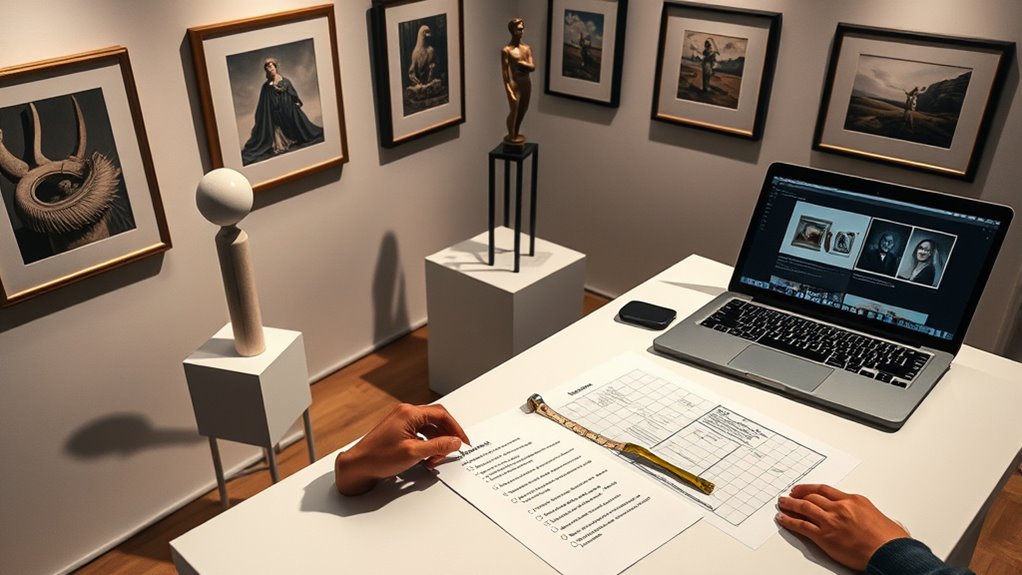
Before you start setting up your exhibition, it’s essential to carefully plan the layout to create a cohesive and engaging experience for visitors. Focus on gallery spacing to guarantee each piece has enough room to be appreciated without feeling crowded.
Consider how visitors will move through the space by mapping out the visitor flow, guiding them naturally from one exhibit to the next. Think about focal points and sightlines to highlight key works.
Use barriers or signage to direct traffic and prevent congestion. Keep pathways wide and clear, especially in high-traffic areas.
A well-organized layout makes navigation intuitive, encouraging visitors to spend more time engaging with your work. Proper planning in this stage sets the foundation for a successful and memorable exhibition.
Set Up Lighting and Environmental Controls
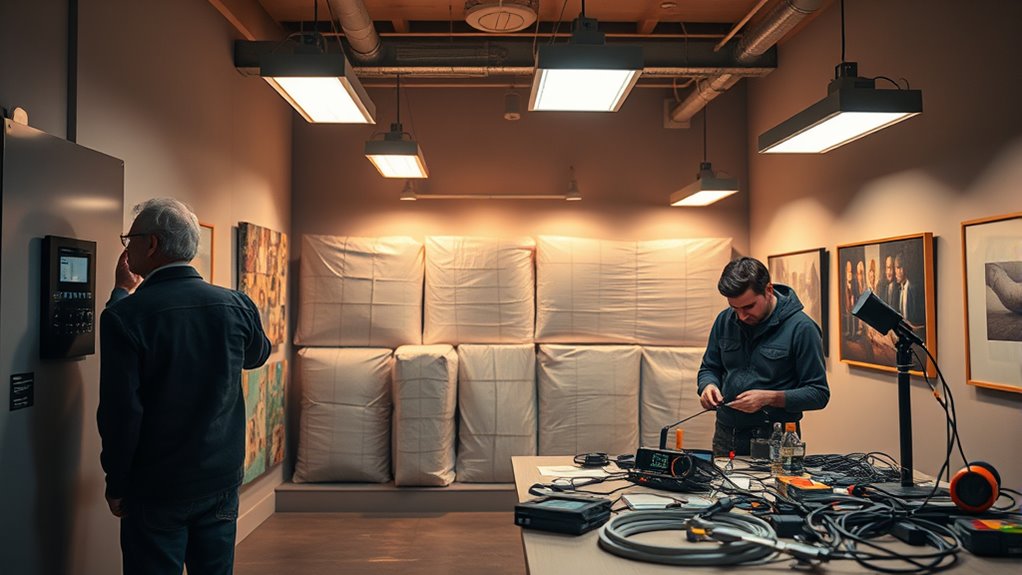
Setting up the right lighting and environmental controls is essential to showcasing your artwork effectively. Proper ambient lighting highlights details without glare or shadows, creating an inviting atmosphere. Climate control maintains ideal humidity and temperature levels, preventing damage and preserving colors. Use adjustable lighting to focus on key pieces and avoid direct sunlight. Regularly monitor environmental conditions during setup to ensure stability. Here’s a quick guide:
| Aspect | Tips |
|---|---|
| Ambient Lighting | Use soft, even lighting to enhance artwork |
| Climate Control | Maintain consistent temperature and humidity |
| Light Placement | Position lights to reduce glare |
| Light Intensity | Adjust brightness for each piece |
| Monitoring | Use sensors to track environmental stability |
This approach guarantees your artwork looks its best and stays safe.
Do Final Checks Before the Opening
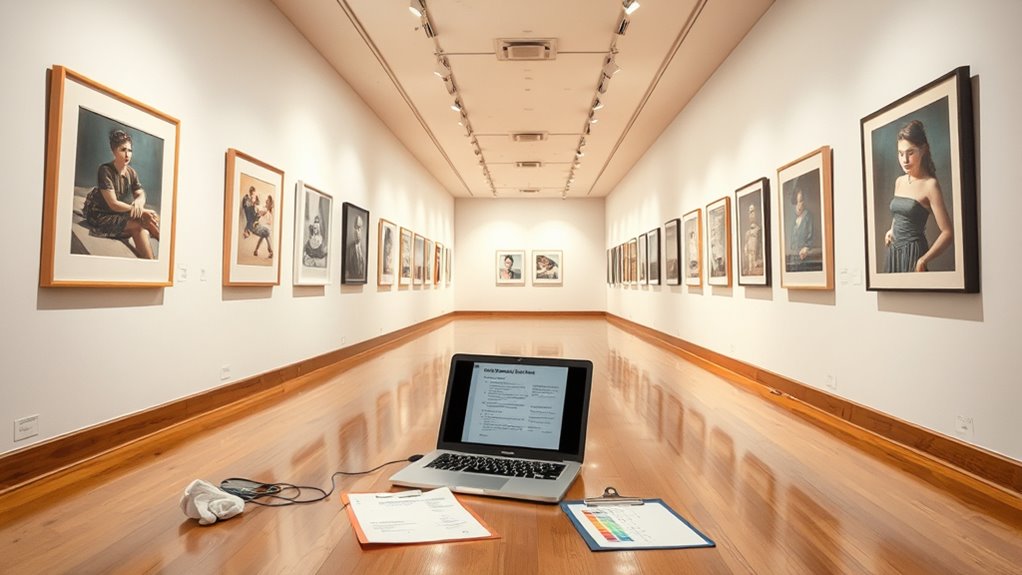
As you approach the opening of your exhibition, it’s time to conduct final checks to guarantee everything is ready for visitors. Perform a thorough final inspection of each artwork and display to verify all pieces are secure, clean, and correctly positioned.
As your exhibition opens, perform a final inspection to ensure artworks are secure, clean, and properly displayed for visitors.
Check that signage is clear and correctly placed for easy navigation. Observe attendee flow from different entry points, making sure pathways are unobstructed and signage guides visitors smoothly through the space.
Confirm that lighting highlights key works without glare or shadows, and that all environmental controls are functioning properly. Address any last-minute issues promptly to prevent disruptions.
This final review helps you ensure a seamless experience for visitors and showcases your work at its best.
Pack Up and Review After the Show
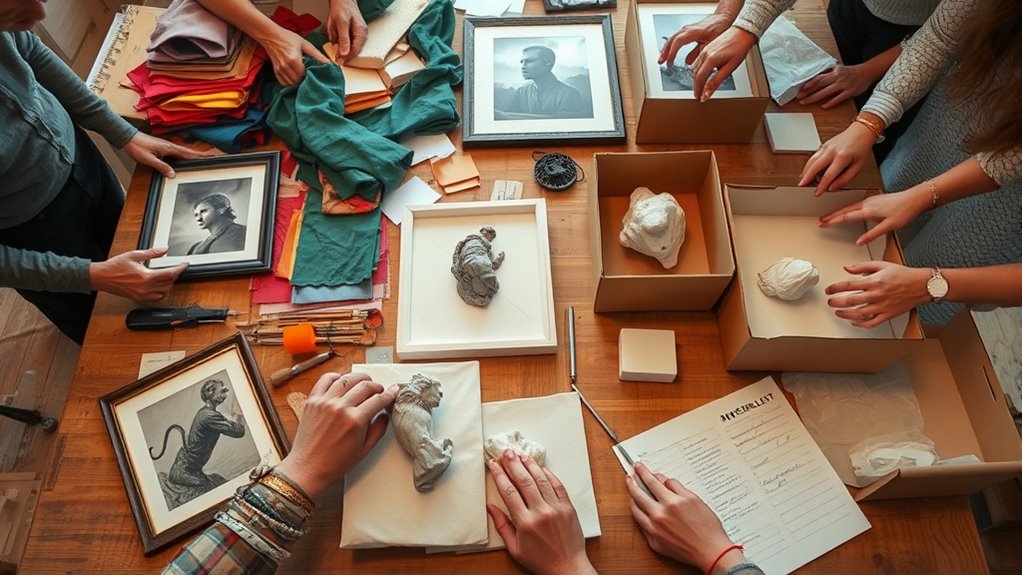
Once the exhibition concludes, it is vital to promptly begin packing up and reviewing your event. Start with artwork retrieval, ensuring all pieces are safely collected and documented for future reference. Conduct a post show evaluation to assess what worked well and identify areas for improvement. This step helps refine your process for next time. Use the following checklist to stay organized:
| Task | Responsible Person | Deadline |
|---|---|---|
| Artwork retrieval | You | Immediately after |
| Packing and shipping | Team | End of day |
| Post show review | You and team | Within 2 days |
Staying meticulous during this phase guarantees your work remains intact and provides valuable insights for future exhibitions.
Frequently Asked Questions
How Do I Choose Which Artworks to Include in the Exhibition?
You should consider curatorial considerations and audience engagement when choosing artworks. Think about how each piece fits the theme and the story you want to tell.
Select works that will captivate your audience and spark interaction. Prioritize diversity in mediums and perspectives, ensuring a balanced and compelling exhibit.
Trust your instincts, and aim for a cohesive flow that invites viewers to explore and connect with the art on display.
What Safety Precautions Should I Take During Transportation?
During transportation, you should prioritize safety by using proper packing materials like bubble wrap, foam, and sturdy crates to protect your artwork. Always secure pieces to prevent movement.
Additionally, get transportation insurance to cover potential damages or loss. Handle your work with care, mark fragile items clearly, and choose a reliable courier.
These precautions help make certain your artwork arrives safely and intact for the exhibition.
How Can I Prevent Damage During Installation?
To prevent damage during installation, you should use protective padding on your artwork and surfaces to cushion against impacts.
Handle pieces carefully, employing proper handling techniques like lifting with support and avoiding unnecessary pressure.
Make sure to communicate clearly with your team about these methods, guaranteeing everyone understands how to move and position artworks safely.
Taking these precautions helps safeguard your work and ensures a smooth installation process.
What Lighting Options Best Showcase Different Art Styles?
You should choose gallery lighting that enhances each art style and provides even illumination. Use adjustable spotlights or track lighting to highlight details and create focus.
For paintings, soft, warm LED lights work well. For sculptures, consider directional lighting to emphasize texture.
Proper art illumination prevents glare and shadows, ensuring visitors see your work at its best. Experiment with different angles and intensities to find the perfect balance for each piece.
How Do I Handle Last-Minute Changes or Emergencies?
When last-minute changes or emergencies arise, stay calm and act quickly. Use clear emergency communication to inform your team and coordinate solutions.
Rely on your contingency planning, which includes backup plans for display setups, lighting, and security. Keep essential contact info handy, and prioritize tasks to minimize disruption.
Flexibility and swift communication will help you manage unexpected situations effectively and ensure your exhibition stays on track.
Conclusion
Getting your artwork ready for exhibition takes careful planning and attention to detail. By selecting, preparing, and safely handling your pieces, you guarantee they’re displayed beautifully. Proper labeling, thoughtful layout, and good lighting create an inviting atmosphere. Don’t forget to double-check everything before opening day, and review your process afterward. With these steps, you’ll make your exhibition a smooth, successful experience for both you and your visitors.