As an artist, you test materials often to understand how they behave and how best to use them. You experiment with techniques like layering, blending, and glazing, constantly exploring new effects. This process helps you guarantee your work will last over time, resisting fading or cracking. Your efforts also push creative boundaries and uncover unique textures. If you want to discover what else goes into this hidden process, there’s more you can learn beyond the surface.
Key Takeaways
- Artists test materials to understand their behavior, durability, and aging properties for long-lasting artworks.
- Extensive experimentation ensures techniques produce desired effects and prevent future deterioration.
- Testing helps artists discover innovative textures, effects, and expressive possibilities in their work.
- Artists evaluate environmental resistance to safeguard art against light, humidity, and temperature changes.
- Scientific approach to material testing ensures technical quality, resilience, and artistic integrity over time.
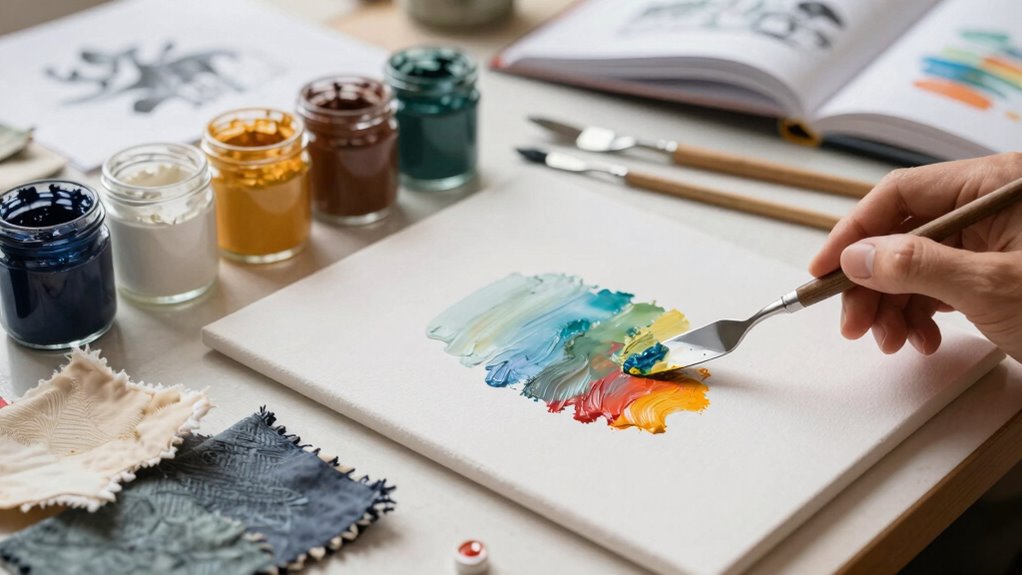
Many people assume that artists simply create their work and leave it at that, but the reality is quite different. Behind every stroke and color choice, there’s a careful process of techniques exploration and material testing. Artists don’t just settle on the first materials they find; instead, they experiment extensively to understand how different mediums behave. They might try layering, blending, or glazing techniques to see how the materials respond. This ongoing exploration ensures they develop a deep understanding of their tools, which ultimately leads to more intentional and expressive work. Additionally, artists often document their testing processes to track how materials respond over time and under various environmental conditions, ensuring they can make informed decisions about durability and longevity. Beyond technique exploration, artists also perform durability evaluations on their materials. They need to ensure that their artwork will stand the test of time, which is especially important for pieces meant to last for decades or even centuries. When testing materials, artists evaluate how well their chosen mediums resist fading, cracking, or other forms of degradation over time. They may subject their work to different environmental conditions—like exposure to light, humidity, or temperature fluctuations—to see how it holds up. This process helps them select materials that will ensure longevity and preserve the integrity of their art. Buyers often don’t realize how much effort goes into this aspect of the creative process, but artists are constantly balancing their artistic vision with practical considerations about durability. material testing is a critical step that influences the overall quality and stability of their work. The testing process isn’t just about durability; it’s also about innovation. Artists push their materials to their limits to discover new effects or textures that can add depth and uniqueness to their work. They might experiment with mixing media or applying multiple layers to achieve a specific aesthetic. By thoroughly exploring techniques and evaluating durability, they refine their craft and create pieces that are not only visually striking but also resilient. This process often involves understanding material properties, which guides artists in making informed decisions about their mediums. Developing a comprehensive knowledge of material behavior allows artists to predict how their work will age and respond to different conditions. In this way, they act as meticulous scientists, dedicating time and effort to understanding every aspect of their mediums. In essence, artists are meticulous scientists in their own right. They dedicate time to understanding their materials deeply, which involves continual techniques exploration and durability evaluation. This behind-the-scenes effort ensures that their work isn’t just beautiful in the moment but remains meaningful and intact over time. Understanding the material properties is crucial for artists to make informed choices about their tools and mediums, ensuring their work endures. Buyers often see the finished piece and admire its beauty, but they rarely realize the extensive testing and experimentation that made that beauty possible.

qitquns Diamond Art Kits for Adults【Industry Ranking No.1—100% Absorption】
- Advanced Electric Pen: Upgraded with dual suction levels and display
- Strong, Stable Suction: Ensures precise diamond pickup without dropping
- No Wires or Wax: Cordless design for hassle-free use
As an affiliate, we earn on qualifying purchases.
As an affiliate, we earn on qualifying purchases.
Frequently Asked Questions
How Do Artists Choose Which Testing Methods to Use?
You choose testing methods based on material durability and artistic experimentation. You consider how the material responds over time, testing for strength, flexibility, or color stability. Your goal is to guarantee the piece withstands environmental factors and handling. You experiment with different techniques to see how materials behave, adjusting your approach to achieve the desired artistic effect while ensuring longevity. This process helps you select the best materials for your creative vision.
What Specific Tests Do Artists Perform on Materials?
You perform specific tests like surface preparation checks to guarantee your materials adhere properly and resist damage. You also test for color stability by exposing samples to light, heat, or chemicals to see if colors fade or change over time. These tests help you determine how well your materials will perform in real-world conditions, making sure your artwork remains vibrant and durable, which is essential for achieving professional results.
How Often Should Artists Test Their Materials During a Project?
You should test your materials regularly throughout your project, especially during creative experimentation. Frequent testing helps you assess material longevity, ensuring your work withstands time and environmental factors. Initially, test after selecting materials, then periodically during the creative process, such as every few days or once a week. This approach allows you to catch issues early, adapt your techniques, and create durable art that maintains its integrity over time.
Do Artists Test for Environmental Factors Affecting Materials?
Yes, you should test for environmental factors affecting your materials. By considering environmental considerations like humidity, temperature, and light, you can guarantee proper material preservation. Testing helps you identify how these factors impact your work over time, preventing deterioration or damage. Regular testing allows you to adapt your storage and display methods, safeguarding your art and maintaining its quality for the long term.
Are There Industry Standards Guiding Artists’ Testing Procedures?
Yes, industry standards guide your testing procedures to guarantee material durability and safety. You follow established protocols from organizations like ASTM or ISO, which specify how to assess environmental impacts, longevity, and safety of materials used in art. These standards help you verify that your materials withstand conditions they’ll face over time, ensuring your artwork remains safe, durable, and of high quality for both display and preservation.

GOLDEN Satin Glazing Liquid, 8 fl. oz. Bottle, Professional Acrylic Medium, Semi-Transparent
- Type: Satin Glazing Liquid
- Volume: 8 fl. oz.
- Use: Acrylic medium for glazing
As an affiliate, we earn on qualifying purchases.
As an affiliate, we earn on qualifying purchases.
Conclusion
So, next time you see an artist experimenting with new materials, remember they’re charting a maze of possibilities, testing and tweaking like a sailor adjusting sails in changing winds. Their meticulous process guarantees their work withstands time and taste. It’s a dance of discovery, a silent conversation between artist and material. By understanding this, you see that their creative journey is less about guesswork and more about mastering the subtle art of material mastery.

Ampersand Art Supply Scratchbord | 5" x 7" – Pack of 3 | 1/8" Flat Profile | Professional Scratchboard Art Panel | for Scratchboard Drawing, Illustration & Mixed Media
- Surface Material: Acid-free, museum-quality kaolin clay surface
- Ideal For: High-contrast, detailed illustrations and scratch art
- Core Construction: Warp-resistant Hardbord core for flatness
As an affiliate, we earn on qualifying purchases.
As an affiliate, we earn on qualifying purchases.

4 Pack Texture Tools for Plaster Plastic Paint Scraper Tool Art Paint Scrapers Kit Textured Art Tools Art Putty Scraper DIY Graffiti Oil Painting and Drawing Plaster Texture Tools for Texture Art on C
- Material: Lightweight, sturdy plastic construction
- Reusable: Durable and long-lasting design
- Creative Tools: Create unique shapes and patterns
As an affiliate, we earn on qualifying purchases.
As an affiliate, we earn on qualifying purchases.