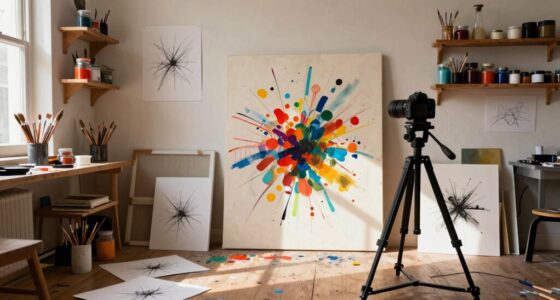
Ergonomics matter more in studios than most artists admit because your comfort and health directly impact your focus, creativity, and productivity. Poor posture and inadequate setup can lead to discomfort, fatigue, and even long-term injuries that hurt your craft. By optimizing your workspace with proper support, adjustments, and body positioning, you prevent these issues and stay in the zone longer. Keep exploring these tips to guarantee your studio helps rather than hinders your artistic journey.

Prime made for students and young adults
- Fast, free delivery for dorm and study essentials
- Prime Video and Amazon Music included
- Member-only deals
Key Takeaways
- Poor ergonomics can lead to chronic pain and health issues, undermining long-term productivity and creativity.
- Customizing workspace tools and posture enhances comfort, preventing fatigue during extended creative sessions.
- Small ergonomic adjustments, like monitor height or arm support, significantly reduce strain and improve focus.
- Neglecting ergonomics may seem minor initially but can cause serious physical problems over time.
- A well-designed ergonomic studio optimizes workflow, boosts efficiency, and sustains artistic performance.
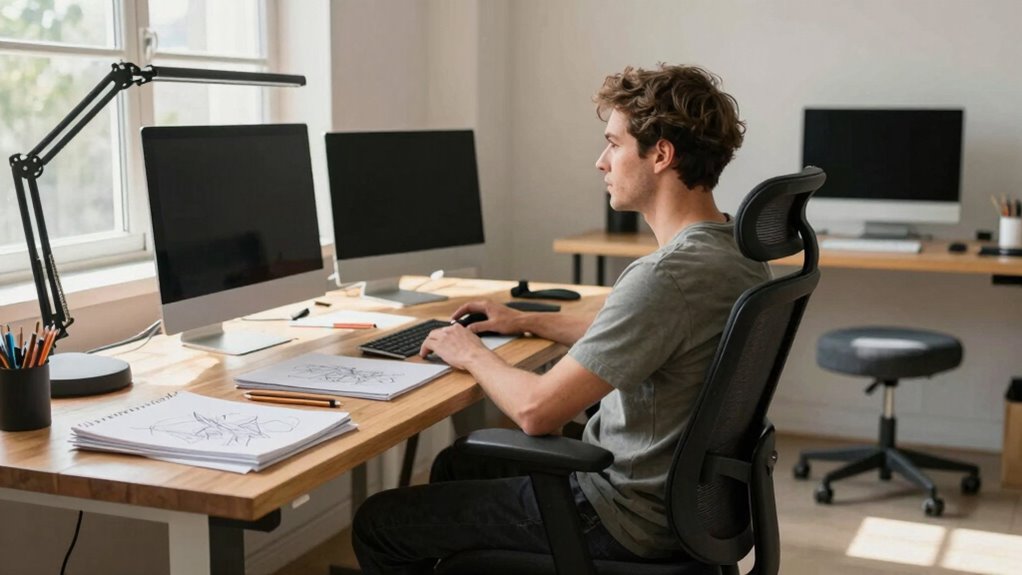
Have you ever wondered how your studio setup can impact your comfort and productivity? The truth is, your environment plays a essential role in shaping your creative process. When you pay attention to ergonomics, you’re not just preventing discomfort—you’re optimizing your entire workflow. A key aspect of this is maintaining a creative posture, which means positioning your body in a way that encourages focus and reduces fatigue. For artists, this often involves adjusting your chair height, monitor placement, and how you hold your tools. When your posture aligns with your movements, you’ll find it easier to stay engaged and avoid the aches that can derail your momentum.
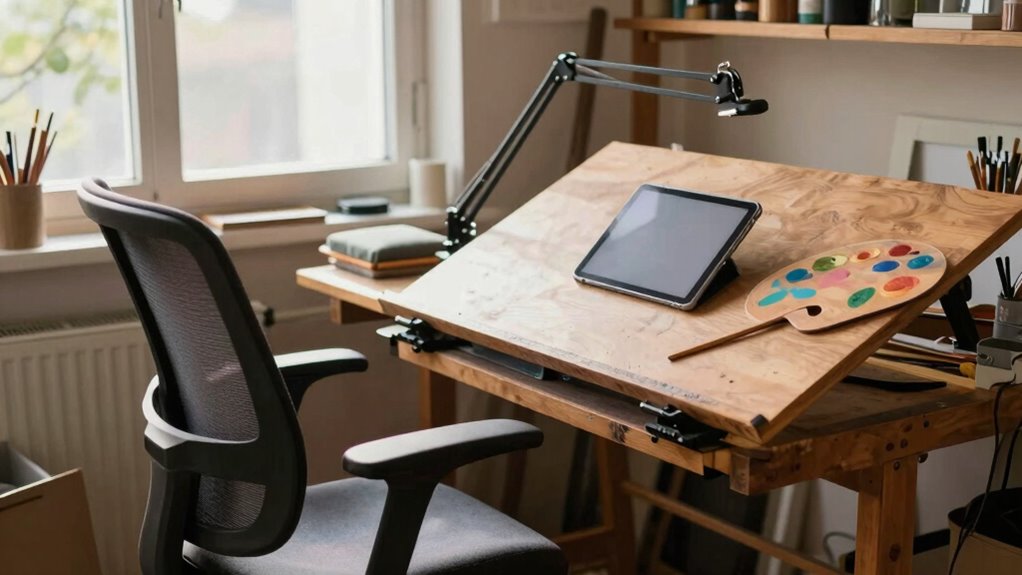
Another critical factor is equipment customization. Every artist’s needs are unique, so tailoring your tools and workspace to fit your body and work style makes a noticeable difference. Whether it’s investing in an adjustable chair, a desk that accommodates your height, or specialized support for your wrists and back, customization ensures your studio setup supports your creative posture. When you adapt your environment, you’re less likely to develop repetitive strain injuries or experience discomfort that pulls you away from your work. It’s about creating a space that molds to you, not the other way around.
Tailor your workspace with adjustable tools for better comfort and sustained creativity.
Many artists underestimate how much poor ergonomics can impact their productivity. Slouching or straining to see your canvas or screen might seem minor at first, but over time, these habits lead to chronic pain and decreased focus. When you prioritize ergonomic principles, you’re actively preventing issues before they become serious. That means regularly checking your setup and making small adjustments—like elevating your monitor to eye level or supporting your arms during long drawing sessions. These tweaks help maintain a healthy, natural posture, keeping your body relaxed and your mind sharp. Incorporating ergonomic design principles into your studio setup can further enhance comfort and efficiency, making your workspace more adaptable to your needs. Recognizing the importance of proper workspace organization can also help streamline your movements and reduce unnecessary strain.
Furthermore, understanding how ergonomic principles relate to workspace organization can help you create a more functional environment that minimizes unnecessary movement and strain. Additionally, proper lighting can significantly reduce eye strain and support better posture by ensuring your workspace is well-illuminated. Ultimately, investing in ergonomic studio design isn’t just about comfort; it’s about sustaining your creativity and health over the long term. The more you understand and implement equipment customization and promote a creative posture, the more your studio becomes a space where ideas flow freely without physical limitations holding you back. By making these changes, you’re not only protecting your body but also enhancing your ability to produce your best work consistently. Good ergonomics isn’t a luxury—it’s a essential foundation for any artist serious about their craft.
ergonomic adjustable office chair for artists
As an affiliate, we earn on qualifying purchases.
As an affiliate, we earn on qualifying purchases.
Frequently Asked Questions
How Often Should Artists Take Ergonomic Breaks During Work?
You should take ergonomic breaks every 30 to 60 minutes to maintain posture awareness and prevent strain. During these breaks, stand up, stretch, and change positions to avoid prolonged pressure on specific muscles. Incorporate short, 5-minute breaks frequently, and longer breaks every hour. This habit helps reduce fatigue, boost focus, and keeps your body healthy, ensuring you can create comfortably and efficiently over extended periods.
What Are Common Signs of Poor Ergonomic Setup?
You might notice discomfort, such as neck or back pain, frequent headaches, or tingling in your limbs, which are signs of poor ergonomic setup. Poor posture awareness often leads to slouching or leaning forward, while workspace organization issues can cause strain from reaching or awkward positioning. Addressing these signs by improving your posture awareness and reorganizing your workspace can prevent long-term injuries and boost your productivity.
Can Ergonomic Adjustments Improve Artistic Productivity?
Think of your workspace as a finely tuned instrument; ergonomic posture and proper workspace organization are the strings that keep it playing smoothly. When you optimize these, your artistic productivity soars, because you work comfortably and efficiently. Good ergonomics reduces fatigue and discomfort, allowing your creativity to flow freely. By making small adjustments, you empower yourself to create more, faster, and with less strain—harmony in your art and your body.
Are There Specific Ergonomic Tools for Different Art Mediums?
Yes, there are specific ergonomic tools tailored for different art mediums. For example, an ergonomic chair provides proper back support during long sessions, reducing strain. An art desk design with adjustable height and angled surfaces helps artists work comfortably, whether painting, drawing, or sculpting. These tools promote better posture and prevent injuries, allowing you to focus on your creativity without discomfort. Investing in these ergonomic essentials enhances both comfort and productivity.
How Does Ergonomics Influence Long-Term Health in Artists?
Good posture awareness and ergonomic education are essential for your long-term health as an artist. By maintaining proper posture and understanding ergonomic principles, you reduce the risk of repetitive strain injuries and chronic pain. Consistently applying ergonomic practices helps protect your muscles, joints, and spine, ensuring you can create comfortably for years to come. Prioritizing ergonomics now safeguards your well-being and keeps your passion sustainable over the long haul.
As an affiliate, we earn on qualifying purchases.
Conclusion
Remember, prioritizing ergonomics isn’t just about comfort—it’s about protecting your long-term health. Did you know that artists who neglect proper ergonomics are 60% more likely to experience chronic pain? By making small adjustments, you can prevent discomfort and keep your creativity flowing. Don’t wait until pain slows you down; invest in your workspace now. Your future self will thank you for the care you give today.
wrist support for drawing and painting
As an affiliate, we earn on qualifying purchases.
As an affiliate, we earn on qualifying purchases.
As an affiliate, we earn on qualifying purchases.
Halloween Picks
halloween
As an affiliate, we earn on qualifying purchases.