Ceramic glazing’s shine comes from the chemistry between silica, fluxes, and metal oxides. Silica forms a transparent glassy layer when melted, while fluxes lower the melting point and help fuse everything together. Metal oxides add vibrant colors and surface effects. Proper firing temperature and atmosphere control how these ingredients interact, creating that glossy finish you seek. Keep exploring, and you’ll discover the detailed processes behind achieving perfect ceramic shine.
Key Takeaways
- Silica forms a glassy network that creates a glossy surface when melted during firing.
- Fluxes lower melting points and react with silica to produce a smooth, shiny glaze.
- Metal oxides add vibrant colors and influence surface finish, transparency, or opacity.
- Proper firing temperature and atmosphere control optimize chemical reactions for shine and durability.
- Surface smoothness and glaze adhesion are crucial for achieving a high-gloss, durable ceramic finish.
What Are the Main Ingredients in Ceramic Glazes?
Ceramic glazes are primarily made from a combination of silica, fluxes, and stabilizers. This glaze composition forms the foundation of your glaze’s appearance and behavior. Silica acts as the glass former, creating the smooth, glossy surface when melted. Fluxes lower the melting point of silica, allowing the glaze to melt at kiln temperatures, and also influence color development. Stabilizers help control the glaze’s consistency and prevent defects like crawling or cracking. Understanding raw material chemistry is essential because each ingredient’s chemical makeup affects how the glaze melts and interacts with the clay body. raw material chemistry plays a crucial role in predicting and controlling the final outcome of your ceramic piece. The chemical interactions among these ingredients influence the final surface qualities and durability of the glaze. Knowing the main ingredients gives you the tools to craft unique and reliable ceramic finishes. Additionally, controlling the firing temperature is vital because it affects how these ingredients melt and develop their final characteristics during the firing process. Incorporating traditional knowledge can also help in achieving specific aesthetic and functional qualities in your glazes. Exploring glaze formulation techniques allows for more precise manipulation of these ingredients to achieve desired effects.
How Do Raw Materials Work Chemically in Glazes?

The raw materials in ceramic glazes interact through chemical reactions that determine how the glaze melts, flows, and bonds to the clay body. Your glaze formulation depends on choosing the right raw material sourcing, such as silica, fluxes, and stabilizers, to create desired effects. These materials undergo transformations when heated: fluxes lower melting points, silica forms a glassy network, and metal oxides add color. The chemical interactions influence the glaze’s texture, transparency, and adhesion. Understanding how each raw material acts chemically helps you control the final appearance and durability of your glaze. Precise raw material sourcing guarantees consistent chemical composition, leading to predictable melting behavior and a reliable, high-quality finish in your ceramic work. Additionally, knowing how these raw materials interact chemically allows for better customization and innovation in glaze design. Recognizing the importance of raw material quality ensures that the chemical reactions proceed as intended, producing consistent and desirable results.
What Happens During the Firing Process?
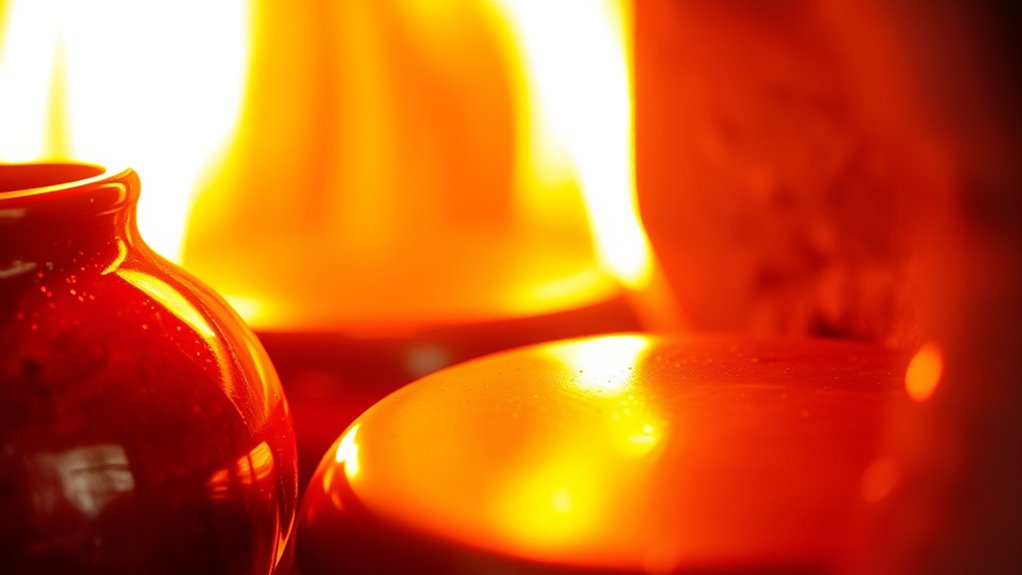
Ever wonder what transforms raw glaze and clay into a finished piece? During firing, you apply heat at a specific firing temperature that causes chemical changes in the glaze. As the kiln heats up, the glaze melts and fuses with the clay body, creating a smooth, glossy surface. The firing temperature is vital because it determines how the glaze interacts with the clay; too low, and it won’t melt properly, too high, and it might run or blister. firing temperature influences the melting point of glaze components and affects the final appearance.
Understanding the thermal expansion of your materials ensures that the glaze bonds correctly without cracking or crazing. As the temperature rises, the components in your glaze undergo physical and chemical transformations, forming a glassy coating. This process solidifies the shine you see and guarantees durability. Properly controlling the firing temperature is key to achieving the desired finish and consistency in your ceramic piece. Additionally, understanding the concept of free floating in kiln atmospheres can influence the final appearance and texture of your ceramics. Recognizing the chemical reactions during firing helps kiln operators fine-tune the process for optimal results.
How Do Chemical Reactions Make the Glaze Melt?

You might wonder how chemical reactions lower the melting point of ceramic glazes, making them flow smoothly. Fluxes play a key role by reacting with other ingredients to reduce the temperature needed for melting.
These reactions create a delicate balance that transforms the solid glaze into a glossy, fused surface.
Melting Point Dynamics
Chemical reactions during the glazing process directly influence how and when the glaze melts. These reactions alter the chemical composition, affecting the thermal expansion of the glaze and the formation of crystalline structures.
As temperature rises, certain compounds react to create a more cohesive melt, lowering the overall melting point. Conversely, the formation of crystalline structures can increase the melting point, making the glaze more resistant to melting at lower temperatures.
The balance between these reactions determines the precise melting behavior, shaping the final appearance and durability of your ceramic piece.
Flux and Reactions
Fluxes play a crucial role in lowering the melting point of ceramic glazes by promoting chemical reactions that facilitate melting. When fluxes are added, they react with silica and other components to form new compounds that reduce the overall melting temperature. These reactions also influence thermal expansion, helping the glaze expand and contract uniformly during heating and cooling, which prevents cracks. Additionally, fluxes enhance chemical stability by creating a more uniform, stable melt that resists devitrification or unwanted crystallization. Understanding flux chemistry allows artisans to better predict and control glaze behavior during firing. This process ensures the glaze melts smoothly, forming a glossy surface. By carefully selecting fluxes, you control the timing and temperature of reactions, leading to a well-fused, shiny glaze that exhibits both durability and aesthetic appeal. The presence of fluxes also impacts the color development of the glaze, contributing to the final visual effect. Moreover, a thorough knowledge of glaze chemistry enables more precise adjustments to achieve desired effects and consistency in ceramic production.
How Do Silica and Fluxes Create a Glassy Surface?
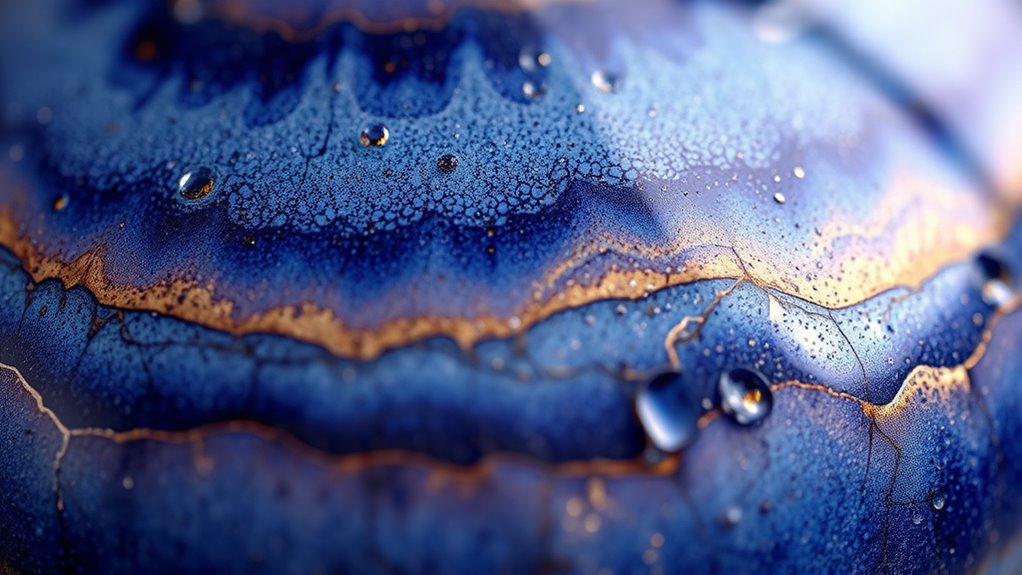
Ever wondered how silica and fluxes work together to create a smooth, glassy surface in ceramics? It all starts with silica bonding, which forms a network of silicon-oxygen bonds that give the glaze its transparency and strength. When you heat the glaze, fluxes melt, lowering the melting point of silica. This flux melting process causes the silica particles to fuse into a liquid glassy layer. As the temperature rises, fluxes liquefy first, creating a molten base that coats the ceramic surface evenly. The silica then integrates into this molten flux, forming a seamless, glass-like coating. This combination is what produces that shiny, smooth surface you see on glazed ceramics, thanks to the interplay between silica bonding and flux melting. Understanding the chemistry behind this process reveals how precise control of temperature and materials influences the final appearance of ceramic pieces. Additionally, factors like material composition and firing atmosphere can significantly impact the final glaze quality, particularly in achieving the desired glossy finish. Recognizing how chemical reactions occur during firing helps artisans optimize their glazing techniques for better results.
How Do Metal Oxides Color and Finish the Glaze?

Metal oxides are key to creating vibrant colors and unique finishes in your glaze. When you apply them, chemical reactions occur that influence the final appearance. Understanding these effects helps you achieve the desired hue and surface texture in your ceramic work. The chemical reactions involved are influenced by factors such as temperature, atmosphere, and glaze composition, making precise control essential for consistent results. Additionally, controlling the firing conditions can alter the color development of these oxides, allowing for a wide range of visual effects. Proper knowledge of glaze chemistry enables you to predict and manipulate these outcomes for more artistic control. Mastering firing techniques is crucial for achieving consistent glazing results and desired finishes. Techniques like auditory feedback therapy can also be valuable in refining your skills and understanding the complex reactions involved.
Metal Oxide Colors
Have you ever wondered how metal oxides transform a simple glaze into a vibrant spectrum of colors? It all comes down to metal oxide’s ability to influence color development during firing.
When you add specific metal oxides—like cobalt for blue or chromium for green—they react with the glaze’s glass matrix, producing distinct hues. The chemistry behind this process determines whether the color appears transparent, opaque, matte, or glossy.
The temperature and atmosphere inside the kiln also affect how these metal oxides develop their final color. By understanding how different metal oxides interact with the glaze, you can control the spectrum of results, creating everything from subtle earth tones to vivid, eye-catching shades.
Metal oxides are essential for turning a plain glaze into a colorful masterpiece.
Oxides’ Chemical Reactions
When metal oxides are added to a glaze and heated, they undergo chemical reactions that produce vibrant colors and unique finishes. These oxide reactions are fundamental to glaze chemistry, as the heat causes the oxides to change states, interact with other glaze components, and form new compounds.
For example, iron oxides can produce earthy reds or browns, depending on temperature and fluxes, while copper oxides can create bright greens or turquoise shades. The specific color outcome depends on the chemical environment within the glaze, such as pH and melting point.
Understanding these reactions allows you to predict and control the final appearance of your ceramics. Mastering oxide reactions is essential for creating consistent, stunning finishes that showcase the true potential of ceramic glazing.
Finishing Effects
The way metal oxides influence the final color and finish of a glaze depends on their chemical behavior during firing. Metal oxides can create vibrant hues or subtle tones, affecting the surface texture and overall appearance. Understanding small systems such as the chemistry of oxides and how they interact within the glaze matrix helps predict these effects. For example, certain oxides promote gloss enhancement, giving your glaze a smooth, shiny finish, while others may produce a matte surface. The interaction of oxides with the glaze melt determines whether the surface becomes sleek or textured. Additionally, some oxides influence surface texture by forming crystalline structures or bubbling effects, adding depth to your piece. Recognizing chemical interactions can assist in controlling these outcomes more precisely.
What Factors Affect the Shine and Durability of Glazed Ceramics?
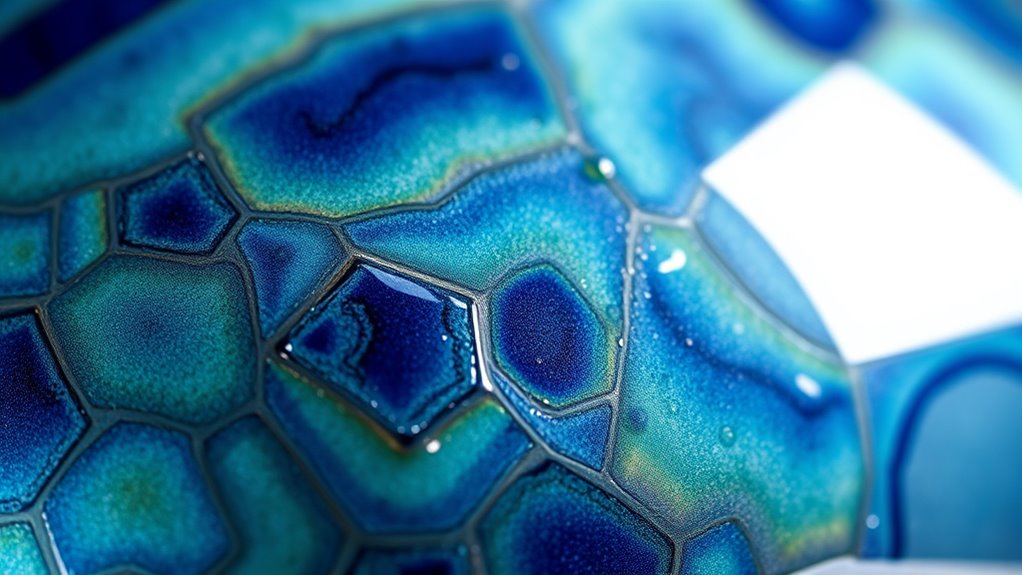
Several factors directly influence the shine and durability of glazed ceramics, making them crucial to contemplate during both the glazing process and subsequent use. Surface texture plays a key role; a smooth, even surface reflects light better, enhancing shine. If the texture is rough or uneven, the glaze won’t reflect light uniformly, dulling the appearance. Achieving the right surface finish requires careful sanding and polishing to ensure optimal light reflection.
Glaze adhesion is equally important; strong adhesion ensures the glaze bonds well to the ceramic surface, preventing chipping or peeling that can weaken durability. Proper surface preparation, including cleaning and applying a suitable base coat, promotes better adhesion. Furthermore, understanding the firing process can help optimize these outcomes for better longevity and appearance.
Additionally, the composition of the glaze, firing temperature, and cooling rate impact both shine and durability. When these factors are optimized, your glazed ceramics will look brilliant and last longer. Proper control of firing temperature and cooling rate can influence not only the appearance but also the structural integrity of the glaze, leading to a more durable finish.
What Common Chemical Problems Occur and How Can You Fix Them?
Chemical issues are common in ceramic glazing and can compromise both appearance and durability. Glaze cracking occurs when the glaze contracts more than the clay body during cooling, causing stress and cracks. To fix this, adjust the glaze formulation or firing schedule to reduce thermal stress.
Surface pinholes often form due to trapped gases or improper application, leading to an uneven finish. To prevent pinholes, ensure thorough mixing of the glaze, apply it evenly, and control the firing atmosphere to allow gases to escape.
Properly cleaning your ware before glazing also minimizes contaminants that can cause defects. Monitoring the glaze’s viscosity and firing temperature helps avoid these issues.
Addressing these chemical problems quickly keeps your ceramic pieces smooth, shiny, and long-lasting.
Frequently Asked Questions
How Does Temperature Influence Glaze Chemistry and Final Appearance?
Temperature critically impacts your glaze chemistry and final look. As you increase the kiln temperature, the melting point lowers, allowing the glaze to flow and fuse properly. This enhances color development, making hues richer and more vibrant.
Conversely, if you go too high, the glaze might over-melt, causing runs or a dull finish. Finding the right temperature balance ensures your glaze achieves the desired shine and color depth.
What Role Do Atmosphere and Oxygen Levels Play During Firing?
During firing, the gas atmosphere and oxygen control markedly influence your glaze’s final look.
An oxidizing atmosphere, with ample oxygen, produces brighter, more vibrant colors.
A reducing environment, with limited oxygen, creates richer, deeper tones.
By managing oxygen levels, you control how chemicals in your glaze react, affecting the shine and texture.
Precise atmosphere regulation ensures consistent results and enhances the overall aesthetic of your ceramic piece.
Can Glaze Chemistry Affect Its Environmental Impact?
Yes, glaze chemistry can affect its environmental impact. By choosing sustainable ingredients and eco-friendly processes, you reduce harmful emissions and waste.
Using non-toxic, locally sourced materials minimizes environmental damage, while low-temperature firing consumes less energy.
Incorporating natural, renewable components in your glaze recipe also promotes sustainability.
How Do Different Firing Durations Alter Glaze Properties?
When you vary the firing duration, it directly impacts glaze melting and chemical stability.
Shorter firing times might result in incomplete melting, leading to a dull or uneven surface.
Longer durations promote complete melting, creating a smooth, glossy finish.
Extended firing also enhances chemical stability, making the glaze more durable and resistant to wear.
Adjusting firing times allows you to control the final appearance and performance of your ceramic piece.
What Are Common Safety Considerations When Working With Ceramic Chemicals?
When working with ceramic chemicals, you should always prioritize safety by wearing protective gear like gloves, goggles, and masks to prevent skin and inhalation exposure. Handle chemicals carefully, following proper procedures for mixing and storage.
Guarantee good ventilation in your workspace, and read labels and safety data sheets thoroughly. These precautions help minimize risks, protect your health, and ensure a safe and enjoyable ceramic glazing process.
Conclusion
Understanding the chemistry behind ceramic glazing helps you achieve the perfect shine and durability. By knowing how ingredients interact and react during firing, you can troubleshoot issues and create stunning finishes. Remember, control over materials and firing conditions makes all the difference. With this knowledge, you’re better equipped to craft beautiful, long-lasting glazed ceramics that showcase your skill and creativity. Keep experimenting and refining your process for consistently impressive results.