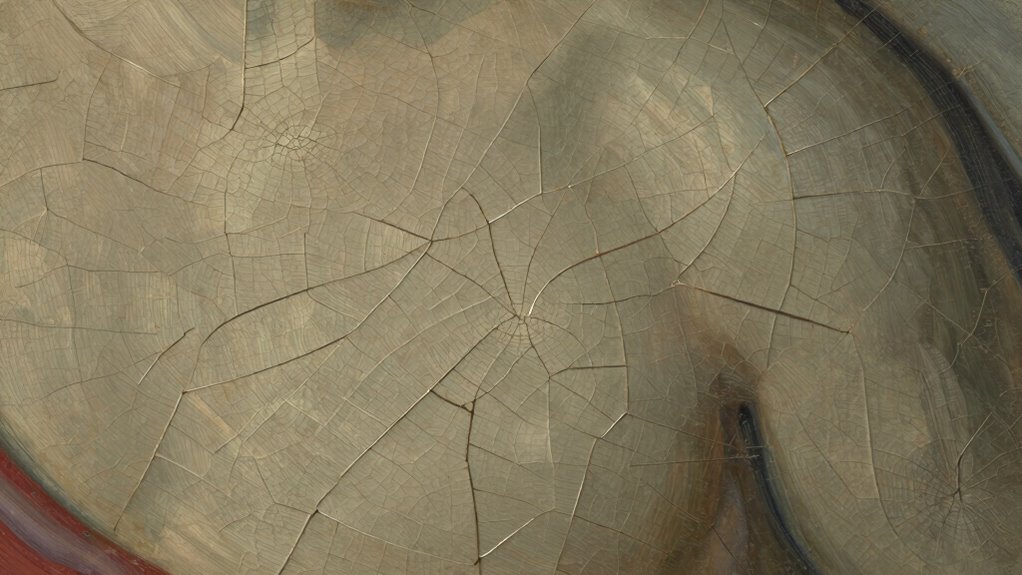

Paintings crack mainly because of your technique choices, especially layer thickness and drying methods. If you apply thick paint layers, they tend to crack over time due to internal stress, while thinner layers dry evenly and resist damage. Environmental factors like humidity and temperature swings also play a role, causing expansion and contraction. Choosing flexible materials and controlling drying conditions can minimize cracks. To understand how your techniques can influence craquelure, keep exploring the details below.

Prime made for students and young adults
- Fast, free delivery for dorm and study essentials
- Prime Video and Amazon Music included
- Member-only deals
Key Takeaways
- Thicker paint layers are more prone to internal stress, increasing the likelihood of cracking over time.
- Rapid drying traps moisture or air bubbles, leading to surface cracks and uneven contraction.
- Using brittle binders or incompatible materials can cause the paint film to fracture as it ages.
- Environmental fluctuations in humidity and temperature induce expansion and contraction, promoting craquelure.
- Applying textured or thick oil-based paints encourages pronounced craquelure patterns during aging.
As an affiliate, we earn on qualifying purchases.
The Impact of Paint Layer Thickness
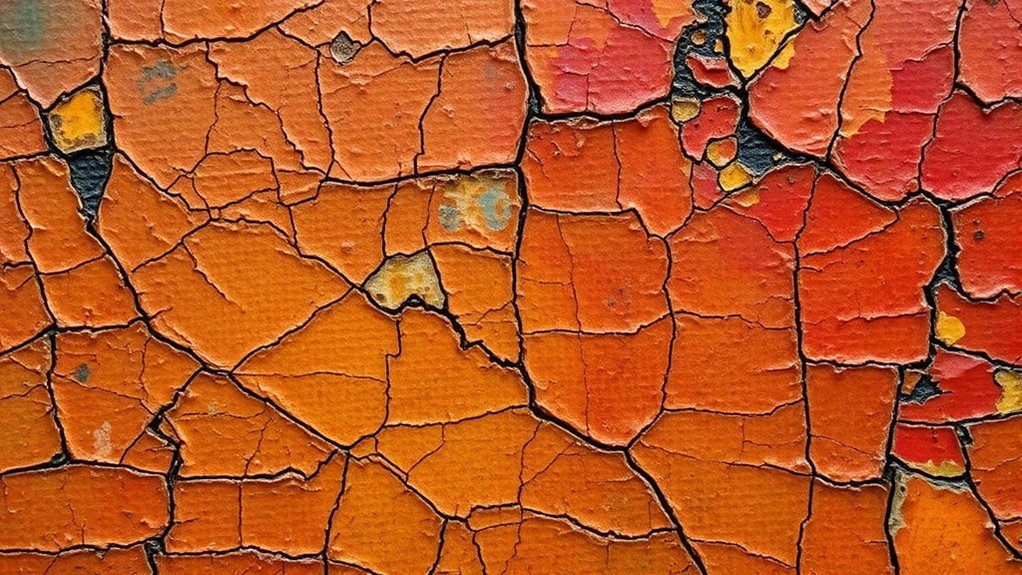
The thickness of a paint layer plays a crucial role in how well a painting ages over time. Thicker paint layers are more prone to craquelure formation because they experience greater internal stress as they dry and contract. When the paint layer is too thin, it dries quickly and evenly, reducing the risk of cracking. However, if it’s too thick, uneven drying occurs, leading to tension that causes the surface to develop fine cracks. You’ll notice that artists who apply thick, textured layers often see more extensive craquelure as the painting ages. Understanding this balance helps you predict how your artwork might age and guides you in choosing the right paint layer thickness to minimize unwanted cracking over time. Additionally, paint composition influences how the layers respond to environmental changes, impacting the development of craquelure over the years. The environmental factors such as humidity and temperature fluctuations also play a vital role in painting preservation, and understanding how material properties interact with environmental conditions can help in maintaining long-term stability.
As an affiliate, we earn on qualifying purchases.
The Role of Drying and Curing Processes
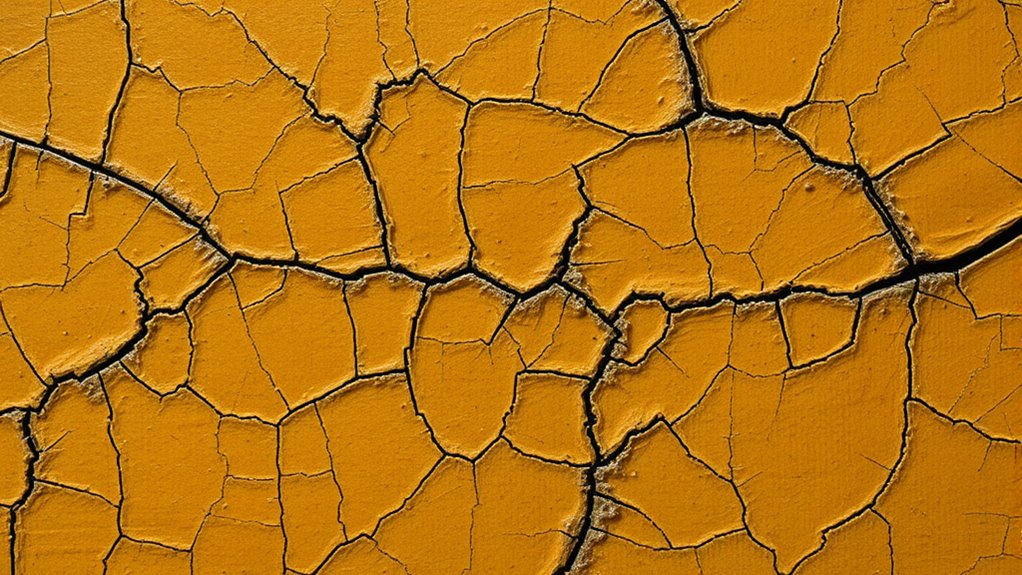
Drying and curing are critical steps that determine how a paint layer develops over time. Proper paint drying guarantees moisture evaporates evenly, preventing stress buildup that can cause cracking. Different curing methods, such as air drying, slow curing, or the use of solvents, influence the final texture and flexibility of the paint. If paint dries too quickly, it can trap solvents or air bubbles, leading to surface cracks. Conversely, slow, controlled curing allows the film to strengthen gradually, reducing the risk of craquelure. Your choice of curing method affects how the paint shrinks and contracts as it dries, directly impacting the likelihood of cracking later. Understanding the importance of proper drying and curing processes can help artists avoid common issues like craquelure and ensure their work remains durable over time. Additionally, environmental factors like humidity and temperature play a significant role in the curing process, making it essential to consider environmental control during drying. Proper moisture management and environmental stability are crucial to achieving a uniform, crack-free surface. Controlling these factors can also influence the long-term stability of the paint film, helping to preserve artwork for years to come. Implementing consistent drying conditions further minimizes the chances of uneven shrinkage that leads to cracking.
As an affiliate, we earn on qualifying purchases.
How Material Composition Affects Cracking
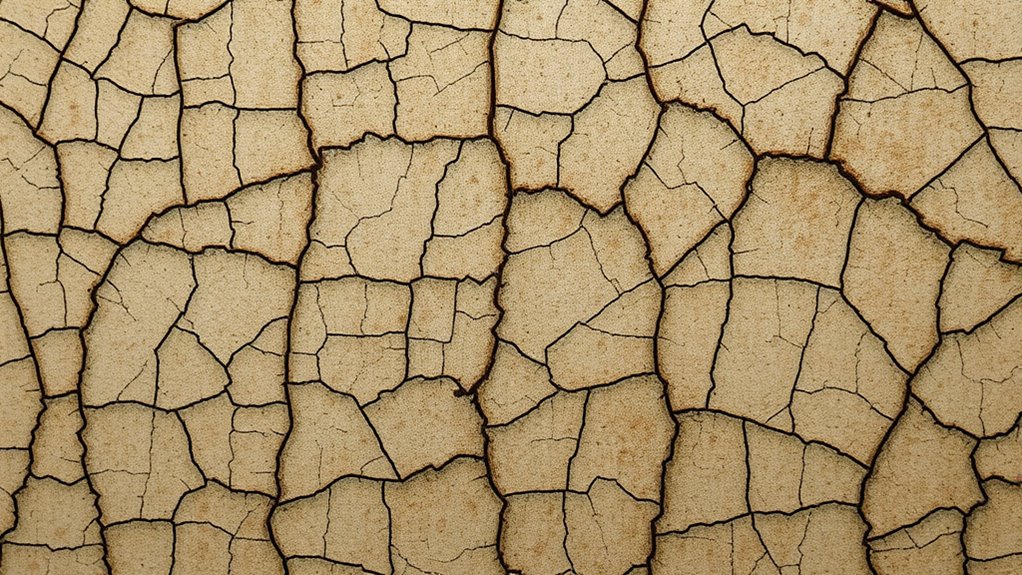
Material composition directly influences how a paint layer responds over time, especially regarding cracking. If your pigments lack stability, they may react chemically, causing expansion or contraction that leads to cracks. Stable pigments resist these changes, maintaining their integrity longer. Similarly, binder elasticity plays a pivotal role; a more flexible binder can absorb stress without cracking, while a brittle binder is prone to fracture as the paint film ages. When the binder’s elasticity decreases or the pigment’s stability declines, the risk of craquelure increases. Understanding these factors helps you select materials that age gracefully, reducing the likelihood of unwanted cracking. Additionally, material stability can be affected by environmental conditions, which may accelerate degradation and cracking over time. Recognizing the importance of material compatibility can further help in selecting components that work well together and age uniformly, minimizing cracking. Moreover, choosing appropriate application techniques can influence the long-term durability of the paint film and its resistance to cracking.
As an affiliate, we earn on qualifying purchases.
Environmental Factors and Their Influence
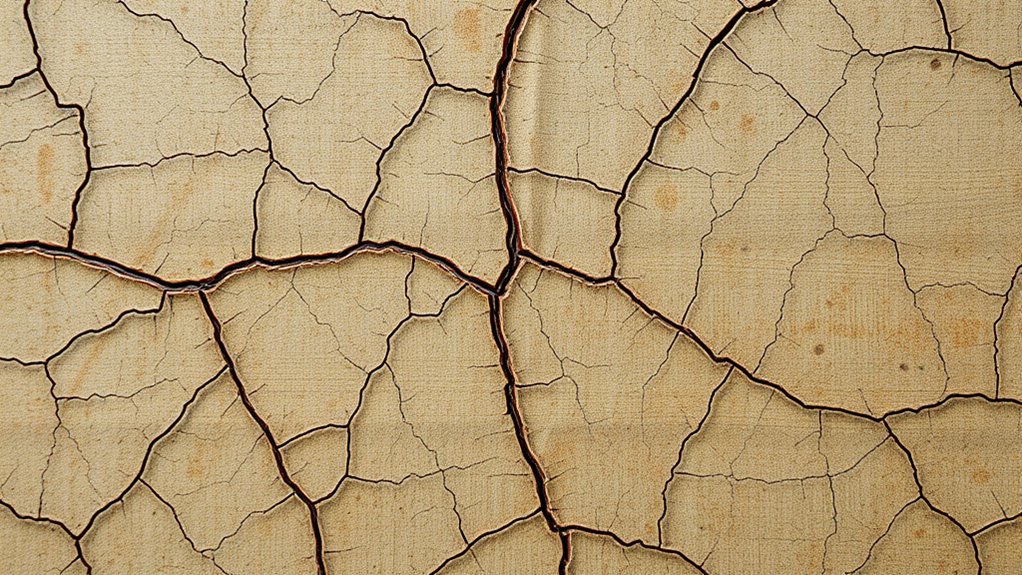
Environmental factors play a crucial role in the development of cracks in paintings, as fluctuations in temperature and humidity can cause the paint film to expand and contract. When humidity fluctuates, moisture levels in the environment change, leading to swelling or shrinking of the paint and underlying materials. Similarly, temperature variations cause the materials to expand during warmth and contract when cooled. These continuous shifts create stress within the paint layer, weakening its structure over time. If your environment experiences frequent humidity fluctuations or significant temperature changes, your painting is more susceptible to craquelure. Proper climate control, with stable humidity and temperature levels, helps reduce these stresses and preserves your artwork’s integrity, delaying or preventing the formation of cracks. Climate stability is essential for maintaining the long-term health of artworks, as consistent environmental conditions minimize the ongoing material stress that contributes to craquelure. To mitigate these effects, artists and collectors should consider implementing environmental monitoring techniques to track and maintain optimal conditions. Additionally, understanding the environmental factors involved can guide preventive measures to protect valuable pieces over time. Maintaining a controlled environment with consistent conditions also helps prevent material deterioration, which can accelerate craquelure formation.
Techniques That Minimize or Promote Craquelure
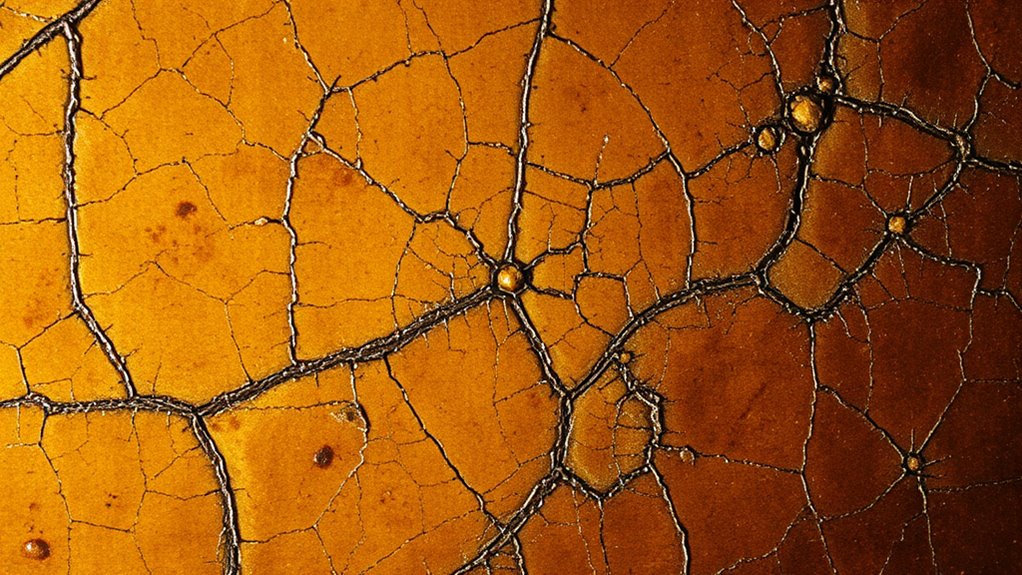
Certain techniques can be employed to either minimize or intentionally promote craquelure in paintings, depending on your artistic goals and collector preferences. If you want to reduce restoration challenges, you’ll focus on stable materials and careful layering. To promote craquelure intentionally, artists often choose materials with different expansion rates or apply thick paint layers. Here are some techniques:
- Use flexible binders to minimize cracking.
- Apply thick, oil-based paints for a more pronounced craquelure pattern.
- Select aging-resistant materials to delay or prevent cracking, ensuring the longevity of the artwork.
- Adjust drying conditions to control the development of craquelure.
- Consider environmental stability to ensure the longevity of your artwork and control craquelure formation.
Additionally, understanding material behavior helps artists predict how their chosen materials will age and crack over time. Recognizing how material properties influence cracking patterns can inform better technique choices for desired effects or preservation. Understanding these methods helps you create desired effects while considering long-term preservation and the preferences of collectors who may value either pristine or deliberately aged appearances.
Frequently Asked Questions
How Does Artist Technique Influence Craquelure Formation?
Your technique directly influences craquelure formation by affecting the paint’s flexibility and drying process. If you use thick brushwork textures or excessive paint layering, the surface becomes more prone to cracking as it dries and contracts over time. Smooth, controlled brushwork and careful layering help minimize stress, reducing craquelure. Your choice of materials and application techniques play a vital role in how your artwork ages and develops these characteristic cracks.
Can Restorers Intentionally Create Craquelure for Aesthetic Purposes?
Think of craquelure as the artist’s secret signature, and yes, restorers can intentionally create it. They use techniques akin to faux aging or deliberate distress to add character or evoke historical charm. By carefully manipulating paint layers and drying methods, restorers craft cracks that look authentic, turning new works into timeless pieces. You can see this as a form of artistic storytelling, blending restoration with creative expression.
What Are the Signs of Early Cracking in Paintings?
You can spot early cracking in paintings by noticing paint film deterioration, where the surface becomes uneven or slightly raised. Look for fine, hairline cracks that follow the natural surface tension of the paint. These minor signs often appear before larger, more obvious craquelure develops. Early cracking may also cause tiny flaking or loss of paint, indicating the surface tension is weakening and the painting needs careful conservation to prevent further damage.
How Does the Age of a Painting Relate to Craquelure Development?
As a painting ages, you’ll notice craquelure becoming more prominent due to material aging. This natural process is key to historical preservation, as it reflects the artwork’s history and authenticity. Over time, the paint and varnish contract and expand, creating the characteristic cracks. Understanding this relationship helps you appreciate the aging process and informs conservation efforts to maintain the painting’s integrity over the years.
Are Synthetic Paints More Prone to Cracking Than Traditional Ones?
Synthetic paints are more prone to cracking than traditional oil paints because they often dry faster and contract more, like a shrinking vine. Water-based concerns also make synthetic paints vulnerable, especially if exposed to fluctuating humidity or temperature. While oil paints age gracefully, synthetic options can become brittle over time, increasing the risk of craquelure. So, if you want longevity, traditional oils might be your safer bet.
Conclusion
Understanding why some paintings crack reveals a delicate balance between technique and environment. While careful material choices and controlled drying can prevent craquelure, neglecting these factors can lead to inevitable cracking. Yet, the very cracks that seem like flaws often add character and history to a piece. You see, in art, perfection and imperfection coexist—each telling a unique story. By mastering these techniques, you embrace the beauty in both, shaping masterpieces that endure and evolve over time.
Halloween Picks
halloween
As an affiliate, we earn on qualifying purchases.