
Watercolor isn’t just paint—it’s a complex system where pigments, paper, and water interact creatively and unpredictably. Your control over water amount, paper texture, and pigment behavior influences every stroke, blending, and soft edge. Mastering this balance is tricky because spontaneity and chance play big roles, making outcomes unpredictable. If you keep exploring these interactions, you’ll discover how to harness watercolor’s unique beauty and challenges, opening endless expressive possibilities.
Key Takeaways
- Watercolor involves complex interactions between pigments, binders, and paper, creating unpredictable blending and texture effects.
- Water management significantly influences color flow, bleeding, and edge softness, making control challenging.
- Techniques rely on spontaneity and chance, requiring mastery of water-to-paint ratios and brush control.
- Variations in paper texture, absorbency, and pigment properties add to the complexity of achieving desired results.
- Continuous practice and understanding of watercolor’s chemistry and behavior are essential for mastery.
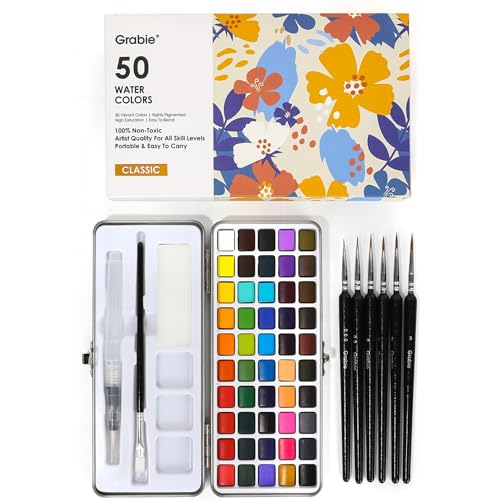
Grabie 50 Colors Watercolor Paint Set, Detail Paint Brush Included, Watercolor Paints, Painting Sets, Art Supplies for Painting, Travel Watercolor Set, Amateur Hobbyists
50 Essential Colors for Every Artist: A carefully curated palette of vibrant, rich pigments that cater to all…
As an affiliate, we earn on qualifying purchases.
As an affiliate, we earn on qualifying purchases.
The Composition of Watercolor Paints
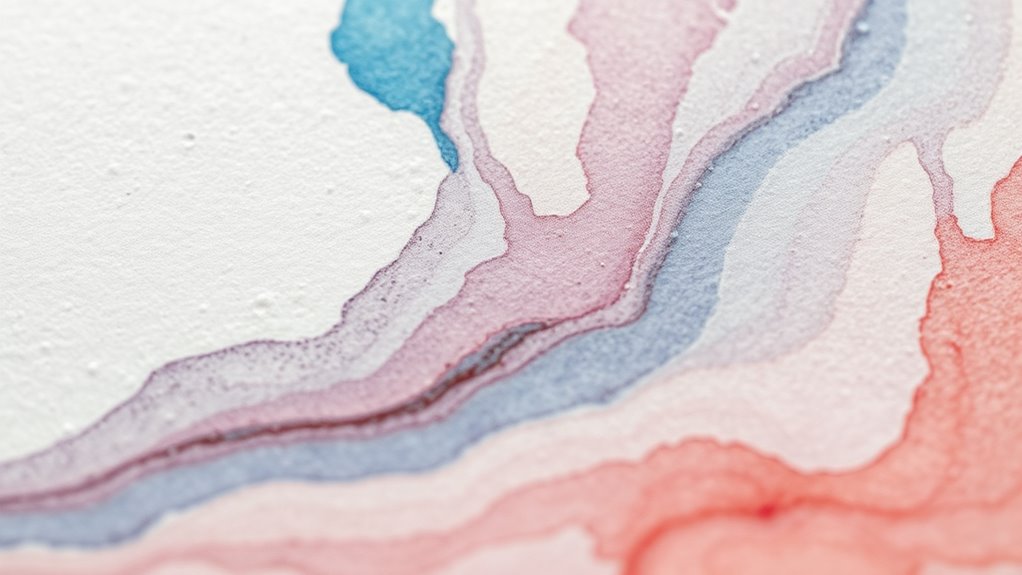
Watercolor paints are composed of three main ingredients: pigments, binders, and fillers. The pigments provide the color, and their particle size influences pigment granulation, creating textured, granular effects that add depth to your work. The binder, usually gum arabic, holds the pigment particles together and adheres them to your paper. Fillers are added to modify texture and control transparency. One key feature of watercolor is color transparency, which allows light to pass through the pigment layers and reflect off the paper, giving your paintings a luminous quality. This transparency varies depending on pigment choice and how much water you use. Understanding these ingredients helps you control how pigments interact and how your final piece will look, from subtle washes to vibrant, textured effects. Controlled transparency is essential for achieving desired luminosity and depth in your watercolor paintings. Additionally, pigment characteristics, such as particle size and opacity, significantly influence the final appearance and texture of your artwork. Recognizing how pigment composition affects color behavior enables artists to better predict and manipulate their results, especially when experimenting with different color mixtures to achieve unique effects.

Non-Warping 100% Cotton Watercolor Paper Block – 20 Sheets of 160lb/350gsm Cold Press Water Color Art Supplies for Wet, Dry, and Mixed Media Painting, for Watercolor, Gouache, Acrylic (7 x 5'')
100% Cotton : Made from100% cotton fibers, our watercolor paper block absorbs water without warping or bleeding colors,…
As an affiliate, we earn on qualifying purchases.
As an affiliate, we earn on qualifying purchases.
The Role of Water in Creating Effects

Water plays a vital role in shaping your watercolor effects. It influences how colors bleed and blend, giving your artwork a spontaneous look. Controlling the amount of water helps you create textures and achieve the desired level of transparency. Additionally, proper surface preparation ensures your artwork interacts well with water, preventing issues like warping or uneven absorption. Using smart water management techniques can help you maintain consistent water levels and improve your control over the painting process. Being aware of water temperature also impacts how pigments move and settle, enabling more predictable outcomes. Recognizing the importance of thermal behavior in water helps artists anticipate how different water conditions affect color flow and drying times, much like managing water levels enhances your painting.
Water’s Impact on Bleeding
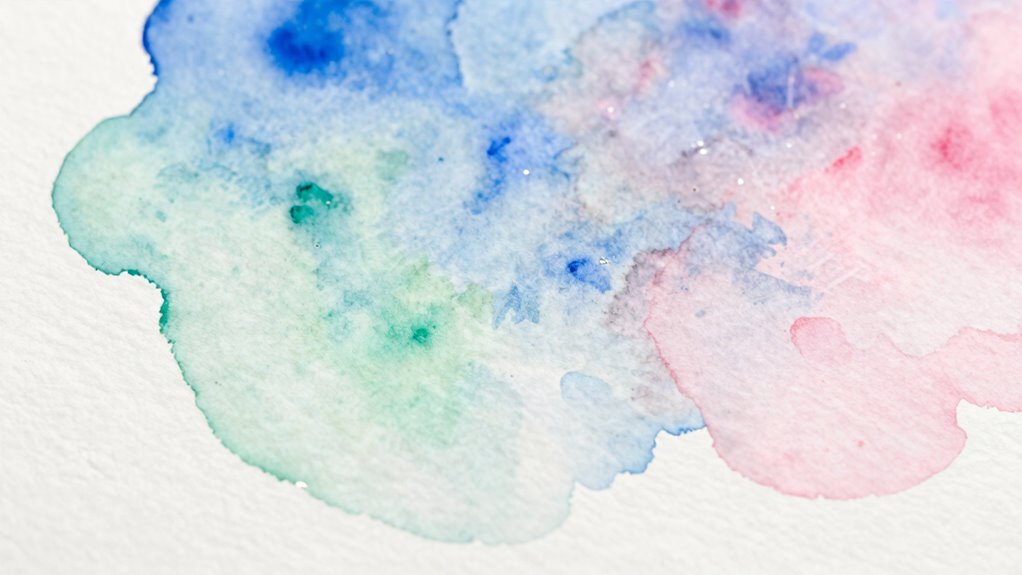
When water interacts with pigment on paper, it becomes a powerful tool for creating bleeding effects. Water’s impact determines how colors spread and blend, forming soft edges and gradients. If you want controlled bleeding, use less water to keep pigments more contained. For a more fluid, diffuse look, add more water to allow colors to flow freely. Bleeding control is essential to achieve the desired effects; too much water can cause colors to run uncontrollably, while too little limits blending. By adjusting water levels precisely, you shape how pigments interact and spread. Understanding water’s role helps you harness bleeding intentionally, whether to create vibrant transitions or delicate washes. Mastering this balance is key to elevating your watercolor techniques and achieving expressive, dynamic results.
Control of Water Amount
Controlling the amount of water you use is key to shaping your watercolor effects. Proper water management allows you to create sharp lines or soft washes. Your brush control determines how much water mixes with the pigment. Here are four tips to master this skill:
- Use less water for sharper edges and detailed work
- Add more water for smooth, flowing washes
- Adjust water levels on your brush to control pigment flow
- Practice consistent water management to achieve desired effects
Water’s Role in Texture
By manipulating the amount of water on your brush and paper, you can create a variety of textures that add depth and interest to your painting. Water’s surface tension influences how pigment spreads and pools, shaping the overall texture. When you add just a small amount of water, the pigment may bead up, creating granular effects, while more water allows colors to flow smoothly, blending seamlessly. Water droplet behavior also plays a role—dropped or pooled water can produce unique textures, such as halos or feathered edges. Additionally, understanding the principles of Free Floating can help artists achieve more spontaneous and natural effects by allowing pigments to move freely across the surface. Mastering water’s role in texture discloses new creative possibilities in watercolor painting, especially when considering how surface tension impacts pigment behavior and texture formation. Recognizing the importance of water interaction can further enhance an artist’s ability to manipulate textures effectively. Exploring water behavior can also reveal how different techniques influence the final appearance of the artwork, providing greater control and variety. Moreover, understanding how support absorption affects water and pigment movement can help refine techniques for achieving desired effects.

GACDR Paint Brush Comb Set – 4PCS Professional Grainer Brushes for Acrylic Painting, Oil & Watercolor – Texture Brushes for Artists & Beginners, Short Handle
【Professional Paint Brush Comb Set for Artists】 The GACDR Comb Brush set includes 4 premium comb-tip brushes in…
As an affiliate, we earn on qualifying purchases.
As an affiliate, we earn on qualifying purchases.
Understanding Paper and Its Influence on Results
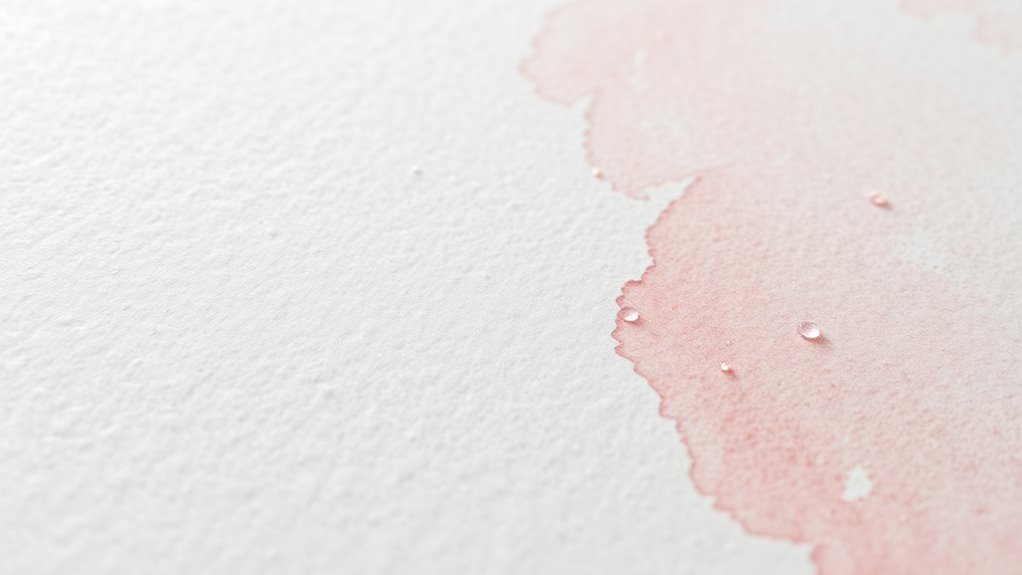
Have you ever wondered how the type of paper you choose can dramatically affect your watercolor results? The paper’s texture and absorbency play *important* roles. Here’s what you should know:
- Texture: Smooth paper allows fine detail, while rough paper adds character with textured strokes. The texture also influences how the paint interacts with the surface, affecting drying and blending. Surface characteristics are key considerations in selecting your paper. Different textures can also impact the paint absorption process, which is crucial for achieving desired effects. The surface texture can also influence how pigment particles settle and spread, affecting the final appearance.
- Absorbency: Highly absorbent paper lets paint spread quickly, creating soft edges; less absorbent paper offers more control. Absorbency varies greatly among different types of watercolor paper, impacting your technique.
- Weight: Heavier paper resists warping and handles multiple washes better.
- Material: Cotton paper provides superior absorbency and durability, enhancing your control and blending.
- Understanding Paper Composition can help artists choose materials that best suit their techniques and desired effects. Knowing the composition also reveals how long the paper will last and how it reacts over time.
Understanding these factors helps you select the right paper to achieve your desired effects, making your watercolor journey more successful.

Junreox Watercolor Palette, Large Watercolor Palette with 24 Wells and 5 Mixing Areas, Premium Paint Pallet with Lid, Folding Paint Tray, Plastic Painting Palette with Thumbhole
WHAT YOU GET: Experience the Junreox upgraded watercolor mixing palette, featuring 24 flat deep wells, 5 large blending…
As an affiliate, we earn on qualifying purchases.
As an affiliate, we earn on qualifying purchases.
The Chemistry Behind Color Mixing and Blending
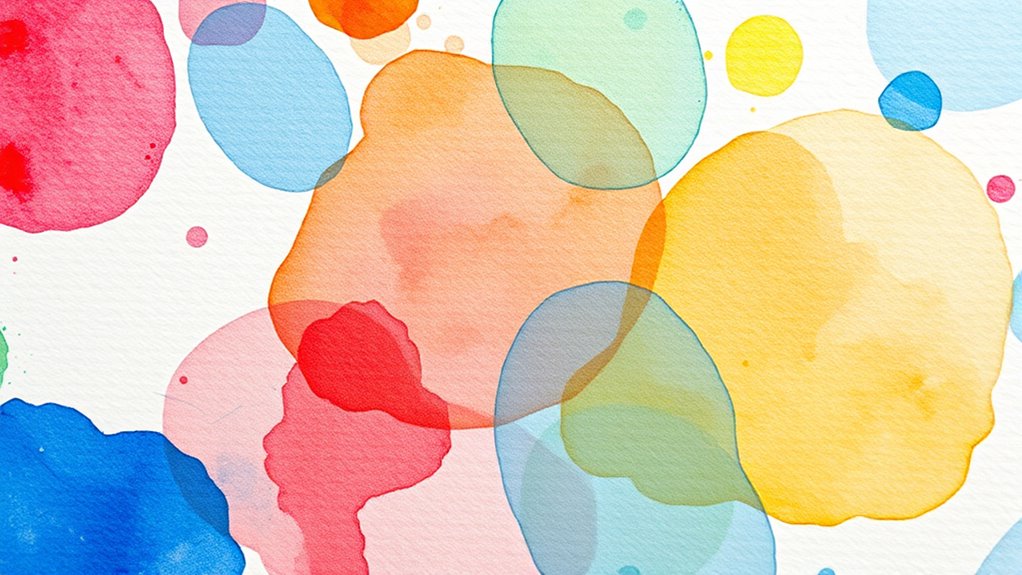
Understanding how pigments interact is key to mastering watercolor mixing. Your choice of pigment composition determines the resulting hue and how colors blend together. When layered transparently, these interactions create subtle gradations and luminous effects that bring your artwork to life. Additionally, pigment chemistry influences the longevity and vibrancy of watercolor paintings over time. A thorough grasp of floating on water can also help artists manipulate transparency and layering effects to achieve desired visual outcomes.
Pigment Composition and Hue
The chemistry of watercolor pigments determines their vibrant colors and how they blend on paper. Understanding pigment composition helps explain why some hues are more stable or variable. Here are four key points:
- Pigment stability affects how well a color resists fading over time, influencing your artwork’s longevity.
- Hue variability arises from subtle chemical differences, making some colors more versatile in blending.
- Color purity depends on the pigment’s chemical makeup, impacting how vibrant or muted a hue appears.
- Opacity and transparency are linked to pigment composition, affecting layering and the final look of your painting. Additionally, watercolor formulation significantly influences how pigments behave during application and drying.
Transparent Layering Effects
Ever wonder how watercolor artists achieve seamless color progressions and subtle blends? It’s all about transparent layering effects, which rely heavily on color theory and brush techniques. By applying thin washes of color over dried layers, you allow underlying hues to subtly show through, creating depth and harmony. Understanding color theory helps you choose complementary or analogous shades to enhance blending. Your brush techniques—using light, controlled strokes and maintaining the right amount of water—enable you to build up layers gradually without muddying the colors. This clarity lets you manipulate how colors interact, creating smooth transitions and luminous effects. Mastering these techniques requires patience and precision but results in paintings that seem to glow with depth and vibrancy. Additionally, selecting suitable water-to-paint ratios is crucial for achieving the desired transparency and layering effects.
Techniques That Shape Watercolor Outcomes
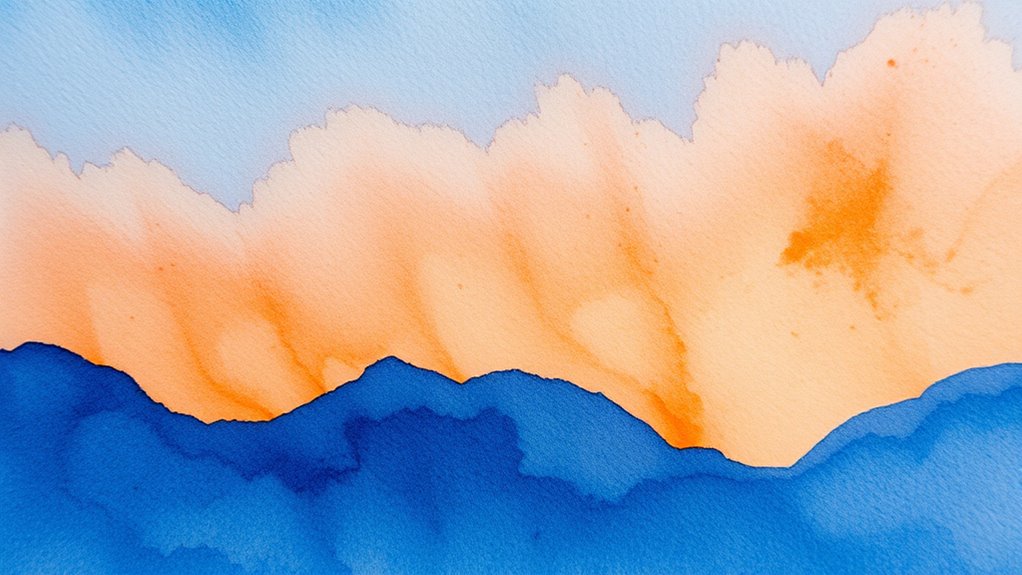
Watercolor artists use a variety of techniques to control how colors blend, spread, and settle on the paper. Your mastery of these methods influences the final look. First, understanding color theory helps you choose harmonious or contrasting hues for dynamic effects. Second, mastering brush techniques allows you to create sharp lines or soft washes, shaping your composition. Third, controlling water amounts—more water creates transparency, less yields vibrancy. Fourth, layering colors with patience can build depth or subtle progressions. Additionally, developing a technique repertoire enables artists to adapt to different effects and challenges, enhancing their overall skill and creativity. A comprehensive understanding of watercolor materials also plays a crucial role in achieving desired results and troubleshooting issues. Moreover, familiarizing yourself with pigment properties helps in selecting paints that respond predictably to your techniques. Furthermore, experimenting with different water control methods helps artists better manage the unpredictable nature of watercolor paints, leading to more consistent and satisfying outcomes. Incorporating digital tools can also assist in planning and previewing color schemes before applying them physically.
The Unpredictability and Spontaneity of Watercolor

Because watercolor inherently embraces chance, you often find yourself surprised by how colors interact on the paper. This spontaneity is part of its charm, relying on unpredictable color theory interactions and fluid brush techniques. Watercolor’s flow can create beautiful, unplanned effects—blending shades or spreading unexpectedly. To harness this, you adapt your brush techniques, letting the paint move freely. Understanding how water and pigment interact helps you guide rather than control outcomes. Here’s a quick comparison:
| Aspect | Effect |
|---|---|
| Color theory | Unpredictable blending of hues |
| Brush techniques | Spontaneous strokes and washes |
| Water control | Variations in flow and spread |
| Paper absorption | Unexpected textures and edges |
Embracing the unpredictability makes each piece unique, turning spontaneity into an art form.
Common Challenges and How to Overcome Them
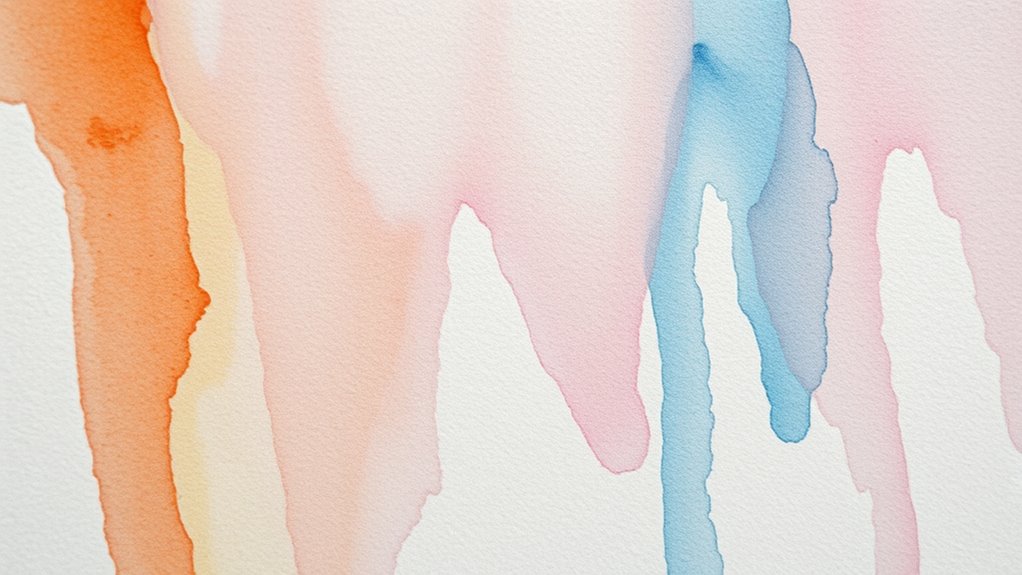
What are the most common challenges you might face when working with watercolor, and how can you overcome them? One major hurdle is controlling color mixing to prevent muddy hues. Practice layering transparent washes to build vibrant colors gradually. Second, mastering brush techniques is essential; using the right brush and stroke can improve precision and prevent unwanted spreading. Third, managing water-to-paint ratio helps avoid blotches and uneven washes—test your mix before applying. Finally, understanding how water affects pigment flow allows you to create desired effects intentionally. To overcome these challenges, experiment with color mixing on scrap paper, refine your brush handling, and keep your water levels consistent. These skills enhance control and elevate your watercolor work, making the process more rewarding.
The Reward of Mastering Watercolor Skills
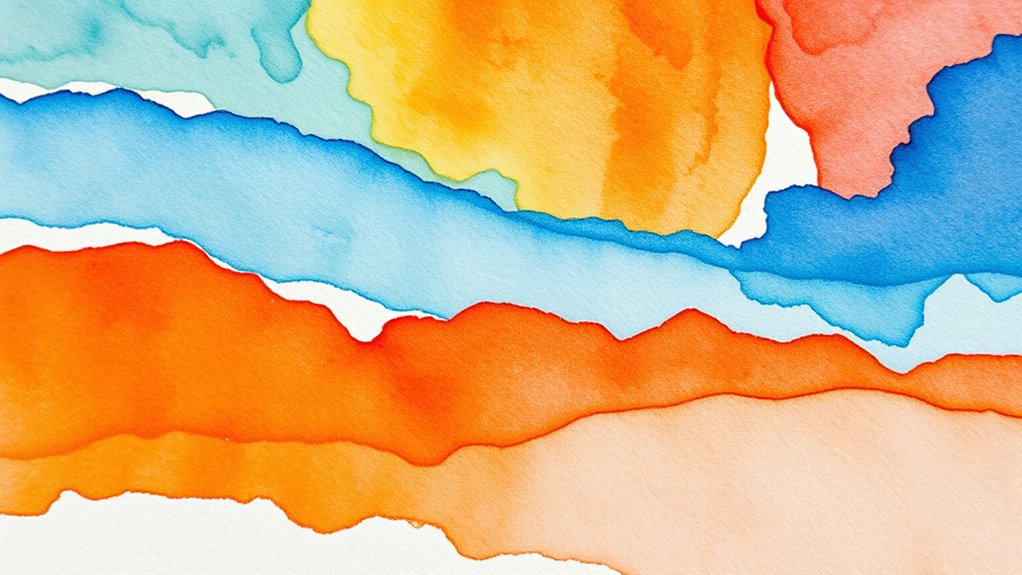
Mastering watercolor skills opens a world of creative possibilities and personal fulfillment. As you deepen your understanding of color theory, you’ll access new ways to blend hues, create mood, and add depth to your work. This mastery enhances your artistic expression, allowing you to communicate emotions and ideas more effectively. The satisfaction of seeing your techniques improve and your paintings come to life is incredibly rewarding. Watercolor challenges you to think critically about color combinations and brushwork, pushing your limits and fostering growth. With patience and practice, you’ll experience a sense of achievement that fuels your passion. Ultimately, mastering watercolor isn’t just about technical skill; it’s about expressing your unique vision and connecting more deeply with your art.
Tips for Developing Your Watercolor Practice
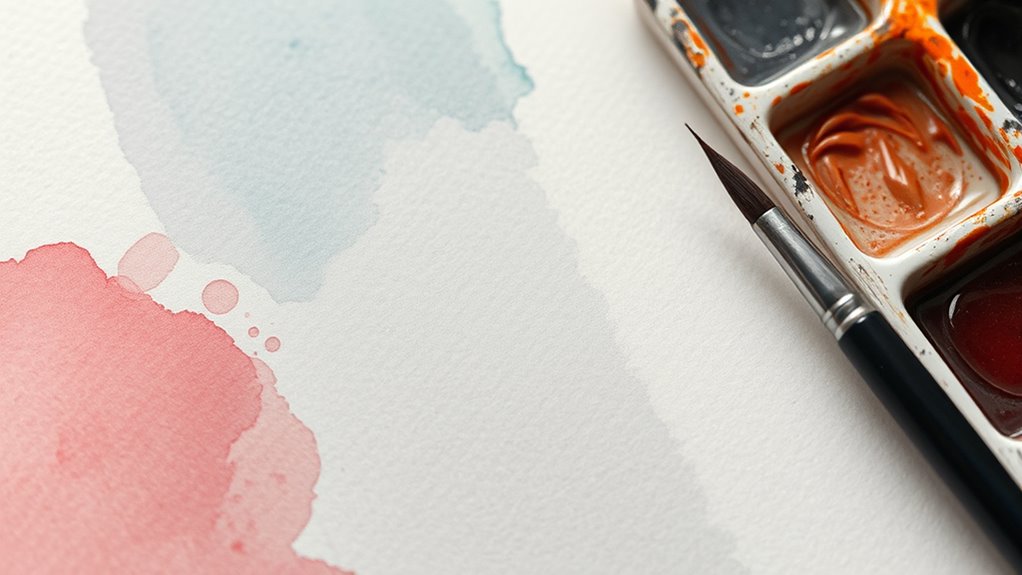
Developing a consistent watercolor practice requires intentional effort and a structured approach. To improve, focus on these key areas:
- Study color theory regularly to understand how colors interact and create harmony in your work.
- Practice various brush techniques, from wet-on-wet to dry brush, to build versatility.
- Keep a sketchbook to experiment with color mixes and brush strokes without pressure.
- Dedicate time to daily or weekly exercises, setting specific goals to track progress.
Frequently Asked Questions
How Does Watercolor Compare to Other Painting Mediums Historically?
You see, watercolor has a unique place in art history, evolving through various cultures and periods. Its transparency and fluidity set it apart from oil or acrylic paints, giving artists a delicate, spontaneous feel. Historically, watercolor gained cultural significance in Asian traditions, especially in Chinese and Japanese art, and later in Western landscapes. Its evolution reflects a pursuit of quick expression and subtlety, making it both challenging and highly valued.
Can Watercolor Techniques Be Adapted for Digital Art?
You can definitely adapt watercolor techniques for digital art. Studies show that over 60% of digital artists use digital brushes mimicking watercolor textures. With digital tools, you can achieve realistic color blending and transparency just like traditional watercolors. Experiment with digital brushes designed for watercolor effects, and you’ll find that your skills translate well, allowing you to create vibrant, fluid artworks without the mess.
What Are Common Myths About Watercolor Painting?
You might believe watercolor misconceptions like it’s only for delicate, light washes or that it’s hard to control. But myth busting reveals it’s versatile and expressive, capable of bold strokes and vibrant colors too. Don’t let these misconceptions hold you back. Embrace the unpredictability and experiment, knowing that mastering watercolor takes practice but offers endless creative possibilities. So, trust your instincts and enjoy the process!
How Does Environmental Humidity Affect Watercolor Work?
Environmental humidity markedly affects your watercolor work by influencing moisture control. High humidity increases moisture in the air, causing colors to spread uncontrollably and making it harder to achieve crisp edges. Conversely, low humidity dries your paint faster, which can lead to uneven washes or cracking. To manage humidity effects, you need to adapt your techniques, such as adjusting water ratios or working in controlled environments for consistent results.
Are There Specific Art Styles Best Suited for Watercolor?
You’ll find watercolor works best for styles emphasizing fluidity and spontaneity, like impressionism or abstract art. Your brushstroke textures can create dynamic effects, while effective color blending techniques help achieve seamless changeovers. These qualities allow you to explore expressive, layered compositions. Watercolor’s versatility suits artists who enjoy experimenting with transparency and soft edges, making it ideal for capturing moods, light, and movement in your artwork.
Conclusion
Mastering watercolor feels like taming a wild river—you learn to go with its flow rather than fight it. Embrace its unpredictability, and you’ll discover a world of endless possibilities waiting to be painted. With patience and practice, you’ll find that each mistake is just a ripple on the surface, guiding you toward more beautiful, expressive art. Keep paddling, and soon you’ll create masterpieces that dance with life and spontaneity.