Fine art stewardship brings together visual judgment, material science, environmental monitoring, documentation, and practical craftsmanship. Whether you manage a museum collection, run a gallery, teach in an art department, maintain an archive, or care for artwork at home, the same principle applies: every choice surrounding an object can affect how it looks, how safely it can be handled, and how well it survives over time.
This guide provides an orientation to the major systems involved in professional art care. It covers environmental control, storage, lighting, installation, print production, workspaces, and documentation. Each section explains the decisions that matter most and points to focused resources for comparing suitable equipment.
Begin With the Artwork and Its Risks
There is no universal preservation setup. An oil painting, watercolor, pigment print, textile, sculpture, and photographic negative respond differently to light, moisture, temperature changes, pollutants, and handling. Before purchasing equipment, identify the materials in your collection and the risks associated with them.
A useful assessment records the object’s medium, support, dimensions, condition, frame or enclosure, current location, and handling requirements. Note visible weaknesses such as flaking paint, brittle paper, loose mounting hardware, planar distortion, or surface grime. Fragile or valuable objects may require an assessment by a qualified conservator before they are cleaned, reframed, moved, or displayed.
Prioritize risks by their likely severity rather than by how easy they are to notice. A dramatic new light fixture may be less urgent than an unnoticed moisture problem, an unstable hanging method, or crowded storage that makes handling hazardous.
art conservation temperature and humidity monitor
As an affiliate, we earn on qualifying purchases.
As an affiliate, we earn on qualifying purchases.
Build a Stable Collection Environment
Understand Temperature and Relative Humidity
Temperature and relative humidity influence many deterioration processes. Excess moisture can encourage mold and corrosion, while very dry conditions may make some organic materials brittle. Repeated fluctuations can cause materials to expand and contract at different rates, stressing paint layers, wooden panels, paper, adhesives, and composite objects.
The right conditions depend on the collection, building, climate, and available controls. Stability is often as important as a nominal target. Avoid placing vulnerable works beside radiators, air-conditioning outlets, exterior doors, damp walls, or other locations with concentrated environmental change.
Measure Before You Intervene
A single wall display shows only the conditions at that moment. Continuous monitoring reveals daily cycles, seasonal patterns, equipment failures, and differences between rooms or cabinets. Data loggers can record temperature and humidity over time, helping you distinguish an isolated reading from a persistent problem.
Choose monitoring equipment according to its accuracy specification, logging interval, storage capacity, calibration options, alert functions, power source, and data-export workflow. The guide to temperature and humidity data loggers offers a useful starting point for comparing these features.
Place loggers where objects actually experience the environment, not only beside a thermostat. In a large room, readings may differ near windows, exterior walls, display cases, and ceiling-level storage. Keep a record of logger locations so that exported data retains its context.
Control Light, Dust, and Pollutants
Light damage is cumulative and generally irreversible. Paper, textiles, dyes, and many photographic materials can be especially sensitive. Reduce unnecessary exposure by limiting display duration, controlling daylight, switching lights off when spaces are unoccupied, and selecting illumination appropriate to the object.
Dust can abrade surfaces and attract moisture, while unsuitable construction materials, cleaning products, and fresh finishes may release compounds that affect collections. Good housekeeping, thoughtful material selection, appropriate filtration, and enclosed storage all contribute to preventive care.
museum quality light meter for artwork
As an affiliate, we earn on qualifying purchases.
As an affiliate, we earn on qualifying purchases.
Plan Storage Around Protection and Access
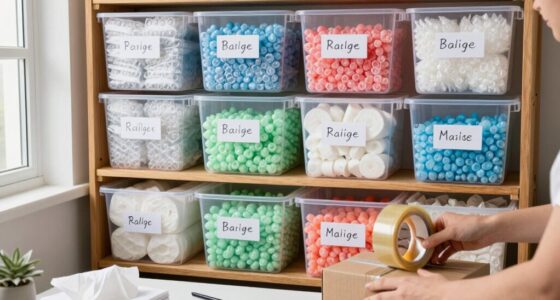
Storage should protect objects without making retrieval difficult. When works are crowded, stacked unpredictably, or stored beyond comfortable reach, routine access can become a source of damage. Begin by inventorying object types, dimensions, weights, frequencies of use, and expected collection growth.
Organize storage by material and format where practical. Flat paper works often benefit from suitable folders and horizontal support, while framed works may need racks or compartmentalized vertical storage. Small objects require trays, boxes, or padded supports that prevent movement and reduce direct handling.
Cabinet selection should account for construction materials, load capacity, drawer dimensions, closure quality, internal configuration, security, and the room in which the cabinet will stand. Review the available professional archival storage cabinets when planning dedicated storage for documents, prints, photographs, or collection materials.
Good labeling reduces unnecessary searching and handling. Give every object and enclosure a stable identifier, and record its precise location in an inventory. Avoid labels or adhesives that could transfer onto the artwork. Leave clear aisles, keep heavy objects at safe lifting heights where possible, and establish a quarantine area for incoming or potentially contaminated material.
archival storage boxes for fine art
As an affiliate, we earn on qualifying purchases.
As an affiliate, we earn on qualifying purchases.
Design Lighting for Viewing and Conservation
Separate Visibility From Exposure
Exhibition lighting must make art legible while managing cumulative exposure. More light is not automatically better. Effective display depends on contrast, beam placement, glare control, color rendering, room reflectance, and the sensitivity of the object.
Track lighting is valuable in changing displays because fixtures can be repositioned as layouts evolve. Compare beam angles, dimming compatibility, adjustability, color characteristics, mounting requirements, and accessory options. For gallery and museum applications, consult the guide to museum track lighting options.
Aim fixtures carefully to minimize reflections from glazing and glossy surfaces. Check the work from typical visitor positions, including seated and standing heights. Wall washing may support a calm, consistent presentation, while narrower beams can create emphasis; both approaches require attention to uneven brightness and visual distraction.
Use High-Quality Light in Studios and Documentation Areas
Studio lighting serves a different purpose from exhibition lighting. Artists, preparators, photographers, and conservators need consistent illumination for judging color, matching materials, examining surfaces, and documenting condition. High color-rendering performance can support more dependable visual comparisons, but it should be considered alongside output, diffusion, flicker behavior, adjustability, and working distance.
The comparison of high CRI LED panel lights can help when equipping a studio, imaging station, classroom, or examination area. Whatever the equipment, standardize the setup: control stray daylight, allow lights to reach normal operation, keep relevant settings consistent, and periodically check whether the viewing environment has changed.
digital art documentation camera
As an affiliate, we earn on qualifying purchases.
As an affiliate, we earn on qualifying purchases.
Install Artwork Securely
A safe installation begins with the wall, the object, and the hardware as a complete system. Determine the artwork’s weight and dimensions, inspect the frame and attachment points, and identify the wall construction before choosing fasteners. Hardware suitable for solid masonry may not be suitable for plasterboard, and a strong wall fixing cannot compensate for a weak frame attachment.
Security hanging systems can help discourage casual removal and keep frames aligned in public, educational, hospitality, or high-traffic settings. Compare mechanisms, load guidance, wall compatibility, installation access, adjustment range, and the tools required for removal. The guide to security picture hanging systems outlines options for different display contexts.
Plan installations before lifting. Mark positions, confirm clearances, prepare tools, and use enough trained people for the object’s size and weight. Never carry a work by decorative molding, loose wire, or fragile protrusions. After installation, inspect alignment, frame stability, hardware engagement, and nearby hazards such as doors, carts, sprinklers, or direct sunlight.
Create a Functional Art and Design Workspace
A well-planned workspace reduces awkward handling and makes careful work easier. Divide the room into zones for clean paper work, wet media, cutting, printing, drying, packing, photography, and computer tasks as needed. Keep food, drinks, solvents, and dusty processes away from collection objects and finished prints.
Work surfaces should suit both the task and the user. Consider surface size, height adjustment, angle range, rigidity, edge design, storage, mobility, and the space required around the table. If the room supports drawing, conservation documentation, architectural work, or teaching, explore the guide to professional drafting tables.
Provide task lighting without creating glare or harsh shadows. Store frequently used tools within easy reach, but keep sharp instruments and liquids away from object staging areas. Use supports rather than allowing fragile works to hang beyond a table edge. A clean temporary holding area is also essential when projects must be paused safely.
Understand Fine Art Print Production
Match the Printer to the Intended Output
Printer selection starts with the finished object. Ask what sizes you need, which papers or other supported media you intend to use, how closely color must be managed, how frequently you will print, and whether the machine belongs in a home studio, classroom, service bureau, or production environment.
Pigment ink printers are commonly considered for photographic and fine art output. Meaningful comparison includes maximum media size, supported media paths, ink configuration, driver and operating-system compatibility, maintenance needs, and color-management options. The guide to pigment ink photo printers helps frame these choices for photographers and artists.
When work exceeds standard desktop formats, other considerations become more important: floor space, roll handling, sheet feeding, output workflow, ventilation, electrical requirements, and the practical movement of large prints. Use the overview of large-format art printers for fine art prints to compare equipment intended for larger output.
Treat Color Management as a Workflow
A printer alone cannot guarantee predictable color. Results depend on the monitor, viewing conditions, software settings, printer behavior, ink, media, and the profile used to translate color between devices. Establish a repeatable workflow rather than correcting every image through trial and error.
Calibrate and profile displays where appropriate, use profiles suited to the printer and media combination, and evaluate prints under consistent lighting. Soft proofing can help anticipate changes in gamut and tonal response, but a physical proof remains important when output quality is critical. Record settings for repeat jobs, including file version, media, profile, rendering choice, resolution, and driver configuration.
Plan for Handling and Storage After Printing
Allow prints to dry or settle according to the ink and media guidance before stacking, sleeving, framing, or shipping. Handle surfaces with clean, dry hands or suitable gloves when the material requires them. Protect prints from abrasion and fingerprints, and use storage materials selected for the specific print process.
For editions, document the source file, production date, printer, ink set, paper, profile, dimensions, and any finishing steps. This information supports consistent reprints, collection records, and future research into how the object was made.
Document Collections and Procedures
Documentation connects all parts of art stewardship. An object record may include identification, creator, title, date, medium, dimensions, inscriptions, provenance, rights information, acquisition details, location, condition, treatment history, exhibition history, and associated images.
Use consistent terminology and file naming. Back up records, control access to sensitive information, and distinguish verified facts from assumptions. When an object moves, update its location immediately. When its condition changes, record what changed, when it was observed, and who made the observation.
Written procedures are equally valuable. Create concise instructions for handling, photography, environmental monitoring, emergency response, incoming-object inspection, installation, and equipment shutdown. Train everyone who works with the collection, including volunteers and temporary staff, and review procedures after changes to the building, collection, or team.
Prepare for Emergencies
Emergency planning should address water leaks, fire, power loss, severe weather, pests, theft, and equipment failure. Keep staff contacts, emergency services, insurers, conservators, facilities personnel, and specialist recovery providers in an accessible list. Identify shutoff locations and establish who is authorized to act.
Maintain basic response supplies in a known location, but do not allow an improvised response to endanger people. Human safety comes first. Once an area is declared safe, clear priorities help teams protect the most vulnerable or significant materials without wasting time deciding what to do.
Back up digital records away from the primary site and retain enough information to identify objects if labels or storage locations are disrupted. Review the plan regularly, replace expired supplies, and conduct simple exercises so responsibilities are understood before a real event.
Turn Separate Purchases Into a Coherent System
Collection care improves when equipment choices support a shared plan. Environmental data should inform storage and display decisions. Lighting should suit both the artwork and the room. Hanging hardware should match the frame, wall, and security needs. Print equipment should fit the intended format, media, color workflow, and available workspace.
Start with an inventory and risk assessment, then address the most consequential weaknesses. Document baseline conditions, make one manageable improvement at a time, and verify whether it solved the original problem. This approach creates a practical preservation program that can grow with the collection while keeping art accessible for study, teaching, exhibition, and enjoyment.