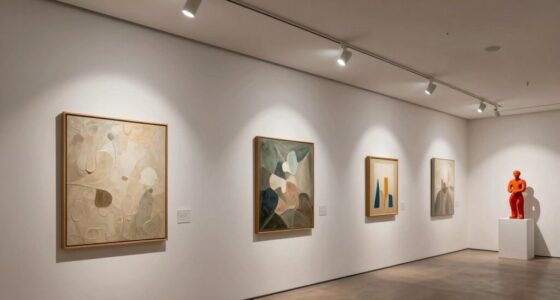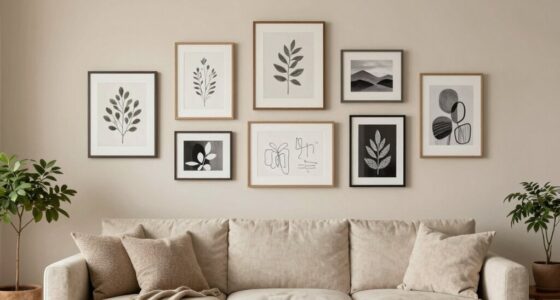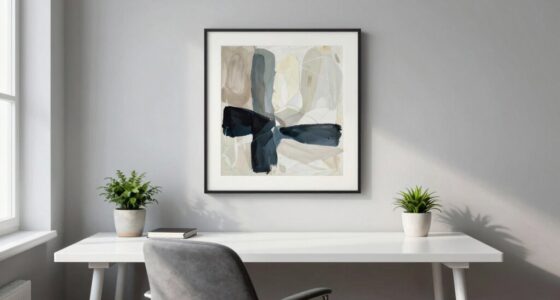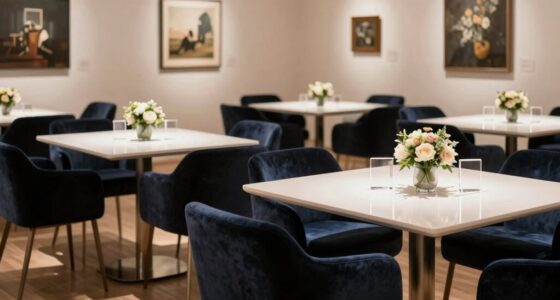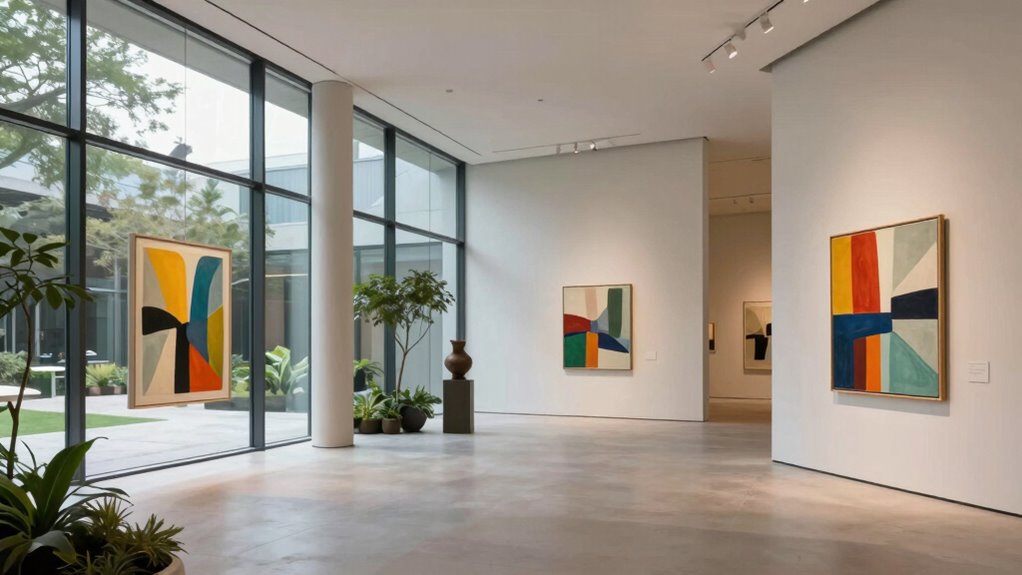

To create an art-friendly space, start by optimizing lighting with layers of adjustable LEDs and UV filters to prevent fading while highlighting details. Control climate by maintaining consistent temperature and humidity, avoiding heat sources and using HVAC systems. Design your layout for clear flow, placing artworks at eye level and creating easy pathways. Balancing light, climate, and space allows your collection to thrive and visitors to enjoy a more engaging experience—keep exploring for more tips to perfect your setup.

Prime made for students and young adults
- Fast, free delivery for dorm and study essentials
- Prime Video and Amazon Music included
- Member-only deals
Key Takeaways
- Use layered, adjustable lighting with UV filters to enhance artwork visibility while preventing fading.
- Maintain stable climate conditions at 70°F and 40-50% humidity with precise HVAC controls.
- Arrange artworks at eye level and create clear pathways to optimize viewer flow and accessibility.
- Incorporate soft lighting and soundproofing to enhance atmosphere and visitor comfort.
- Balance visual elements and lighting to create an inviting, cohesive space that encourages engagement.
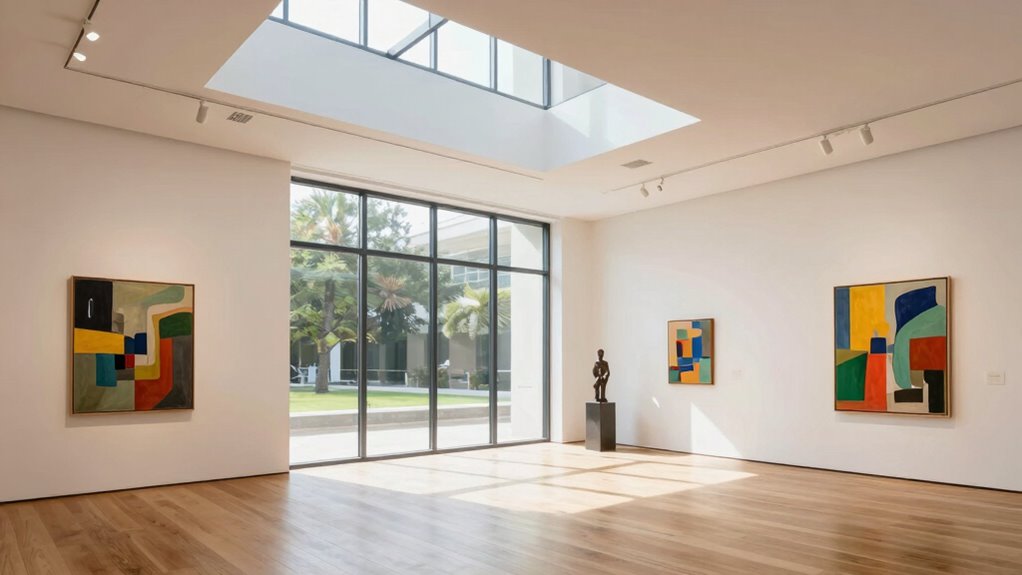
Ever wondered how to create a space that truly celebrates art? It starts with understanding that a well-designed environment can elevate your artwork and make every piece stand out. The first step is focusing on lighting optimization. Natural light is ideal, as it reveals colors accurately and brings vitality to your art. However, too much direct sunlight can cause fading over time, so using adjustable window treatments or UV-filtering glass helps balance illumination. Incorporate layered lighting—combine ambient, task, and accent lights—to highlight details and create a welcoming atmosphere. LED lights are a smart choice because they emit minimal heat and can be customized to match the artwork’s specific needs, ensuring your pieces are always showcased in their best light. Additionally, proper lighting control is essential to prevent damage and maintain the desired ambiance in your art space. Ensuring that lighting is flexible and adaptable can help you adjust to different times of day and seasons, further protecting your collection. A thoughtful lighting setup can also influence the overall mood and perception of your art environment.
Next, climate control plays an essential role in preserving your art. Fluctuations in temperature and humidity can lead to warping, cracking, or mold growth. You should aim to keep the environment stable, ideally around 70°F (21°C) with relative humidity between 40-50%. Installing a high-quality HVAC system with precise humidity controls allows you to maintain a consistent climate without drafts or sudden changes. Avoid placing artwork near heat sources, vents, or windows where temperature swings are common. A dehumidifier can also help in damp environments, preventing mold and deterioration. Proper climate control doesn’t just protect your art; it also creates a comfortable space for you to enjoy and work in. Maintaining a stable climate is essential for the long-term preservation of delicate art pieces.
Flow is another crucial element. You want your space to feel inviting and easy to navigate, guiding visitors naturally from one piece to the next. Arrange artworks at eye level and create clear pathways, so viewers can appreciate each piece without feeling crowded or obstructed. Use furniture and display elements thoughtfully to direct movement and establish visual balance. Good flow encourages engagement and allows your collection to tell a story seamlessly. Additionally, consider acoustics—sound can influence the overall atmosphere, so soft background music or soundproofing can enhance the experience without overwhelming the visual focus. Creating a comfortable environment enhances both the aesthetic and functional qualities of your art space. Thoughtful layout and space planning can significantly enhance the viewer’s experience and appreciation.
adjustable LED art lighting with UV filters
As an affiliate, we earn on qualifying purchases.
As an affiliate, we earn on qualifying purchases.
Frequently Asked Questions
How Can I Protect Art From Humidity Fluctuations?
To protect your art from humidity fluctuations, you should install humidity barriers to regulate moisture levels and prevent excess humidity from reaching your pieces. Using dehumidification systems helps maintain a stable environment, especially in damp or fluctuating climates. Regularly monitor humidity levels with a hygrometer, and adjust your systems accordingly to guarantee your art stays safe and preserved in a consistent, controlled environment.
What Are the Best Lighting Types for Preserving Artwork?
Think of lighting techniques as gentle guardians, shielding your artwork like a delicate bloom. To preserve your art, opt for LED or UV-filtered lighting, which prevents harmful rays and minimizes heat. These art preservation strategies guarantee your pieces aren’t scorched or faded over time. By choosing the right lighting types, you maintain the beauty and integrity of your collection, letting it flourish in a protected, well-lit environment.
How Do I Control Pests in an Art Space?
To control pests in your art space, start with pest prevention by sealing cracks and keeping the area clean. Use insect monitoring traps to detect early signs of pests, allowing you to act swiftly before damage occurs. Regular inspections help identify issues early. Maintain low humidity and proper ventilation to deter pests naturally. These proactive steps protect your artwork and keep your space safe and pest-free.
What Materials Are Safest for Climate Control Equipment?
Like a trusty knight’s armor, choose materials with high durability and chemical safety for climate control equipment. Opt for stainless steel, aluminum, or copper, which resist corrosion and don’t emit harmful fumes. Avoid plastics with volatile compounds, as they can degrade and release toxins over time. Your goal is to guarantee your art space remains safe, stable, and free of pollutants, safeguarding your artwork and visitors alike.
How Can I Optimize Space Flow for Art Display?
To optimize space flow for art display, design a gallery layout that guides visitor movement naturally. Use clear pathways, open spaces, and strategic placement of exhibits to prevent congestion. Consider sightlines and focal points to direct attention smoothly from one piece to the next. By creating an intuitive flow, you enhance the visitor experience, making it easier to appreciate each artwork without feeling crowded or distracted, ensuring your gallery feels inviting and accessible.
digital climate control system for art preservation
As an affiliate, we earn on qualifying purchases.
As an affiliate, we earn on qualifying purchases.
Conclusion
As you fine-tune your space with thoughtful lighting, climate control, and seamless flow, you’ll find that art naturally becomes more vibrant and enduring. Sometimes, the smallest adjustments—like a well-placed window or an intuitive thermostat—coincide perfectly with your artistic vision. In embracing these smart, subtle changes, you create an environment where art and life harmonize effortlessly, reminding you that the perfect setting often reveals itself when you least expect it, just like a masterpiece’s final brushstroke.
art display wall mount with eye level height
As an affiliate, we earn on qualifying purchases.
As an affiliate, we earn on qualifying purchases.
soundproofing panels for art gallery
As an affiliate, we earn on qualifying purchases.
As an affiliate, we earn on qualifying purchases.
Fall Picks
fall essentials
As an affiliate, we earn on qualifying purchases.