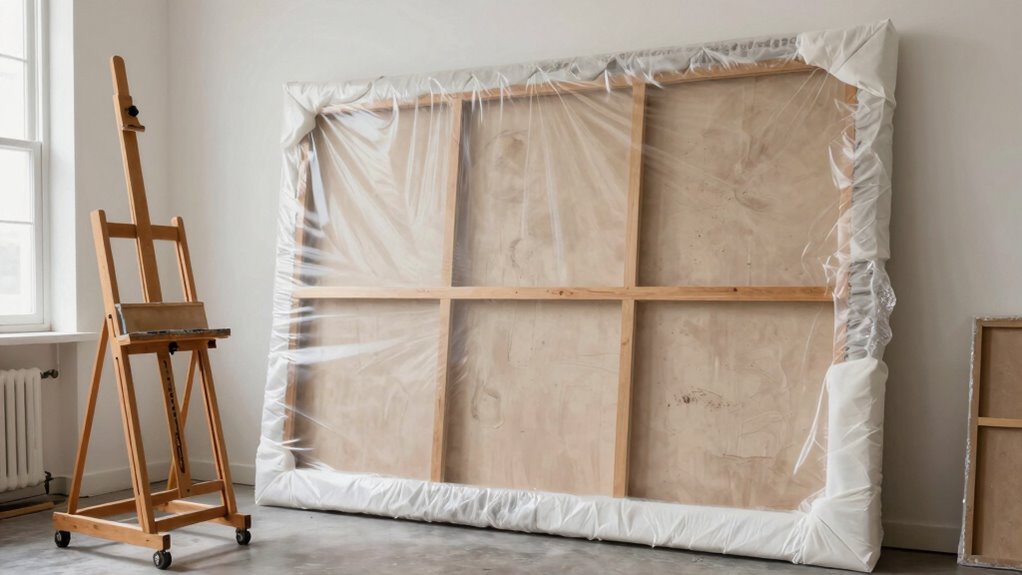

To protect oversized works before hanging, use sturdy, flat surfaces like large palettes or custom platforms to prevent warping. Wrap your artwork with acid-free paper or bubble wrap for added safety, and store it upright rather than stacking it flat. Keep the environment stable by controlling temperature and humidity, and handle the pieces carefully when moving. For more tips on preserving your art, keep exploring these strategies to guarantee your work stays in top condition.

Prime made for students and young adults
- Fast, free delivery for dorm and study essentials
- Prime Video and Amazon Music included
- Member-only deals
Key Takeaways
- Store oversized artworks on sturdy, flat surfaces like large palettes or custom platforms to prevent warping.
- Wrap works with acid-free paper or bubble wrap for dust, dirt, and minor protection.
- Keep artworks upright in climate-controlled environments to avoid pressure and environmental damage.
- Label storage containers clearly to minimize handling and facilitate easy access.
- Regularly inspect stored pieces for early signs of deterioration and adjust storage conditions accordingly.
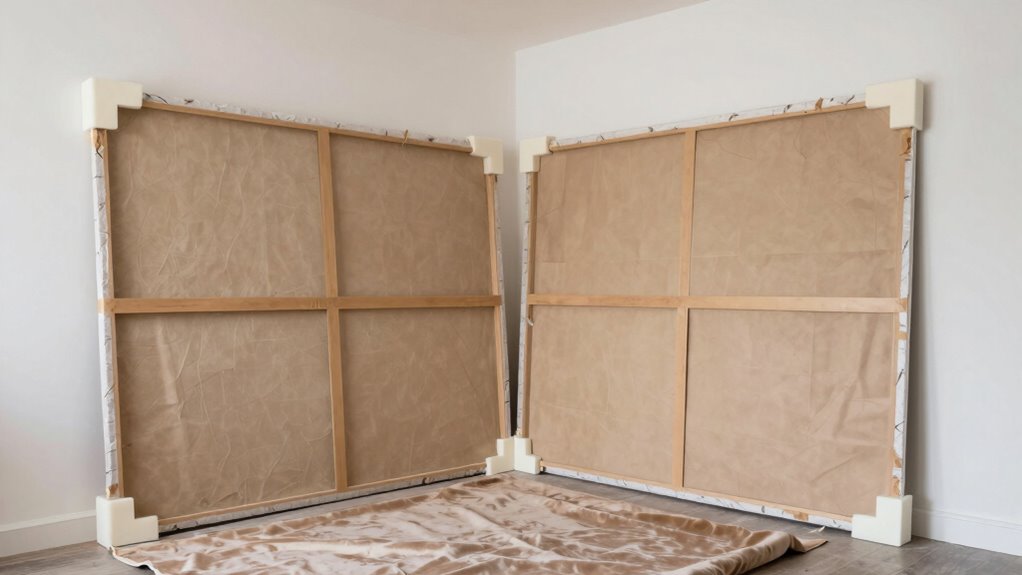
When you’re working on oversized artworks that aren’t yet ready to hang, protecting them from damage becomes essential. Large pieces are especially vulnerable to environmental factors and accidental mishaps. To keep them in pristine condition, you need effective storage solutions that prioritize safety and preservation. Choose sturdy, flat surfaces like large palettes or custom-made platforms that prevent warping or bending. If the artwork can’t be laid flat, consider using padded crates or specialized art storage cabinets designed for oversized pieces. These containers should have smooth interiors to avoid scratching or tearing your work. Additionally, wrapping your artwork with acid-free paper or bubble wrap provides an extra layer of protection against dust, dirt, and minor impacts. Proper storage techniques are crucial for maintaining the integrity of your oversize works. Climate control plays a vital role in safeguarding your artwork during storage. Fluctuations in temperature and humidity can cause warping, cracking, or mold growth. Maintain a consistent environment in a dedicated storage area, ideally between 65-70°F (18-21°C) with relative humidity around 40-50%. Use climate-controlled storage units if possible, especially if your artwork is valuable or particularly sensitive. Avoid placing your work in basements, attics, or garages where temperature swings and moisture levels are harder to regulate. Humid environments can lead to mold, while overly dry conditions might cause cracking. Invest in dehumidifiers or humidifiers to fine-tune the climate as needed, ensuring your artwork remains stable over time. Handling oversized artworks carefully is equally important. Always lift and move them with multiple people if possible, supporting the piece from underneath to prevent bending or dropping. Never drag the work across surfaces; instead, slide it gently to avoid tears or abrasions. When storing, keep the artwork upright rather than stacked horizontally, which can cause pressure marks or deformation. Label storage containers clearly so you can easily locate pieces without unnecessary handling. Proper handling techniques also contribute to preventing accidental damage. Regular inspection and maintenance help identify early signs of deterioration and prevent long-term damage. Understanding art preservation best practices can further extend the lifespan of your works. Additionally, staying informed about storage environment best practices can help you make adjustments to better protect your oversized artworks over time. By combining proper storage solutions with vigilant climate control, you ensure your oversized artworks stay protected until they’re ready to hang, preserving their integrity and beauty for years to come.
Frequently Asked Questions
What Materials Are Best for Temporary Art Protection?
You should use protective coatings like acrylic or spray-on varnishes to shield your artwork from dust and moisture. For storage environments, opt for acid-free paper, bubble wrap, or foam panels to prevent damage. Guarantee the space is climate-controlled, avoiding extreme temperatures and humidity. This combination of materials and proper storage conditions helps safeguard your oversized works until you’re ready to hang them, keeping them pristine and ready for display.
How Often Should I Check on My Stored Artwork?
You should check on your stored artwork at least once a month to guarantee proper preservation. Regular inspections allow you to spot issues like moisture, pests, or physical damage early. When considering art storage techniques and display considerations, keep the artwork in a stable, climate-controlled environment, and avoid stacking or overcrowding. This routine helps maintain the integrity of your pieces until they’re ready to hang, ensuring they stay in prime condition.
Can I Use Plastic Wrap for Long-Term Storage?
Using plastic wrap for long-term storage is generally not recommended, as it can trap moisture and cause damage. Think of it like wrapping a delicate gift too tightly; it might seem protective but can actually harm the item over time. Instead, you should use proper framing techniques and display methods, like acid-free materials and flat storage, to guarantee your artwork remains in pristine condition until you’re ready to hang it.
How Do I Prevent Mold and Moisture Damage?
To prevent mold and moisture damage, you should control humidity levels in your storage area. Use a dehumidifier or silica gel packs to keep humidity low, ideally between 40-50%. Regularly check for signs of mold or moisture, and guarantee good airflow around your artwork. Proper humidity control is key to mold prevention, protecting your oversized works from damage until you’re ready to display or store them properly.
What Are Common Mistakes to Avoid During Protection?
You should avoid common mistakes like neglecting proper framing techniques and overlooking security measures. Don’t assume wrapping with plastic or bubble wrap alone suffices; these can trap moisture and cause damage. Instead, use breathable materials and sturdy supports. Also, don’t forget to secure the piece properly during storage—unstable framing can lead to accidents. By carefully combining framing techniques with security measures, you’ll better protect your oversized work from harm.
Conclusion
So, don’t let your masterpiece become a victim of chaos or neglect. Protect it like it’s the crown jewel of your life—because in a way, it is. When you safeguard your oversized work now, you’re not just preventing damage; you’re guarding a future legend in the making. Remember, the way you care for it today shapes the awe it’ll inspire tomorrow. Treat it like a treasure, and it’ll shine brighter than you ever imagined.
Fall Picks
fall essentials
As an affiliate, we earn on qualifying purchases.