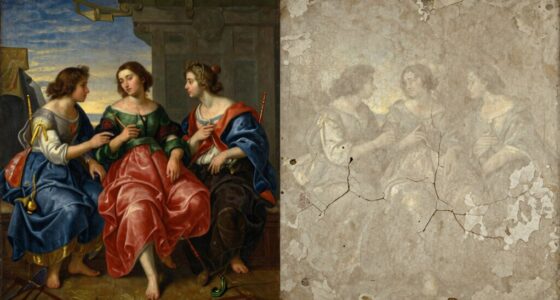
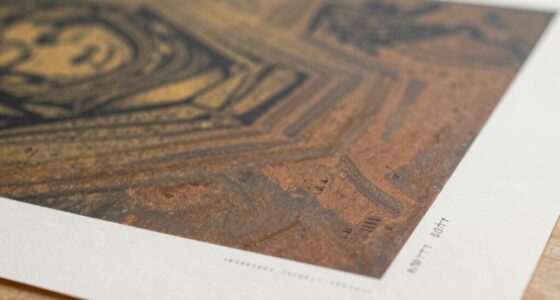
If you find mold on your artwork, act quickly but carefully. Assess how much mold is present and note the material—whether it’s paper, canvas, or wood—to choose the right approach. Wear protective gear like gloves and a mask, then isolate the piece to prevent spores from spreading. Document the damage and consider whether it needs professional help or immediate cleaning. To prevent future issues, improve storage conditions. Keep exploring for detailed steps to protect your artwork effectively.
Key Takeaways
- Immediately isolate the artwork to prevent mold spores from spreading.
- Wear protective gloves, mask, and eye protection before handling or cleaning.
- Take detailed photos and notes to document the damage and environmental conditions.
- Assess the severity and material of the artwork to determine if professional help is needed.
- Control storage environment by reducing humidity and improving ventilation to prevent further mold growth.
Assess the Extent of the Mold Growth
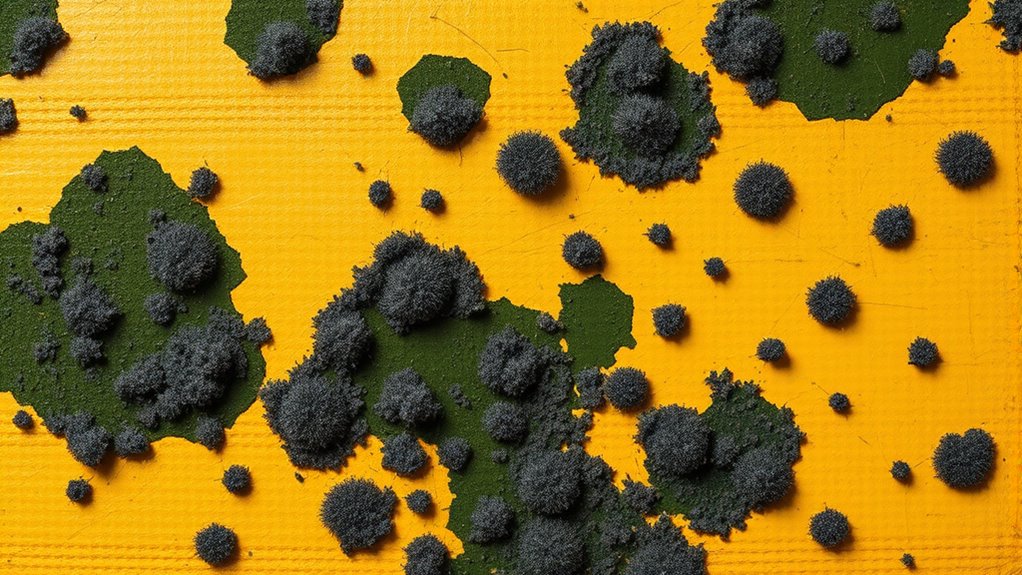
To effectively address mold on artwork, you first need to assess how widespread the growth is. Start by examining the artwork carefully, paying attention to the material involved—be it paper, canvas, or wood. The artwork material influences how mold spreads and how easily it can be cleaned. Evaluate the mold severity by checking for visible spots, discoloration, or fuzzy growth. Light mold might be confined to a small area, while severe cases could cover large sections or penetrate deeply into the material. Understanding the extent helps determine the best cleaning approach and whether professional restoration is necessary. Be thorough in your assessment, as rushing could lead to further damage or incomplete removal of the mold. Additionally, consider cleaning and hygiene factors to prevent future mold growth during the restoration process. Proper ventilation and humidity control can help prevent mold reoccurrence in the future. Recognizing the extent of mold is crucial for choosing the appropriate cleaning method and avoiding further harm to your artwork. Incorporating climate control techniques can further reduce the risk of mold development over time.
Wear Protective Gear Before Handling the Artwork

Before you handle mold-affected artwork, don protective gear to safeguard yourself from mold spores and potential toxins. Wearing gloves, a mask, and eye protection is essential to minimize exposure. Handling precautions include using disposable gloves or thoroughly disinfecting reusable ones to prevent cross-contamination. A dust mask or respirator keeps spores from being inhaled, reducing health risks. Cover your skin with long sleeves or a protective gown to avoid direct contact. Proper protective gear not only shields you but also helps prevent spreading mold to other surfaces. Additionally, understanding the mold remediation process can help you take more effective steps during cleanup. Being aware of mold growth factors can also help prevent future issues. Incorporating proper ventilation during cleanup can significantly reduce airborne mold spores, creating a safer environment for both you and the artwork. Using appropriate cleaning supplies is crucial to ensure effective mold removal without damaging the artwork. The use of protective clothing is crucial to further reduce the risk of contamination. Taking these steps creates a safe environment for both you and the artwork during the cleanup process.
Isolate the Affected Piece to Prevent Cross-Contamination
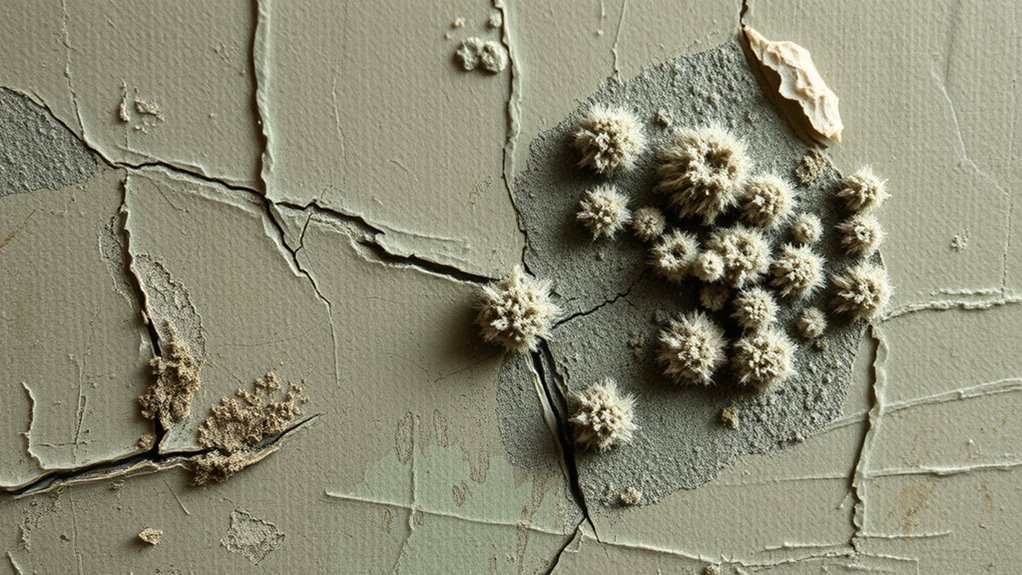
You should remove the moldy artwork from its display area immediately to prevent spores from spreading. Seal it in a containment bag or box to contain any mold particles. This step helps protect other pieces and reduces the risk of cross-contamination. Additionally, handling the artwork with proper techniques can minimize the spread of mold during removal. Employing sustainable cleaning methods can further safeguard your collection from future mold growth. Using air quality monitoring devices can also help detect mold spores early and prevent recurrence. Regular environmental assessment can identify conditions conducive to mold development and help maintain a safe display environment.
Remove From Display
When mold is discovered on artwork, isolating the affected piece is essential to prevent cross-contamination. Carefully remove it from the display, ensuring you avoid spreading spores. Consider how framing techniques may have contributed to mold growth, and remove or adjust framing if needed. When relocating the artwork, minimize exposure to direct display lighting, which can worsen mold issues. To do this effectively:
- Handle the piece using gloves and a clean workspace.
- Carefully detach it from its current framing, avoiding contact with unaffected areas.
- Place it in a sealed, breathable container for transport.
- Keep it in a cool, dry environment until proper cleaning or treatment can occur. Be mindful of air quality factors that can influence mold development and preservation efforts. Ensuring proper ventilation in storage and display areas can help prevent future mold growth. This step helps contain mold spores and prepares your artwork for safe preservation.
Seal in Containment
To effectively prevent mold from spreading further, sealing the affected artwork in a containment area is essential. You should place the piece in airtight containers or sealed plastic bags to limit exposure to mold spores. If possible, create protective barriers around the artwork using plastic sheeting or tape to isolate it from other items. This step minimizes cross-contamination and keeps mold spores contained. Avoid opening the container or barrier frequently to reduce the risk of spreading spores into the environment. Make sure the containment area is clearly marked and secure until you can properly clean or treat the artwork. Utilizing containment techniques like secure containment measures can help protect your valuable items from further contamination. Proper containment is a key part of managing mold issues in your home. By isolating the piece, you reduce the chance of mold spreading to your other valuable items or surfaces, especially when combined with proper mold prevention strategies.
Document the Damage for Future Reference
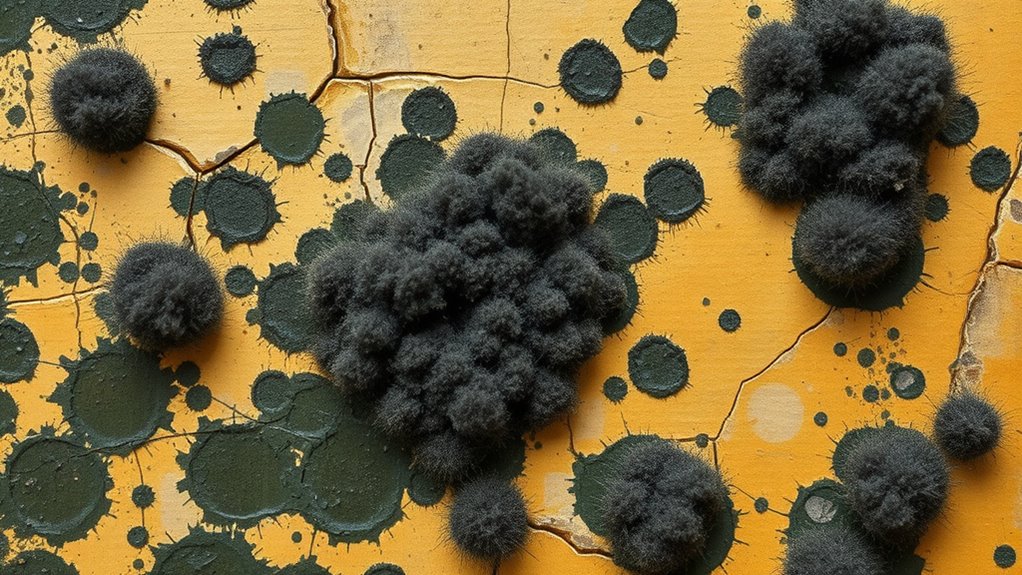
Documenting the damage caused by mold on artwork is an essential step in the preservation process. Proper mold documentation ensures you have a detailed record of the extent of the infestation, which is necessary for insurance, restoration planning, and future reference. To do this effectively, focus on high-quality artwork photography that captures close-ups and overall views, highlighting areas affected by mold. Keep a detailed log of the damage, noting color changes, texture shifts, and mold growth patterns. Additionally, record environmental conditions like humidity and temperature at the time of inspection. Understanding name coverage is crucial to ensuring that all relevant details are accurately documented and that the artwork’s historical significance is preserved. Proper artwork documentation also aids in identifying the best conservation techniques tailored to the specific mold and material involved. This documentation can also serve as a reference for future treatments, helping conservators track changes over time and evaluate the effectiveness of remediation efforts. Including information about environmental controls helps in developing strategies to prevent future mold growth. Finally, store all images and notes securely, creating a complete record for professionals to assess and develop a targeted preservation plan. Accurate mold documentation is a fundamental foundation for successful artwork conservation, especially when considering climate‑specific conditions that can influence mold growth and remediation strategies.
Avoid Direct Contact With Mold-Infested Areas
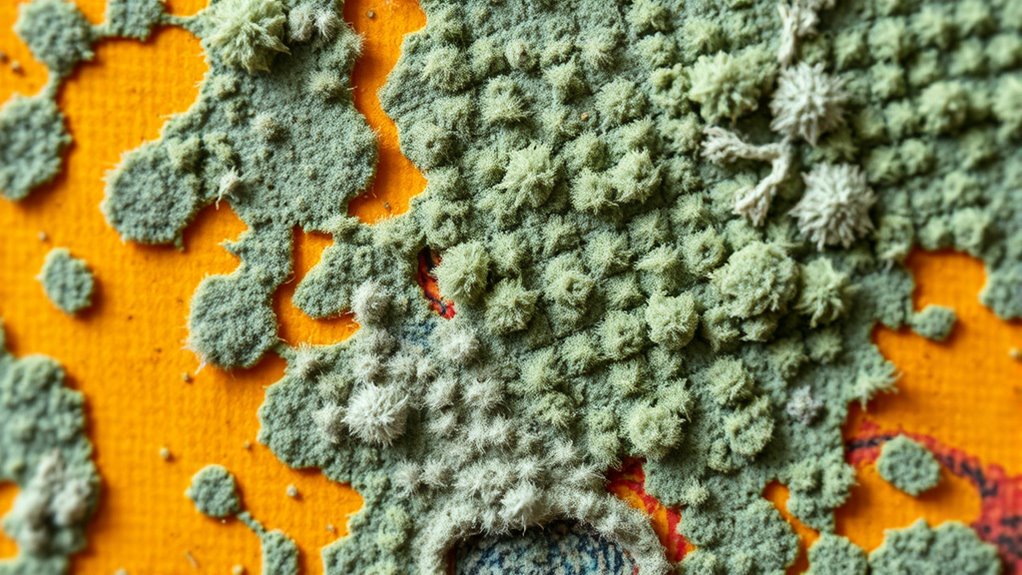
Avoiding direct contact with mold-infested areas is essential to prevent spreading spores and causing further damage. When handling mold safely, always wear gloves and a mask to minimize exposure. Keep tools and cleaning supplies away from affected zones to prevent mold spread. Use a barrier, like plastic sheeting, to isolate the contaminated area. Additionally, understanding mold cleanup procedures can help ensure safe and effective removal. Familiarity with safe mold removal practices can further reduce health risks and ensure proper cleanup.
Determine the Material and Surface Type of Your Artwork
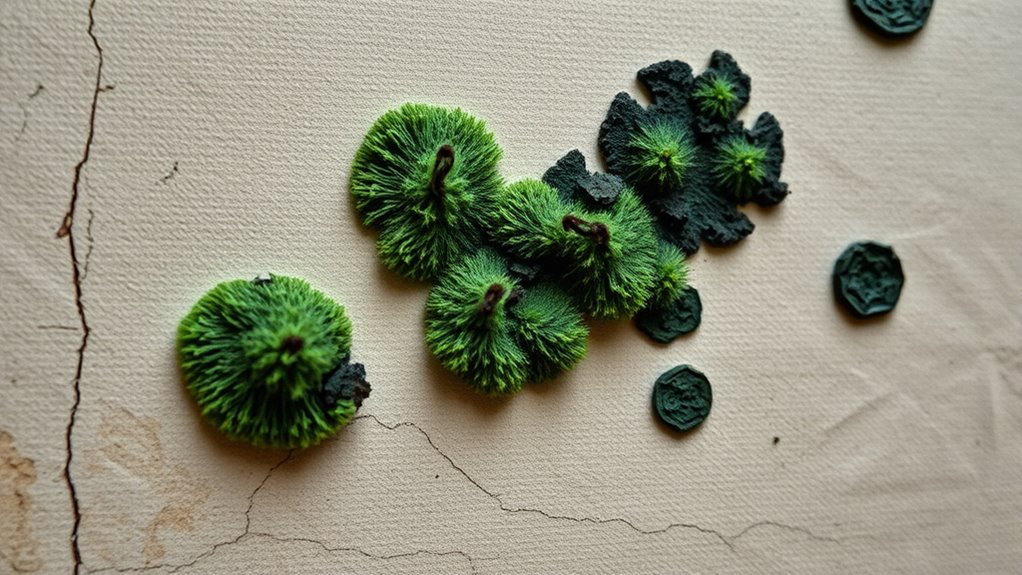
Understanding the material and surface type of your artwork is essential for choosing the appropriate cleaning and preservation methods. Proper artwork classification and surface texture determine how mold and cleaning agents interact with your piece. To accurately assess your artwork, consider these steps:
- Identify the medium—canvas, paper, wood, or metal.
- Observe the surface texture—smooth, rough, or textured.
- Determine if the surface is porous or non-porous.
- Note any existing finishes or coatings that might affect cleaning.
Knowing these details helps you avoid damage and select suitable methods. For example, mold on watercolor paper requires different treatment than mold on a varnished wooden sculpture. Proper identification ensures you approach mold removal safely and effectively.
Consider Immediate Cleaning or Professional Evaluation

If you notice mold on your artwork, it’s important to decide quickly whether to attempt immediate cleaning or seek professional help. Your choice depends on the mold’s extent and the artwork’s value. For minor mold, you might consider gentle cleaning techniques, such as lightly dabbing with a soft cloth or using a mild cleaning solution. However, if the mold covers a large area or if the piece is invaluable, it’s best to opt for a professional assessment. Professionals have the expertise to evaluate the damage and use specialized cleaning methods that minimize risk. Attempting unsafe or improper cleaning could worsen the mold or damage your artwork. When in doubt, consulting a conservator ensures proper care and preservation, preventing further harm.
Adjust Storage Conditions to Prevent Future Mold Growth
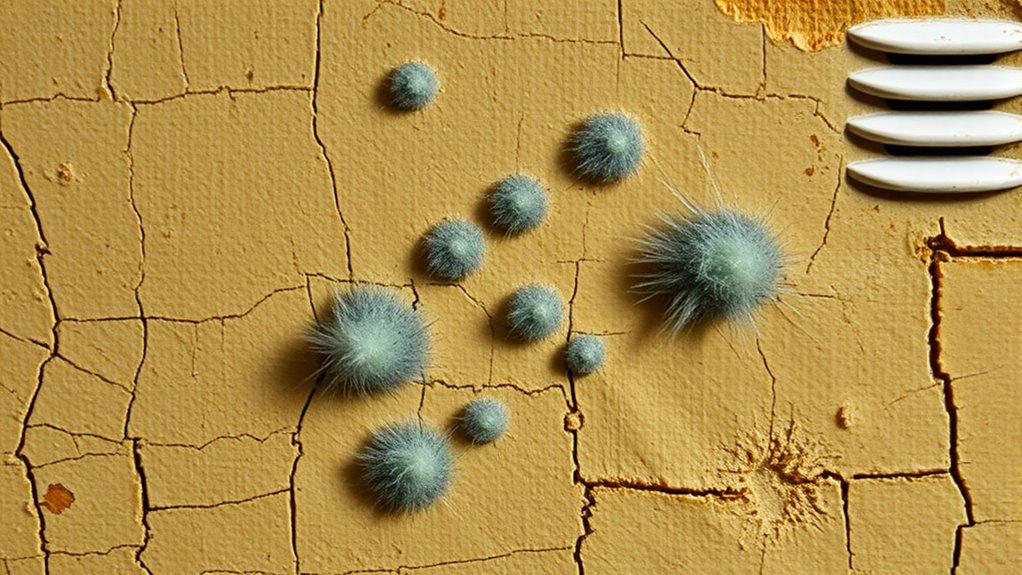
To prevent mold from returning, you should optimize your storage conditions by controlling temperature, humidity, and airflow. Proper humidity control is essential; aim for 40-50% relative humidity to inhibit mold growth. Maintain a stable storage environment by avoiding fluctuations in temperature, which can foster mold development. Ensure good airflow around your artwork to prevent moisture buildup. Consider these steps:
Maintain artwork by controlling humidity, temperature, and airflow to prevent mold recurrence.
- Use dehumidifiers in enclosed spaces to regulate humidity.
- Store artwork in a climate-controlled room with consistent temperature.
- Avoid airtight containers that trap moisture; opt for breathable covers.
- Regularly check your storage environment for signs of excess moisture or mold.
Implementing these measures creates an inhospitable environment for mold, safeguarding your artwork for the future.
Frequently Asked Questions
How Can I Identify Mold on Different Artwork Materials?
You can identify mold on artwork by inspecting for fuzzy or slimy patches, often gray, green, or black, especially in humid areas. Use fungal identification techniques like magnification to spot spores, and check for a musty odor. Moisture detection tools help you find hidden damp spots that foster mold growth. If you notice any of these signs, take immediate steps to prevent further damage and consult a professional for proper removal.
What Are Safe Cleaning Methods for Delicate Art Pieces?
Think of cleaning delicate art pieces as walking a tightrope—you need balance and precision. Use gentle, pH-neutral cleaning supplies like distilled water and soft brushes or microfiber cloths to prevent damage. Avoid harsh chemicals or abrasive tools. Proper art preservation depends on careful cleaning, so handle each item with care, and when in doubt, consult a professional. Your artwork’s longevity depends on your gentle touch.
How Do I Prevent Mold Growth During Seasonal Changes?
To prevent mold growth during seasonal changes, you should focus on humidity control and proper ventilation. Keep indoor humidity levels between 40-50%, using a dehumidifier if needed. Guarantee your space has good airflow by opening windows or using fans. Regularly monitor humidity and ventilation to prevent excess moisture, which encourages mold. Taking these steps helps protect your artwork from mold during fluctuating seasonal conditions.
Can Mold on Artwork Be Completely Removed?
Yes, mold on artwork can often be completely eliminated through proper art preservation and mold remediation techniques. You should carefully clean the affected area with gentle, pH-neutral solutions and consult a professional conservator for extensive damage. Acting quickly helps prevent mold from spreading further. Keep in mind, some delicate or valuable pieces may require specialized treatment to ensure their integrity and avoid future mold growth.
When Should I Consult a Professional Conservator?
You should consult a professional conservator if mold has penetrated deeply into your artwork or if cleaning risks damaging it further. Don’t wait until framing or insurance claims become complicated; expert advice guarantees proper preservation. A conservator evaluates the extent of mold, recommends appropriate treatments, and helps document damage for insurance. Acting promptly protects your artwork’s integrity and value, preventing costly repairs or loss in the future.
Conclusion
Think of your artwork as a delicate garden—tender and in need of careful nurturing. By taking these initial steps, you’re gently guiding it away from the shadows of mold, allowing it to breathe freely again. With patience and the right approach, you’re helping your masterpiece shine brighter, like sunlight breaking through clouds. Trust in your actions—they’re the gentle rain that restores beauty and keeps your art flourishing for years to come.