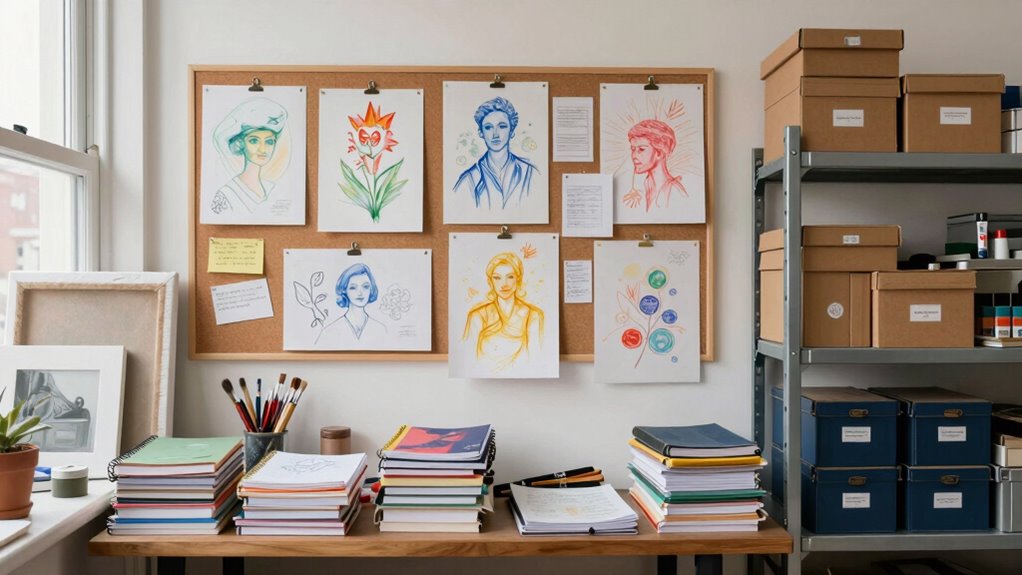

To prevent your artwork from disappearing into a closet, start by digitizing your pieces with high-quality photos or scans, then use cloud storage or external drives to keep backups safe. Organize your work with detailed labels and a clear catalog system, and create an online portfolio for easy sharing. Regularly update and maintain your archive to guarantee your art stays protected and accessible for years to come. Keep going to learn more about strong archiving techniques.

Prime made for students and young adults
- Fast, free delivery for dorm and study essentials
- Prime Video and Amazon Music included
- Member-only deals
Key Takeaways
- Digitize artworks with high-resolution images and organize them with detailed metadata for easy retrieval.
- Implement a consistent cataloging system using labels, color codes, and standardized tags.
- Store digital files securely in the cloud and on external drives with regular backups and encryption.
- Use proper physical storage solutions like archival boxes and shelving to protect physical works.
- Maintain an online portfolio and schedule routine updates and backups to keep the archive current and safe.
Why Proper Archiving Matters for Artists
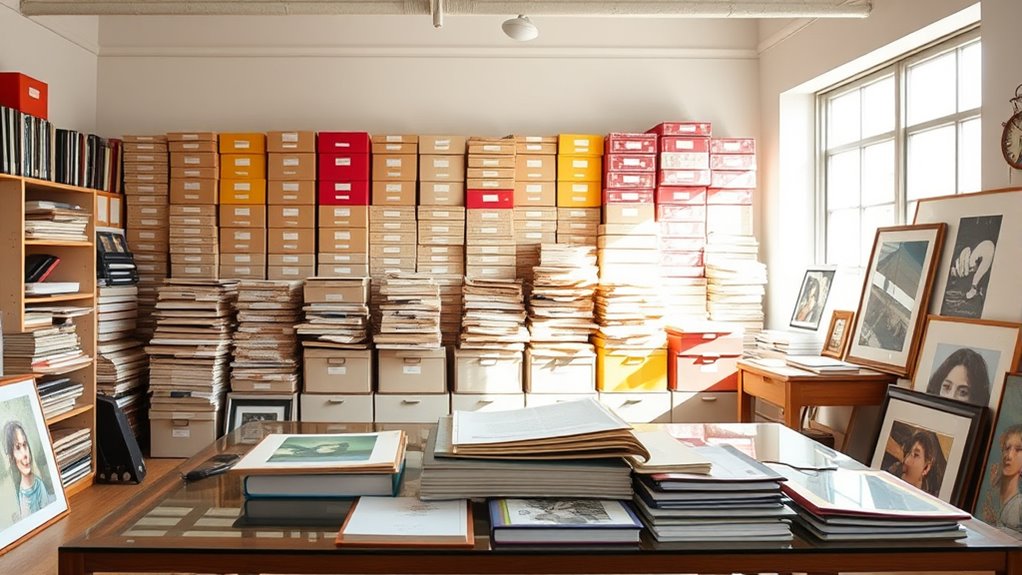
Proper archiving is essential for artists because it guarantees your work remains preserved and accessible over time. By maintaining organized, durable records, you protect your artistic legacy, ensuring future audiences can experience and appreciate your creations. Good archiving also simplifies exhibition planning, allowing you to locate specific pieces quickly and present your work professionally. It’s vital to understand the best practices for digital storage to prevent data loss due to hardware failure or obsolescence. It helps you track your development and document important milestones within your career. When your work is properly archived, it’s easier to share your story with collectors, galleries, and institutions, increasing opportunities for recognition. Additionally, digital archiving methods can enhance the security and longevity of your records, making it easier to access and share your work in the digital age. Implementing consistent organization techniques ensures that your archives remain manageable and navigable over time. Ultimately, investing in effective archiving safeguards your artistic contributions, making sure they endure long after creation and continue to inspire others. Proper archiving isn’t just storage; it’s a crucial part of your artistic journey, especially considering the importance of maintaining organized records for long-term preservation and artistic legacy management.
Limitations of Traditional Storage Methods
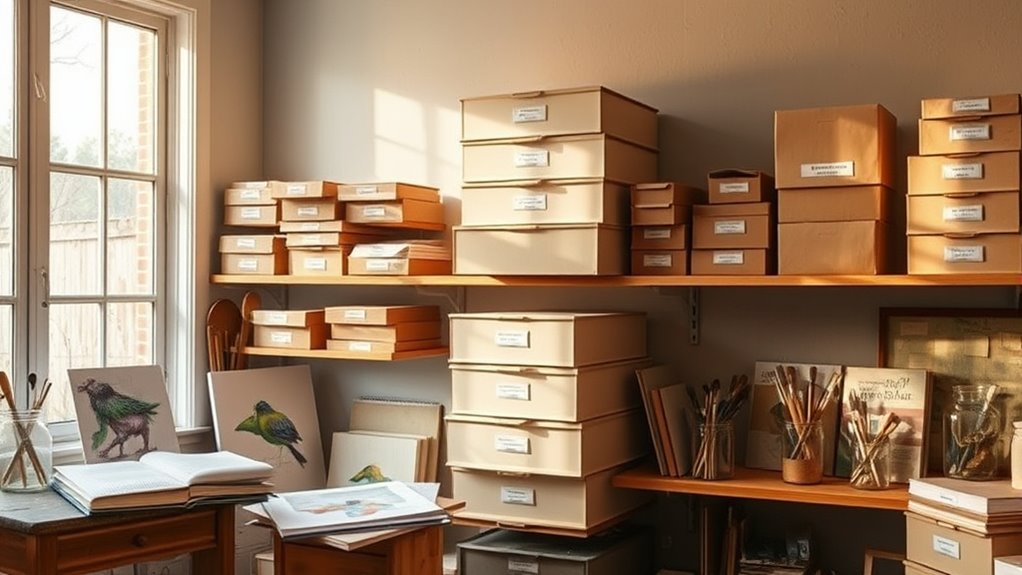
Traditional storage methods like stacks of paper, cardboard boxes, and basic filing cabinets often seem convenient at first, but they quickly reveal their limitations. Physical storage can be bulky, taking up significant space and making it hard to locate specific works when needed. Storage efficiency is compromised by clutter and disorganization, reducing the ability to quickly access your artwork. Archival materials, such as acid-free folders or boxes, help preserve your work, but even these have durability issues over time. Physical storage is vulnerable to environmental factors like humidity, light, and pests, which can cause deterioration. Additionally, fragile or large pieces may be difficult to store safely. These methods lack flexibility, making it hard to organize or access your artwork efficiently. Proper archival techniques are essential for long-term preservation and can significantly improve storage outcomes. Modern digital cataloging systems can also enhance accessibility and safeguard your collection against physical damage. Implementing digital archiving methods can further protect your work and streamline management. Incorporating environmental controls can greatly reduce the risk of deterioration caused by humidity, light, and pests. Ultimately, relying solely on traditional storage can jeopardize the longevity and accessibility of your creative archive.
How Digital Documentation Protects Your Work

Digital documentation keeps your artwork safe with high-resolution images that capture every detail. Storing these files in the cloud guarantees your work is protected from physical damage or loss. Proper digital archiving ensures long-term preservation and easy access for future use. Cloud storage solutions designed for connected equipment can enhance your ability to manage and access your files seamlessly. With secure backups, you can confidently preserve and share your art without worry. Additionally, understanding reliable backup power options can help safeguard your digital files from unexpected outages. Implementing a comprehensive preservation strategy can further ensure your artwork remains intact over time. Incorporating evidence-informed guidance into your preservation plan guarantees you are using proven methods to maintain your work effectively.
High-Resolution Image Storage
High-resolution image storage is essential for safeguarding your artwork in the digital age. You want your images to stay sharp and detailed, so using high-quality digital files is key. Fiber optic storage offers fast, reliable access and minimizes data loss over time. When you combine this with archival printing, your prints retain their vibrancy and detail for decades. Keep multiple copies of your high-res images in different locations to prevent loss. Using a dedicated external drive or a professional-grade server helps ensure your files stay safe. Additionally, adopting European cloud servers can enhance your data security and sustainability efforts. Implementing redundant backups further protects your digital assets from unforeseen issues. Ensuring your storage methods are compatible with digital files is crucial for seamless access and longevity. Regularly verifying your digital file integrity helps catch potential issues early and maintain quality over time. Considering digital preservation strategies can also help extend the lifespan of your artwork archives. Here’s a quick comparison:
| Storage Method | Benefits |
|---|---|
| Fiber optic storage | Fast, secure, long-term reliability |
| Cloud backups | Easy access, off-site protection |
| External drives | Cost-effective, portable |
| Network storage | Centralized, scalable |
| Archival printing | Preserves image quality over time |
Cloud Backup Security
Have you ever wondered how to keep your digital artwork safe from unexpected threats? Cloud backup security is vital for protecting your work. By using strong encryption protocols, your files stay secure both during transfer and storage, making it difficult for unauthorized people to access or intercept your data. Implementing access controls ensures only you or trusted individuals can view or modify your files, adding an extra layer of protection. Understanding cryptid mysteries helps illustrate how elusive threats can be, even in the digital realm, emphasizing the importance of robust security measures. Regularly updating your passwords and choosing reputable cloud providers also help prevent breaches. Remember, a secure cloud backup isn’t just about storage; it’s about protecting your creative effort against theft, loss, or corruption. Proper storage conditions can also help maintain the quality of your files over time. Utilizing necessary cookies can help ensure your site remains secure and functional while you manage your backups effectively. Implementing security protocols aligned with industry standards further enhances your overall data protection strategy. With these measures, you can confidently preserve your artwork, knowing it’s protected from digital threats.
Organize and Catalog Your Art Effectively
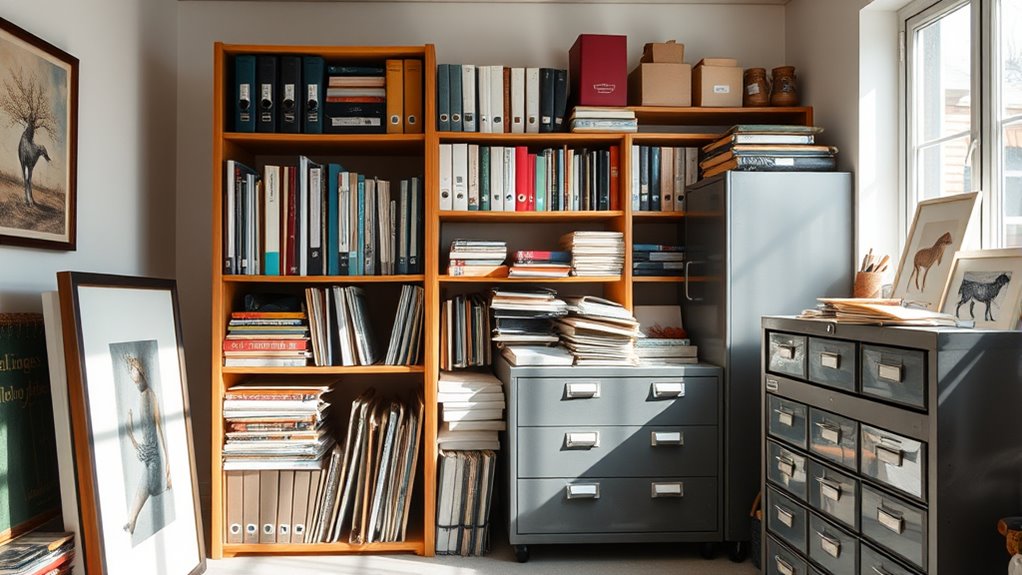
To keep your artwork organized and easily accessible, start by creating a consistent system for cataloging each piece. Use color coding to quickly identify different series, mediums, or years, making it easier to sort and locate your work. Incorporate systematic labeling with standardized tags to further streamline identification and retrieval. Implement physical shelving to store your artwork securely and keep it visible. Label shelves clearly to avoid confusion and ensure that each piece has a designated spot. Maintain a detailed inventory list, noting key details like title, date, size, and medium. Incorporating proper storage techniques helps prevent pieces from getting lost or damaged over time. This system helps prevent pieces from getting lost or damaged over time. Regularly update your catalog as you create new work or make changes. Staying organized with clear labels, color coding, and physical shelving keeps your art collection manageable and ready for showcase or storage.
Create an Online Portfolio to Showcase Your Art
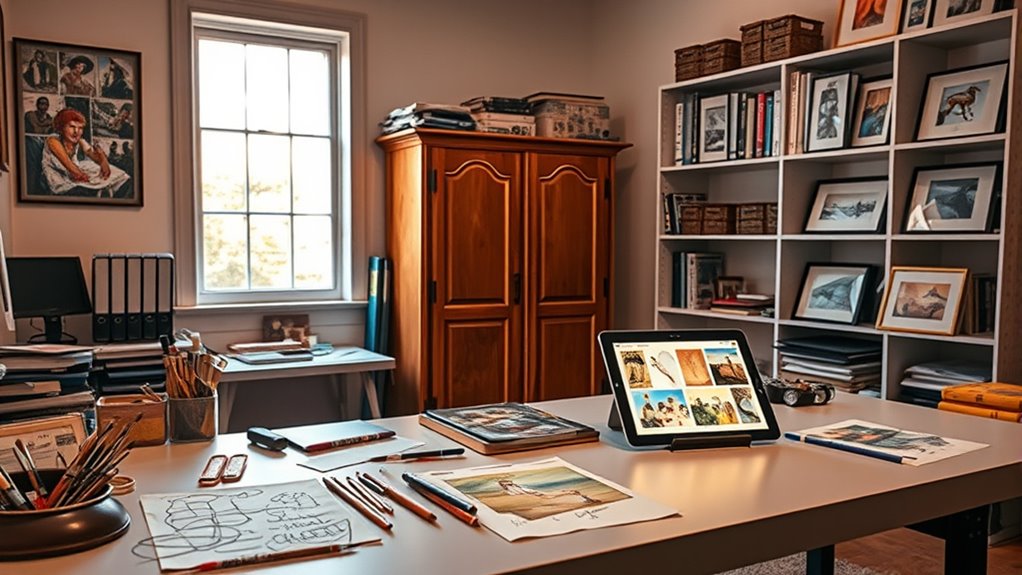
Creating an online portfolio is a crucial step in showcasing your artwork to a wider audience. Digital portfolios allow you to display your work professionally and accessibly, making it easy for galleries, clients, or fans to view your art.
By creating online galleries, you can organize your pieces into categories or themes, giving viewers a clear understanding of your style and skills. Keep your portfolio updated regularly with your latest work to demonstrate growth and versatility.
Use high-quality images and concise descriptions to enhance presentation and provide context. An online presence not only promotes your art but also helps you connect with potential buyers, collaborators, and art enthusiasts worldwide.
With a well-crafted digital portfolio, your art can reach far beyond your immediate circle.
Keep Your Archive Safe With These Maintenance Tips
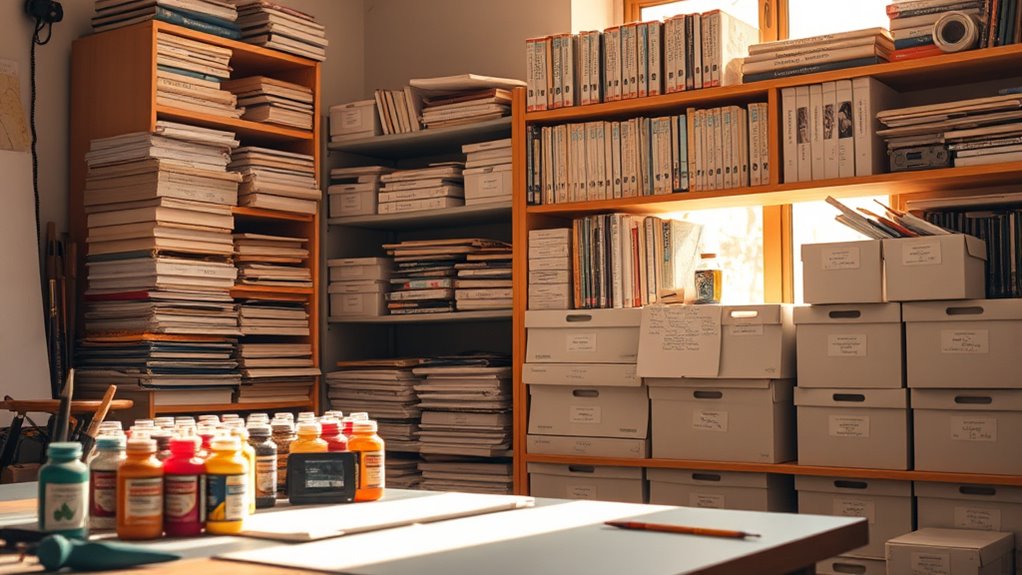
To keep your archive safe, you need to stay proactive with maintenance. Regularly back up your files, organize storage systems, and use clear labels to avoid confusion.
These simple steps help protect your artwork and guarantee easy access when you need it.
Regularly Backup Files
Regularly backing up your files is vital to safeguarding your artwork archive. By doing so, you protect your work against digital failures or accidental deletions, guaranteeing physical preservation of your digital records.
Use multiple storage solutions, like external drives and cloud services, to diversify backups. Keep copies in different locations to reduce the risk of loss from fire, theft, or natural disasters.
Regular backups also support artist interviews or documentation that might be indispensable for future exhibitions or grants. Schedule automatic backups to maintain consistency and reduce human error.
Use Organized Storage Systems
Maintaining an organized storage system is essential for keeping your artwork archive safe and easy to navigate. Invest in quality art storage furniture, such as flat files, cabinets, or archival boxes, designed to protect your pieces.
Using archival quality materials guarantees that your artwork doesn’t deteriorate over time, preventing damage from acids or environmental factors. Arrange your work by size, date, or project to streamline access and reduce clutter.
Keep frequently accessed pieces in ready-to-retrieve storage, while less often used items can be stored more securely. Regularly check your storage setup for signs of wear or damage.
Maintain Proper Labeling
How can you guarantee your artwork remains easy to identify and retrieve? The key is maintaining proper labeling. Consistent metadata, such as date, title, medium, and dimensions, ensures your files stay organized and searchable.
Adopt labeling standards that you follow across all pieces, making it easier to locate specific work later. Use clear, legible labels and avoid abbreviations that might cause confusion.
Regularly review your labels to ensure metadata consistency, updating information as needed. Proper labeling helps prevent misplacement and saves time when searching for a particular piece.
Frequently Asked Questions
What Are the Best Digital Tools for Archiving Artwork?
You should use digital tools like ArtBinder or Tropy for archiving artwork. These platforms help with metadata management, so you can easily organize details like dates and materials.
Cloud storage options like Google Drive or Dropbox guarantee your digital files are safe and accessible anytime.
How Often Should Artists Update Their Archive?
You should update your digital cataloging regularly, ideally every few months, to keep your archive current and organized.
Regular maintenance guarantees new artworks are added, details are accurate, and digital backups stay secure.
By staying consistent with updates, you prevent your archive from becoming outdated or incomplete, making it easier to showcase or access your work whenever needed.
Set reminders to review and update your archive to stay on top of your collection.
Can Physical Storage Be Reliable Long-Term?
Physical storage can be reliable long-term if you prioritize physical durability and use archival materials. Choose acid-free boxes, high-quality storage containers, and climate-controlled environments to safeguard your work from temperature and humidity fluctuations.
Regularly inspect your archives to catch any deterioration early. By maintaining proper conditions and using durable, archival-grade materials, you can guarantee your artwork remains preserved for decades without deterioration.
What Privacy Concerns Exist With Online Portfolios?
You should be aware of privacy concerns with online portfolios, like privacy breaches that risk exposing your personal information or artwork details. To protect yourself, verify the platform uses strong data encryption to secure your data.
Regularly review privacy settings, limit public access when needed, and stay informed about how your information is handled. Taking these steps helps safeguard your work and personal data from potential threats.
How Do I Archive Collaborative or Group Projects?
You should start by organizing all collaborative documentation related to your group project, including sketches, drafts, emails, and final work. Use digital tools like cloud storage for easy access and preservation.
Clearly credit all contributors and maintain detailed records of your process. Regularly update your archive to reflect new work.
This approach guarantees effective group project preservation, so your collaborative efforts remain accessible and well-preserved over time.
Conclusion
By properly archiving your work, you guarantee your art stays accessible and protected over time. Digital documentation and organized catalogs make it easy to showcase your creations and prevent them from getting lost in a closet. Stay proactive with regular maintenance and updates to keep your archive safe and current. Taking these steps not only preserves your legacy but also opens doors for new opportunities and connections in your artistic journey.
Halloween Picks
halloween
As an affiliate, we earn on qualifying purchases.