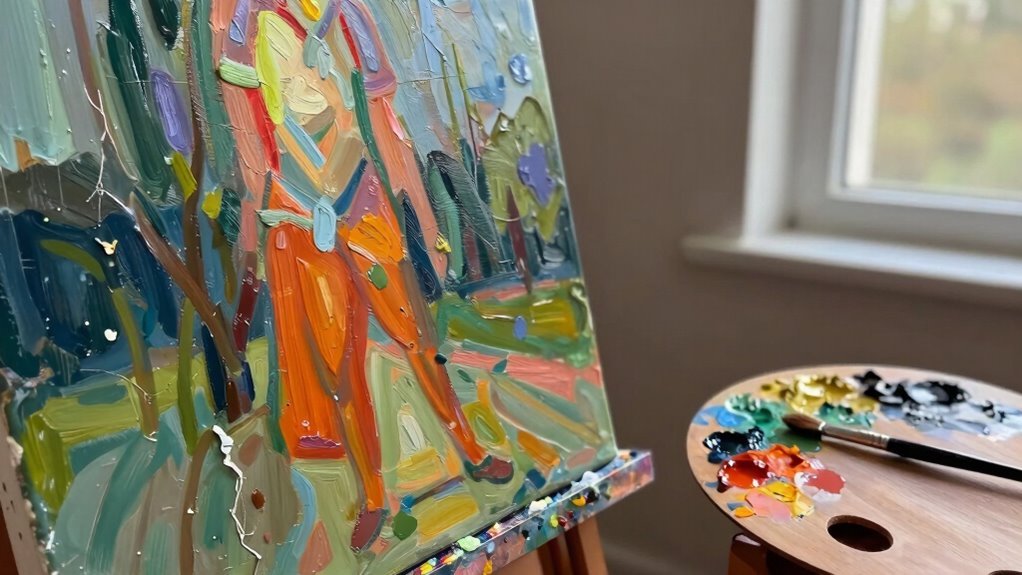

To guarantee your paintings stay intact during travel, you need to let them fully dry first. Paints contain solvents that evaporate slowly, so rushing this stage can cause cracks, bubbling, or damage. Factors like humidity, paint type, and thickness influence drying time. Proper drying allows the artwork to cure completely and reduces risk. Stay patient and follow best practices—if you keep going, you’ll discover how to protect your art effectively.
Key Takeaways
- Paintings need sufficient drying time to prevent damage like cracking, bubbling, or warping during transit.
- Proper drying ensures the paint film is fully cured, maintaining the artwork’s integrity and longevity.
- Rushing drying can trap solvents and moisture, leading to surface blemishes and long-term deterioration.
- Fully dried paintings are less prone to smudging, scratches, or other damages when moved or displayed.
- Monitoring environmental conditions and waiting until the surface feels matte and smooth is essential before travel.
How Does the Painting Drying Process Work?
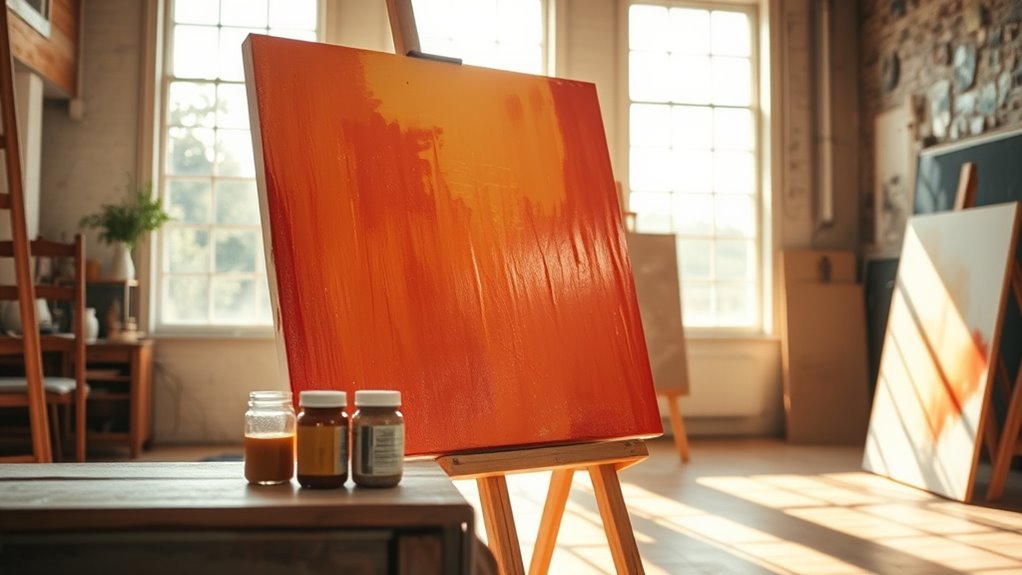
When a painting dries, the solvents in the paint evaporate into the air, allowing the pigment and binder to solidify. This process is influenced by the painting’s moisture content and environmental conditions. High-quality paint often contains solvents that evaporate at different rates, affecting the overall drying time. As the solvents escape, the moisture within the paint decreases, causing it to harden over time. Drying times vary depending on factors like paint type, thickness, and room humidity. Thinner layers tend to dry faster, while thicker applications require more patience. You might notice the surface feels dry first, but the deeper layers can still retain moisture. It’s essential to comprehend that drying isn’t instantaneous; it’s a gradual process that ensures the paint fully cures. Rushing this stage can compromise the integrity of your artwork, highlighting the importance of patience. Understanding the paint drying process can help artists better plan their workflow and avoid common pitfalls. Moreover, environmental factors like temperature and airflow significantly impact the drying time, making it crucial to control these conditions for optimal results.
Why Handling Paintings Too Soon Can Damage Them
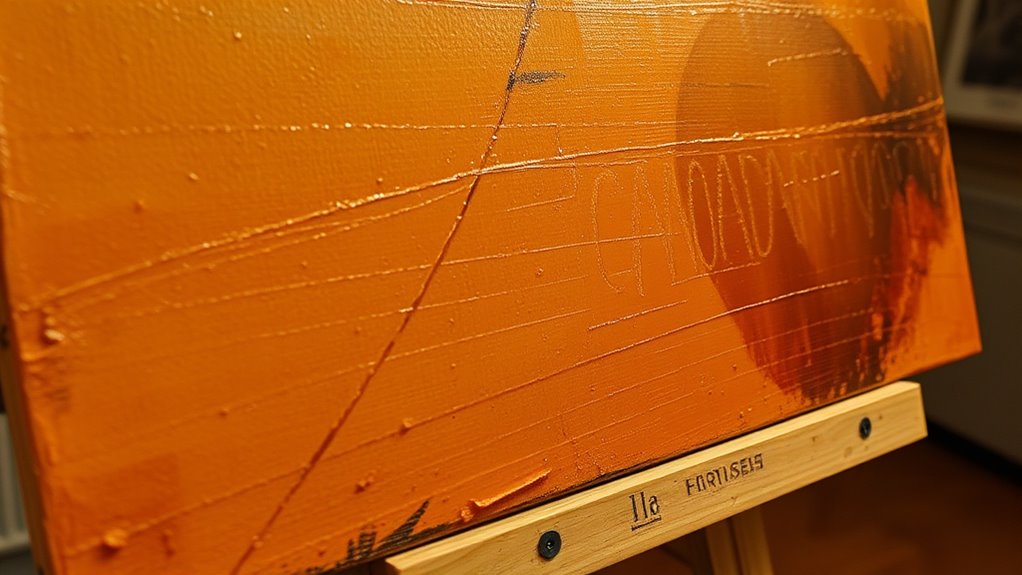
Handling a painting before it’s fully dry can cause permanent damage. Wet or tacky paint is fragile and easily smudged or scratched. To prevent this, follow proper handling precautions—use clean, dry hands or gloves and support the artwork from beneath. Proper storage techniques are also crucial to avoid accidental harm during the drying process. Avoid touching the surface or edges unnecessarily, as even gentle contact can disturb the layers. Moving a painting too soon risks smearing colors, damaging textures, or creating cracks. Damage prevention is essential for preserving the artist’s work and ensuring it remains pristine. Patience is key; allowing sufficient dry time strengthens the paint film and minimizes risks. Additionally, understanding the drying process helps in planning the best time to move or display artwork. Recognizing how different paint types dry can help in making informed decisions about handling and displaying. By respecting the drying process, you protect the painting’s integrity and help it withstand moving or display without harm.
What Factors Affect How Long Paintings Take to Dry
The type and composition of your paint play a big role in how quickly it dries. Environmental conditions like temperature, humidity, and airflow also influence the drying process. Incorporating connected equipment and apps can help monitor these conditions to optimize drying time. Using these tools allows for precise control over the drying environment, reducing the risk of damage or delays. For example, adjusting humidity levels with climate control devices can significantly impact drying speed. Additionally, understanding paint chemistry helps you choose the right products and drying methods for your artwork. Being aware of drying times based on paint type can help you plan your work schedule more effectively. Understanding these factors helps you determine the right amount of rest your painting needs before it’s ready to travel.
Paint Type and Composition
Paint type and composition play essential roles in determining how long a painting takes to dry. Different paints have unique paint chemistry, which influences drying times.
Oil paints, for example, contain slow-evaporating oils that extend drying periods, while acrylics dry quickly due to their water-based composition. The pigment stability also affects drying; unstable pigments can alter the drying process, sometimes causing uneven or delayed drying.
The binder in the paint, whether oil, acrylic, or watercolor, impacts how fast the film forms and cures. Thicker applications or layered paints naturally take longer to dry, regardless of the medium.
Understanding these factors helps you predict drying times more accurately, ensuring your artwork is properly rested before handling or transporting.
Environmental Conditions Impact
Environmental conditions play an essential role in determining how long your paintings need to dry. High humidity levels slow down the evaporation of solvents and water, making your artwork take longer to cure fully.
Conversely, low humidity speeds up drying but can cause cracking or uneven finishes. Temperature fluctuations also impact drying times; sudden changes can cause the paint to crack or warp.
Consistent, moderate temperatures promote steady evaporation and proper curing. If the environment is too humid or too cold, your painting may remain wet or sticky longer than expected.
To guarantee ideal drying, keep your workspace stable in temperature and humidity. Monitoring these factors helps you avoid issues that could compromise the artwork’s integrity before traveling.
How to Follow Best Practices for Safe Drying
To guarantee your painting dries safely, you need to create ideal conditions like proper airflow and stable temperature. Handling your artwork carefully during the drying process helps prevent damage, so use gentle techniques. Keep an eye out for signs of dryness, such as a matte finish or no tackiness, to know when it’s ready for the next step. Regular observation can detect subtle changes indicating optimal dryness. Additionally, utilizing smart home technology like sensors can help monitor environmental factors that influence drying conditions, ensuring a safe and effective process. For example, environmental monitoring devices can track humidity and temperature fluctuations that impact drying times and prevent issues like cracking or mold growth. Incorporating air quality awareness into your drying environment can further help maintain the ideal conditions, reducing the risk of contamination or uneven drying. For optimal results, understanding power tools and equipment used in climate control or measurement can further enhance your drying process.
Optimal Drying Conditions
Ensuring ideal drying conditions is essential for preserving the integrity of your paintings before they travel. To control drying speed, you should keep the artwork in a stable environment with consistent temperature and humidity levels. Rapid drying can cause cracking or uneven paint layers, so avoid drafts or direct sunlight. Pay attention to your paint consistency during application; thicker layers take longer to dry and require more careful monitoring. Proper airflow helps moisture escape without disturbing the surface, but avoid strong fans that can dry spots unevenly. Maintaining a controlled environment guarantees your paint dries uniformly, reducing the risk of damage during transit. Additionally, understanding airflow management can help optimize drying without causing surface disturbances. Proper environmental factors such as temperature and humidity are crucial for a smooth drying process. Implementing proper ventilation techniques also plays a key role in ensuring consistent drying conditions. Controlling air quality within the drying space can further prevent dust or particles from settling on the surface, which is vital for preserving artwork quality. Being mindful of humidity levels helps prevent issues like mold or surface blisters. Ultimately, creating optimal drying conditions safeguards your artwork’s quality and longevity before it’s packed and shipped.
Proper Handling Techniques
Handling your paintings carefully during the drying process is essential to prevent damage. Use gentle framing techniques, supporting the artwork from the back with clean hands or tools. Keep the painting flat on a non-stick surface, avoiding pressure points that could cause warping or smudging. Proper storage considerations include placing your work in a dust-free environment, away from direct sunlight and humidity. Use a flat storage area or a dedicated drying rack designed for art. Consider this visual:
| Supportive Frame | Safe Storage Area |
|---|---|
| Soft backing board | Climate-controlled room |
| Even pressure | Elevated, dust-free shelf |
Additionally, ensuring proper handling techniques can significantly reduce the risk of art damage during the drying phase. Incorporating trustworthy storage methods that align with best practices can help maintain the artwork’s integrity throughout the drying period. For added protection, using proper drying environments that control temperature and humidity levels can further safeguard delicate finishes. Being aware of art conservation principles can guide you in selecting optimal drying and storage strategies. Proper handling and storage are especially important for wave and wind affected artworks, which are more vulnerable to environmental stressors.
Recognizing Dryness Signs
As your painting dries, it’s important to recognize the key signs that indicate it’s ready for the next step. First, check for color consistency across the entire surface; if the paint looks uniform without shiny or wet patches, it’s a good sign.
Next, examine the surface texture—when it feels matte and smooth rather than sticky or tacky, drying is likely complete. Gently touch a small, inconspicuous area to ensure there’s no residual dampness or gloss.
Keep in mind that surface texture can reveal subtle differences between dry and wet paint. Rushing the process can cause smudging or damage, so wait until these signs are clear before moving your painting. Incorporating traditional healing practices into your routine can also promote patience and mindfulness during the drying process.
Proper recognition helps ensure your artwork is fully dry and safe for handling or traveling.
What Happens if You Rush the Painting Drying Stage
Rushing the drying process of a painting can lead to serious issues that compromise its quality. When you skip proper drying time, the paint remains wet internally, making the surface vulnerable to cracking, bubbling, or warping over time.
This can considerably hinder future art restoration or conservation techniques, as repairs become more complex and less effective. Rapid drying also risks trapping solvents or moisture inside, causing long-term damage or mold growth.
If you push a painting to travel too soon, it may develop unsightly blemishes that diminish its value. Proper drying allows the paint layers to cure evenly, ensuring stability for the future.
Patience is essential to preserve the artwork’s integrity and prevent costly restoration work later on.
Tips for Art Professionals and Collectors to Protect Paintings
To effectively protect paintings, art professionals and collectors should prioritize proper storage and environmental controls. Ensuring stable temperature and humidity levels prevents damage and preserves the artwork’s integrity. When considering framing, opt for materials that won’t react with the paint or cause deterioration. Use archival-quality mats and UV-protective glass to shield paintings from light damage.
Here’s a quick guide:
| Framing Considerations | Storage Tips |
|---|---|
| Use acid-free materials | Store paintings vertically to prevent warping |
| Avoid direct sunlight | Keep in a climate-controlled environment |
| Opt for non-reactive metals | Regularly inspect and maintain storage spaces |
| Use proper mounting hardware | Avoid stacking paintings directly on each other |
Following these tips helps ensure your artwork remains protected and pristine.
How to Ensure Your Artwork Is Fully Dry Before Display
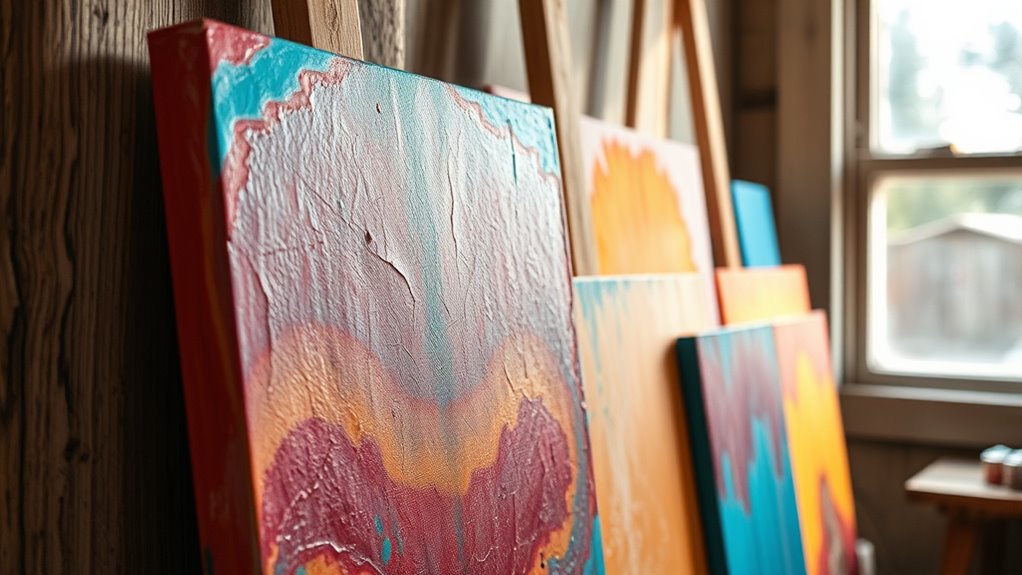
Ensuring your artwork is fully dry before displaying it’s essential to prevent smudging, sticking, or damage. Before a gallery display or framing preparation, check that the paint has cured completely. Gently touch a small, inconspicuous area to verify dryness; if it feels tacky or soft, give it more time.
Use a clean, dry surface to support the piece during drying, and avoid stacking paintings. Consider using a moisture meter for precise readings, especially with thick applications or layered mediums.
Once you’re confident it’s dry, handle the artwork carefully to avoid smudging. Proper drying guarantees your piece maintains quality during gallery installation or framing, reducing the risk of damage and preserving the integrity of your work throughout its display journey.
Frequently Asked Questions
Can Paintings Dry Faster Indoors Than Outdoors?
You might think paintings dry faster indoors, but outdoor drying can sometimes be quicker due to lower humidity impact in certain conditions.
Indoor spaces often have controlled humidity and temperature, which can slow drying.
Outdoor drying exposes paintings to natural airflow and sunlight, speeding up evaporation.
However, high humidity outdoors can extend drying time, so it depends on the weather.
Ultimately, the environment’s humidity level plays a key role in drying speed.
What Signs Indicate a Painting Is Fully Dry?
You’ll know a painting is fully dry when it feels touch dry and no longer leaves residue on your fingers.
Look for a glossy appearance, which indicates the paint has set properly. If it’s matte or dull, it might still need more time.
Trust your judgment—if it feels completely solid and smooth to the touch, and the gloss is consistent, it’s ready to travel safely.
How Long Can a Painting Safely Be Moved After Drying?
You can generally move a painting safely once the paint film integrity is solid and the varnish adheres well, usually after at least two weeks of drying time. During this period, the artwork continues to cure, reducing the risk of damage.
Rushing this process can compromise varnish adhesion and cause cracks or smudges. Always check for a fully dry, non-tacky surface before transportation to guarantee safety.
Does Environmental Humidity Affect Drying Time Significantly?
Environmental humidity definitely impacts drying time, causing variability you’ll notice. High humidity slows down the evaporation of solvents and moisture in your paint, extending the drying process.
Conversely, low humidity speeds it up. You should monitor humidity levels closely and adjust your environment if possible.
This way, you guarantee your painting dries evenly, reducing the risk of damage during handling or travel, and achieving ideal preservation for your artwork.
Are There Specific Storage Conditions to Prevent Damage During Drying?
You should store your paintings in a space with controlled humidity and temperature to prevent damage during drying. Keep storage humidity stable, ideally around 50%, and avoid fluctuations that can cause cracking or warping.
Maintain consistent temperature, around 68-72°F, to ensure even drying. Using climate-controlled environments helps safeguard your artwork from environmental stresses, ensuring it dries properly and remains in excellent condition before traveling.
Conclusion
Remember, patience is key when it comes to drying paintings. Rushing the process can cause damage and compromise your artwork’s future. Always give your paintings ample time to dry fully before handling, transporting, or displaying them. Follow recommended practices to protect your investment and ensure your art remains vibrant and intact. By respecting the drying time, you’ll help your masterpiece stand the test of time and look its best for years to come.