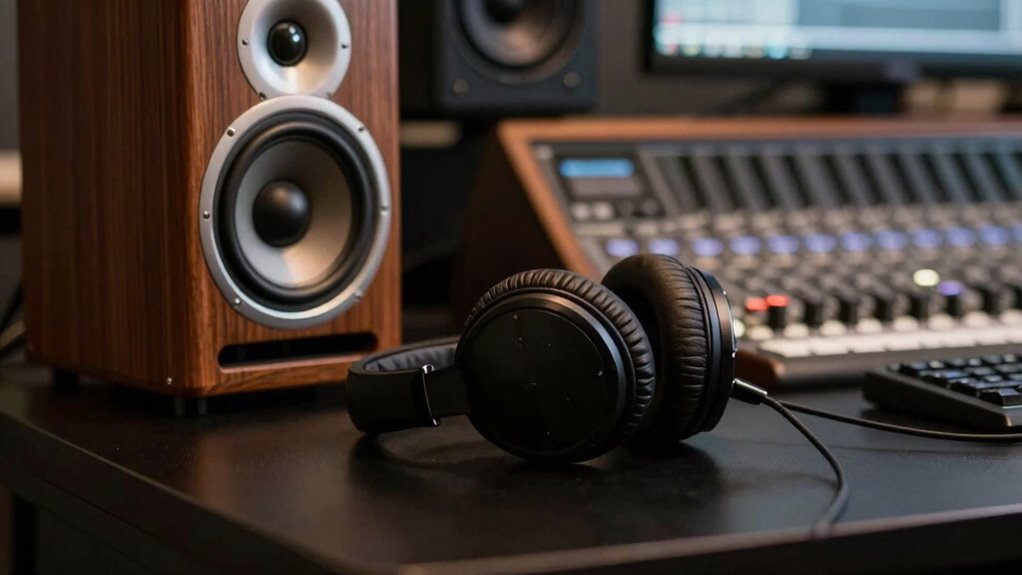

Using studio headphones and speakers changes your editing decisions because they provide flat, accurate sound that reveals true issues in your mix, like muddiness or harshness. Consumer gear often adds color, leading you to overcompensate or miss important details. With reliable monitoring, you make more confident choices that translate well across different playback systems. Keep exploring to understand how the environment and calibration also play essential roles in maintaining your mix’s clarity and accuracy.
Get ready for Prime Big Deal Days — try Prime free
Exclusive member deals on October 6–7, plus fast free delivery. Cancel anytime.
As an affiliate, we earn on qualifying purchases.
Key Takeaways
- Studio headphones and speakers provide flat, accurate sound, revealing true audio details that influence editing choices.
- Accurate monitoring minimizes the impact of sound coloration, preventing overcompensation during editing.
- High-quality gear helps identify subtle issues like muddiness or harshness, guiding precise adjustments.
- Reliable equipment ensures editing decisions are based on authentic sound, improving translation across playback systems.
- Consistent, calibrated monitoring environments foster confidence and consistency in editing decisions.
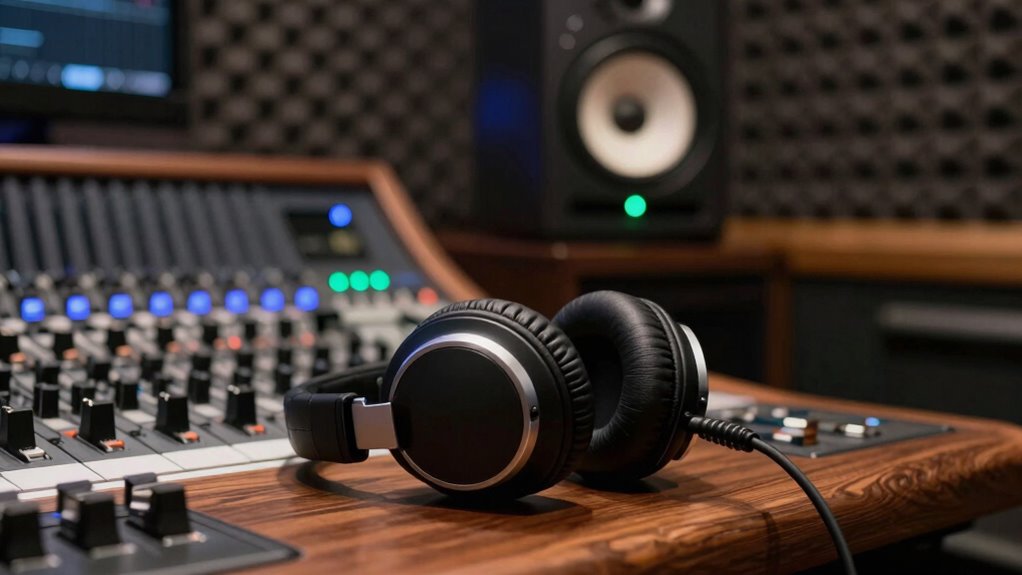
When editing music or audio content, the quality of your headphones and speakers can considerably influence your decisions. High-quality studio headphones and speakers provide a flat and accurate sound, enabling you to perceive audio exactly as it was intended. This precision is essential because it allows you to perform effective audio calibration—adjusting your monitoring environment so that the sound you hear is as close to the original mix as possible. When your gear accurately reproduces frequencies, you’re better equipped to identify muddiness, harshness, or imbalance in your recordings. This, in turn, helps you make more informed editing choices, guaranteeing your final product maintains clarity and fidelity across various playback systems.
High-quality studio gear ensures accurate sound, enabling precise audio calibration and better editing decisions for professional results.
Listener perception plays a significant role here. If your headphones or speakers color the sound—boosting bass, emphasizing treble, or muffling certain frequencies—you might make adjustments based on a skewed view of the mix. For instance, if your speakers naturally enhance bass, you could mistakenly reduce lows, thinking they’re overpowering, when in reality, your monitoring setup is giving you an inaccurate picture. Conversely, inaccurate monitoring can lead you to overcompensate, making edits that won’t translate well to other listening environments. This is why audio calibration becomes critical; it aligns your perception with an objective standard, so your decisions are based on an accurate representation of the audio.
Using studio-grade equipment helps you develop a more consistent listening perception. When you understand how your headphones and speakers translate sound, you gain confidence in your editing choices. You’ll notice subtleties—like slight timing issues, delicate spatial cues, or nuanced tonal shifts—that might be missed on consumer-grade gear. This heightened perception allows for meticulous editing, resulting in a polished final mix. Furthermore, it minimizes the risk of your mixes sounding great on your setup but terrible elsewhere. Recognizing the importance of accurate sound reproduction ensures your assessments are based on true audio representation rather than coloration or distortion. Additionally, understanding monitoring environment factors can further enhance your ability to make precise adjustments. Developing an awareness of room acoustics can also significantly improve your monitoring accuracy by reducing unwanted reflections and resonances. Moreover, consistent monitoring conditions are crucial for maintaining reliable editing decisions over time.
Achieving this level of consistency often requires investing in proper audio calibration tools and techniques, which help you maintain an optimal monitoring setup. Ultimately, the impact of studio headphones and speakers on editing decisions boils down to trust. When you trust your monitoring environment, you can focus on the creative and technical aspects of editing without second-guessing what you’re hearing. Achieving proper audio calibration ensures your listener perception is aligned with objective standards, empowering you to make precise, confident editing decisions that translate well to all playback systems. This consistency is key to producing professional-quality music and audio content that truly sounds good everywhere.
As an affiliate, we earn on qualifying purchases.
Frequently Asked Questions
How Do Different Headphone Types Affect Sound Perception?
Different headphone types affect your sound perception by altering how you experience frequency response and sound isolation. Closed-back headphones offer better sound isolation, making you focus on bass and reducing external noise, but may color the sound. Open-back headphones provide a more natural soundstage with accurate frequency response, ideal for critical listening. Over-ear models generally deliver richer sound, while in-ear types are portable and isolate well, affecting how you perceive details.
Can Speakers Accurately Replicate All Listening Environments?
Speakers can’t perfectly replicate all listening environments because of limitations in soundstage accuracy and frequency response. You might notice that speakers lack the precise spatial cues found in real-world settings, which affects how you perceive stereo imaging. Additionally, their frequency response can vary, making certain sounds more prominent or subdued. While high-quality speakers come close, they still can’t match the nuanced experience of real environment acoustics, influencing your editing decisions.
What Is the Impact of Room Acoustics on Speaker Sound?
Room acoustics are the canvas that shapes your listening experience. When room reflections bounce around, they distort your perception of sound, making it harder to hear details accurately. Acoustic treatment acts like a shield, absorbing unwanted reflections and smoothing out the sound. Without it, your speakers can’t deliver true fidelity, leading you to make editing decisions based on a skewed version of reality. Proper acoustics keep your sound honest and your edits precise.
Are Higher-End Headphones Always Better for Editing?
Higher-end headphones aren’t always better for editing because comfort and accurate sound are key. If you find headphones uncomfortable, your focus drops, affecting your decisions. Also, good speaker placement impacts how you perceive sound, which can be tricky with high-end gear that emphasizes certain frequencies. Ultimately, choose headphones that fit well, provide a flat response, and work well with your room setup, ensuring your edits translate well across different systems.
How Often Should Studio Equipment Be Calibrated?
You should calibrate your studio equipment regularly, ideally every few months, to keep things running smoothly. The frequency of calibration depends on how often you use your gear and the environment it’s in. Don’t let maintenance fall by the wayside—consistent calibration guarantees accurate sound quality and prevents costly repairs. Think of it as tuning up your car; staying on top of equipment maintenance keeps your studio in top shape and your edits on point.
As an affiliate, we earn on qualifying purchases.
Conclusion
In the end, studio headphones and speakers shape your editing decisions by revealing details you might miss on other devices. They challenge your perceptions, refine your choices, and guarantee your mix sounds good everywhere. They demand your attention, test your judgment, and push your skills. Embrace their influence, trust their accuracy, and let them guide your creativity. Because, ultimately, the right tools don’t just assist—they elevate your craft, transforming your edits into professional-quality productions.
As an affiliate, we earn on qualifying purchases.
As an affiliate, we earn on qualifying purchases.
Fall Picks
fall essentials
As an affiliate, we earn on qualifying purchases.